To this day, there are still several open questions regarding the origin of the Incas, how they managed to establish themselves in this vast territory in such a short time, and also the large number of imposing constructions left behind. It is also necessary to remember that this empire in the heart of the Andes achieved different advances in architecture, hydraulics, agriculture, astronomy, medicine, and politics. That is why in recent years, various scholars have tried to explain the origin of the Incas, based on archaeological findings and the stories left by the last inhabitants of Tawantinsuyu.
The Inca Empire, known as Tahuantinsuyu, had its origins in the southern region of the Peruvian Andes, around the 13th century. According to oral tradition collected by chroniclers such as Garcilaso de la Vega, the empire began with the legendary figure of Manco Capac, who, together with his sister and wife Mama Ocllo, emerged from the waters of Lake Titicaca by the design of the sun god Inti. Manco Capac founded the city of Cusco, which became the political, religious and administrative center of the empire. However, true Inca expansionism began in the 15th century under the leadership of the ninth ruler, Pachacútec, who transformed the small Cusco kingdom into a vast empire that spanned much of South America, from southern Colombia to northern Chile and Argentina.
This growth was based on efficient social, economic and military organization, as well as the integration of pre-existing cultures through alliances and conquests. The Tahuantinsuyu was characterized by its road system, its centralized administration and its ability to adapt to diverse geographic environments, consolidating itself as one of the most important civilizations in pre-Columbian America.
Before the arrival of the first immigrants from the Inca ethnic group, the Cusco valley had its native inhabitants. Inhabited by a series of small ethnic groups, some older than others: Hualla, Alcahuisa, Sahuasira, Antasayas, Lares and Poque; each of which included some ayllus.
The Hualla ethnic group lived in the lands of Huaynapata, near the place called by the Spanish Arco de La Plata, on the way to Charcas, that is, south of the current city. The Huallas appear as the oldest inhabitants of Cusco, with their houses grouped on the slopes of the hill, to the east of the city, from the San Blas terraces. Their core village was called Pachatusán.
The Sahuasiras came from Sutijtoco (Masca/Paruro area), and when they arrived in Cusco they found the Huallas. They took possession of what centuries later would become the main part of the llacta (city), the fertile hill where the Inticancha (or Coricancha) and its surroundings would later be built. The Huallas did not resist them; it seems that they joined forces with the invading Sahuasiras. The latter, due to their pacarina or place of origin, were also called Sutijtoco Ayllu. Their pacarina or place of origin was therefore in Pacarictambo.
The Antasayas appeared after the Sahuasiras. From their etymology it can be deduced that they emanated from somewhere in the pampas of Anta. They were located in the northern part, from the current monastery of Santa Clara to Collcampata. They arrived commanded by their chief Quisco (a bird of ominous fortune) and this arrival gave rise to the naming of the place Cusco, because they leveled the land, removing stones and boulders. The Sahuasiras did not resist them, and even joined forces with the Huallas.
The Ayaruchos, who claimed to come from Pacarictampu (Masca), pointing out Capactoco as their Pacarina. They stopped in Cusco headed by their chieftain who had the same name: Ayar Ucho, settling in Pucamarca. It was the Incas who later changed their name, calling them Alcahuisas. Upon reaching Cusco they found that the Huallas, Sahuasiras and Antasayas were already established there, with whom they allied themselves. The Ayaruchos, after their chief, also called Ayar Ucho, disappeared, among other coryphaei who governed them subsequently, had the famous Apomaita and Colunchima. Precisely when the invasion of Manco Capac took place, they were administered by the sinchi Colunchima.
Poques and Lares lived to the east of Cusco, where they had built their homes. The Poques were on either side of the place where centuries later the road to Antisuyo would run. These small ethnic groups that Manco Capac or Ayar Manco would meet or clash with in Cusco did not represent the typical situation of the area, since not far from there there were other large ethnic groups, constituting respectable States model kingdoms, among which, according to the oldest myths, the Colla, the Pinagua and the Ayarmaca stood out. The hypothesis that Ayarmacas and Pinaguas formed a single State, in which the first represented Hanan and the second Urin, virtually prevails.
This was a great kingdom that was established in what are now the provinces of Cusco and Anta after the destruction of the Huari empire. The territory of the Ayarmacas began in Quiquijana, in the south, extending to Jaquijaguana (Anta plains) and Ollantaytambo, in the north. Meanwhile, Pinagua dominated from Quiquijana to Quispicanchi, enclosing the plain and lagoon of Muyna. The Ayarmaca chiefs received the generic name of Tocay Capac, and the others Pinagua Capac; but the first one had more power than the second. Ayarmaca pottery has now been identified with the name of Quillque.
Tocay Capac and Pinagua Capac always appear together. In the documentation they appear side by side, which indicates that each one embodied a half or saya (Hanan/Urin). An image that is not at all unusual, but very common in the Andean kingdoms, where in each kingdom of the southern Andes and even in the southern ones of the central Andes a diarchy ruled. Tocay Capac ruled in the northeast of Cusco and Pinagua Capac to the east. And they were contemporary with the kingdom of Jatuncolla or Colla, and where its king was known by the nickname of Colla Capac. All of which were in full swing when the appearance of Manco Capac occurred.
The Ayarmacas had their pacarina or place of origin located on their own lands, in a place situated on the road to Yucay. They distinguished it by marking it with a stone, a fact that warns that it was not a State created by invaders or emigrants, but a kingdom that was made, formed and developed thanks to its own internal political-social process, like authentic natives of the area. Consequently, the ayllus of Cusco that have been referred to, as has been said, were sub-ethnic groups belonging to the kingdom of Ayarmaca (Hanan), or at least on the verge of being politically annexed.
The origin and presence of the Inca ethnic group in Cusco and its valley, as occurs in any place in the world, have their historical explanation and also their mythological and legendary justification. Reading the documents of the 16th and 17th centuries, some published and others unpublished, show that the Inca ethnic group was nothing more than a caravan of emigrants who escaped from Taypicala (now Tiahuanaco) who, approximately at the end of the 12th century of the current era, managed to escape and seek refuge in lands located north of their original habitat.
At the end of the mentioned century (12th), the Puquina-speaking state, more commonly called TIAHUANACO, was attacked and invaded by huge waves of people from the south (from Tucumán and Coquimbo), so suddenly and impetuously that they had no time to mount resistance. These invaders, clearly, were none other than the Aymaras. The reasons for the Aymara displacement from south to north and the causes of the fall of the Puquinas (or Tiahuanacos) could have been several. In the case of the Aymaras, possibly climatic changes (lower temperatures) could have led them to a massive evacuation towards the north; or perhaps the pressure of other peoples who in turn attacked and pushed them; or who knows, a voluntary migration in search of better horizons.
In the situation of the Puquinas (or Tiahuanacos), who at that time formed a powerful State, their rapid derangement could have been determined by the violence and unexpectedness of the Aymara incursion, which gave them no support to organize the defense; or perhaps the aristocracies or chieftains of the peoples conquered and dominated by them, eager for liberation, helped the attackers by encouraging the overthrow. Any of these events could have happened, or perhaps all together. What is certain is that the Puquina-speaking State and its capital Taypicala were captured and totally destroyed. The archaeological evidence found by Francis de Castelnau in 1845 and later, at the end of the 19th century, confirmed by Max Uhle, confirms that Taypicala was attacked and destroyed when it was inhabited and when its builders and craftsmen worked without interruptions, constructing buildings. Hence the stone blocks, attached and juxtaposed to chisels and other tools, lay beneath the walls, ready to be lifted and placed into place.
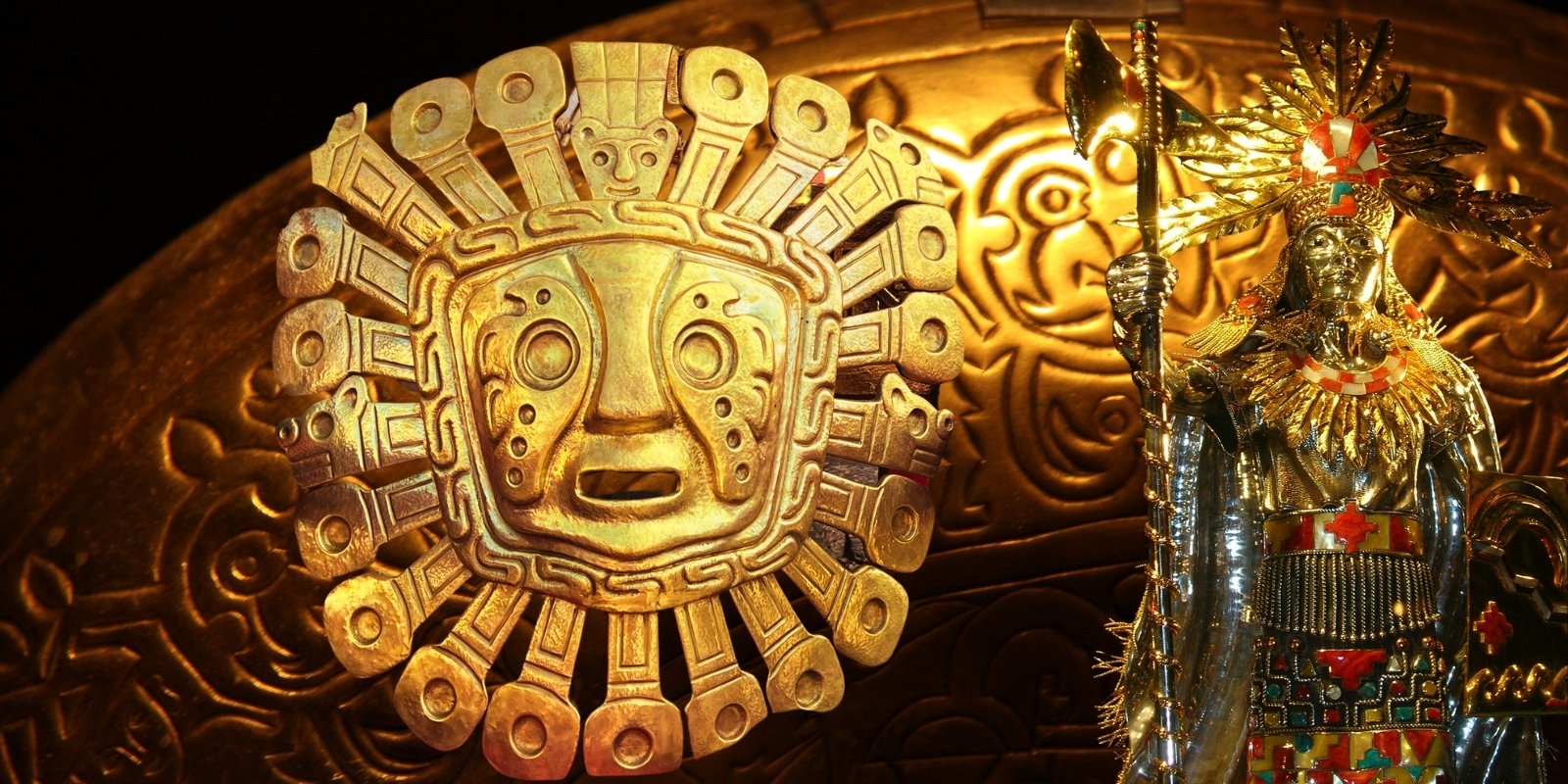
After the triumph of the Aymara irruption, the ruling and dominant group of Taypicala was also persecuted and almost entirely killed. At least the leaders of half of Hanantaypicala were completely eliminated, with only those of Urintaypicala managing to escape, the half or partial group in charge of the official cult and religion. Of course there were entire Puquina “provinces” that were not destroyed, such as Callahuaya and Capachica. The peasant masses did not bother to escape, an attitude that was all too noticeable among the ayllus that made up the ruling and dominant class. In short, the chiefs of Urintaypicala, with five ayllus belonging to this moiety, another five from Hanan and three more from another faction, led by the high priest, escaped in order to save themselves and as best they could they went into Lake Mamacota or Puquinacocha to take refuge on the island of Titicaca, considered by them impregnable because of its magical and religious role, as it was the super sacred island of the Puquinas. And indeed there they managed to take shelter and remain on the defensive for some years.
But when the Aymaras consolidated themselves in Collao, they resumed their marches, advancing north and west to lead another invasion that would end with the destruction of the Huari State, doing so, it seems, in the same way that they disintegrated the Puquinas; but above all when the Aymara kingdom speaking Lupaca (Chucuito-Juli-Copacabana) was established and consolidated. Faced with the threat of these, commanded by the leader Cari, who were advancing through Copacabana and Yampupata to enter and take the island of Titicaca, the priests and other ayllus saved from the catastrophe had no other option than to sail away on totora rafts to disembark on the beaches of Puno; and from there continue a long, painful and sacrificial pilgrimage towards the northwest in search of a more or less safe shelter to survive and protect the cultural and political tradition of the ruling class of the Taypicala neighborhood.
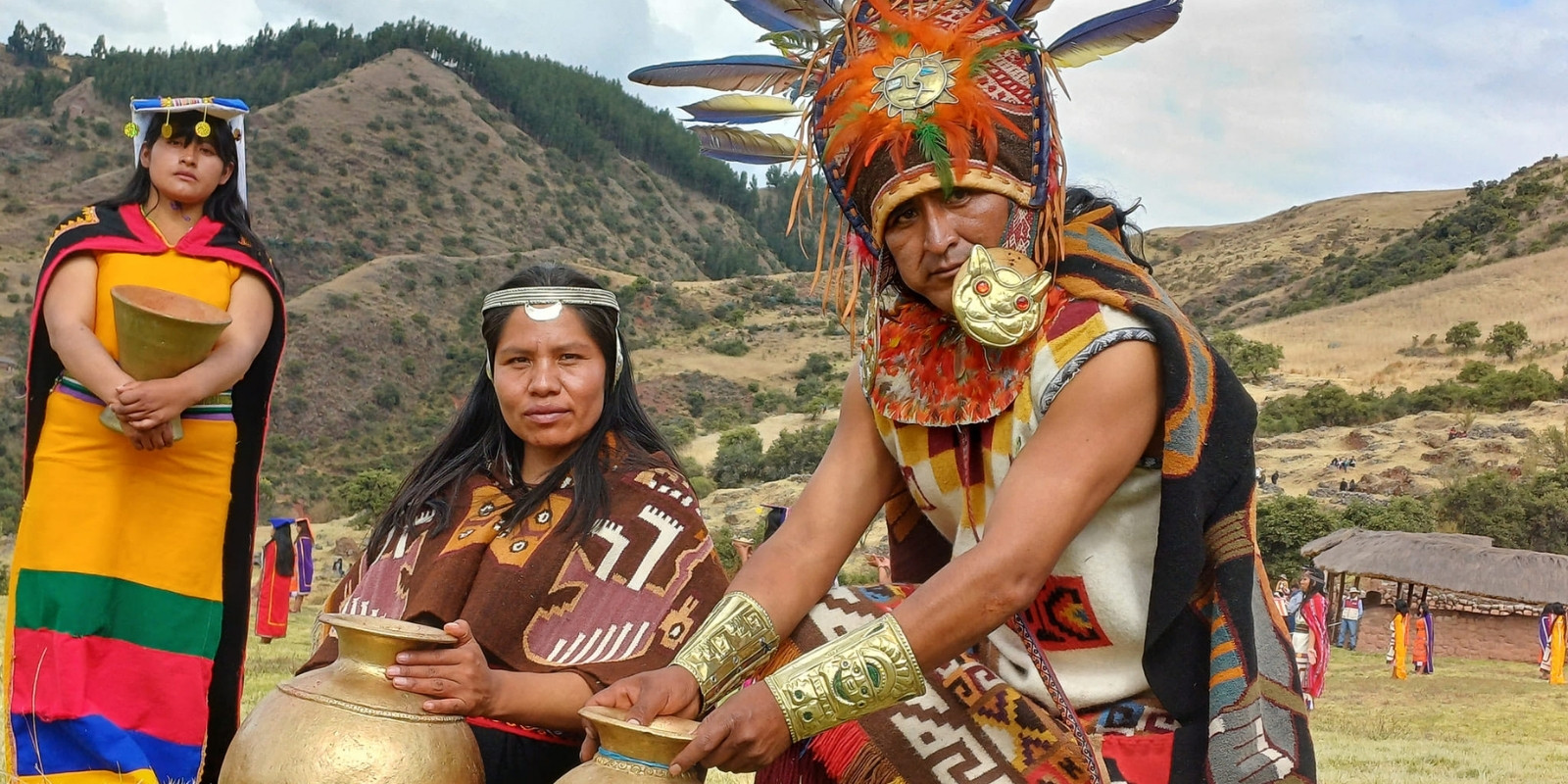
The caravan was led by none other than Apo Tambo, chief of Urintaypicala; the warrior chief of Hanantaypicala no longer existed, having been killed by the invaders during the attack. From Puno the exodus continued to the country of the Mascas (today the province of Paruro), stopping at Pacarictampu or Tambotoco. This pilgrimage must have taken place at the end of the 12th century, and the journey must have lasted a good number of years. But when they stopped in Masca lands, they found there the pacarina or legendary place of origin of the Maras, that is, the cave of Maras-toco. They stayed there for a considerable time, so much so that Manco Capac, son of Apo Tambo, seems to have been born in Tambotoco.
The ancient Pacarictampu must have corresponded to the settlement of Maucallacta (an ancient city) and Tambotoco must be related to the present Pumaurco. Maucallacta is 18 kilometers from the current town of Pacarictambo. They lived there for many years. Their chiefs then began to be called by the generic name of Apotambos, one of whom, the last, was the father of Manco Capac. Pacarictampu, at that time, became the seat of a meager lordship that maintained in a small way the tradition and pomp of the old and extinct Taypicala. It could be argued that Maucallacta was founded by those refugee-migrants.
Pacarictampu, a place of shelter for the expelled Taypicalas, was inconvenient for the towns whose individuals grew and for whom the need for land for sustenance arose. For this reason they turned their gaze towards Cusco and the Urubamba-Vilcamayo valley (Sacred River or River of the Sun), in search of living space; In order to achieve this goal, they were determined to carry out invasions and irascible wars of conquest if taking possession by peaceful means proved impossible. The fertility of the valleys mentioned encouraged them to occupy them.
There are indications that in Pacarictampu there was also a split in the migrant group, each one continuing along different routes: some, the Tampus, towards the extreme north (today Ollantaytambo), and the others, followers of Manco Capac, to Cusco. The leader Manco Capac began to appear as a leader only in the Masca country, in other words, in Pacarictampu. Manco gathered around him the 10 migrant ayllus, while Ayar Cachi, the possible leader of the Tampus, only three. Each one, therefore, prepared to follow different routes.
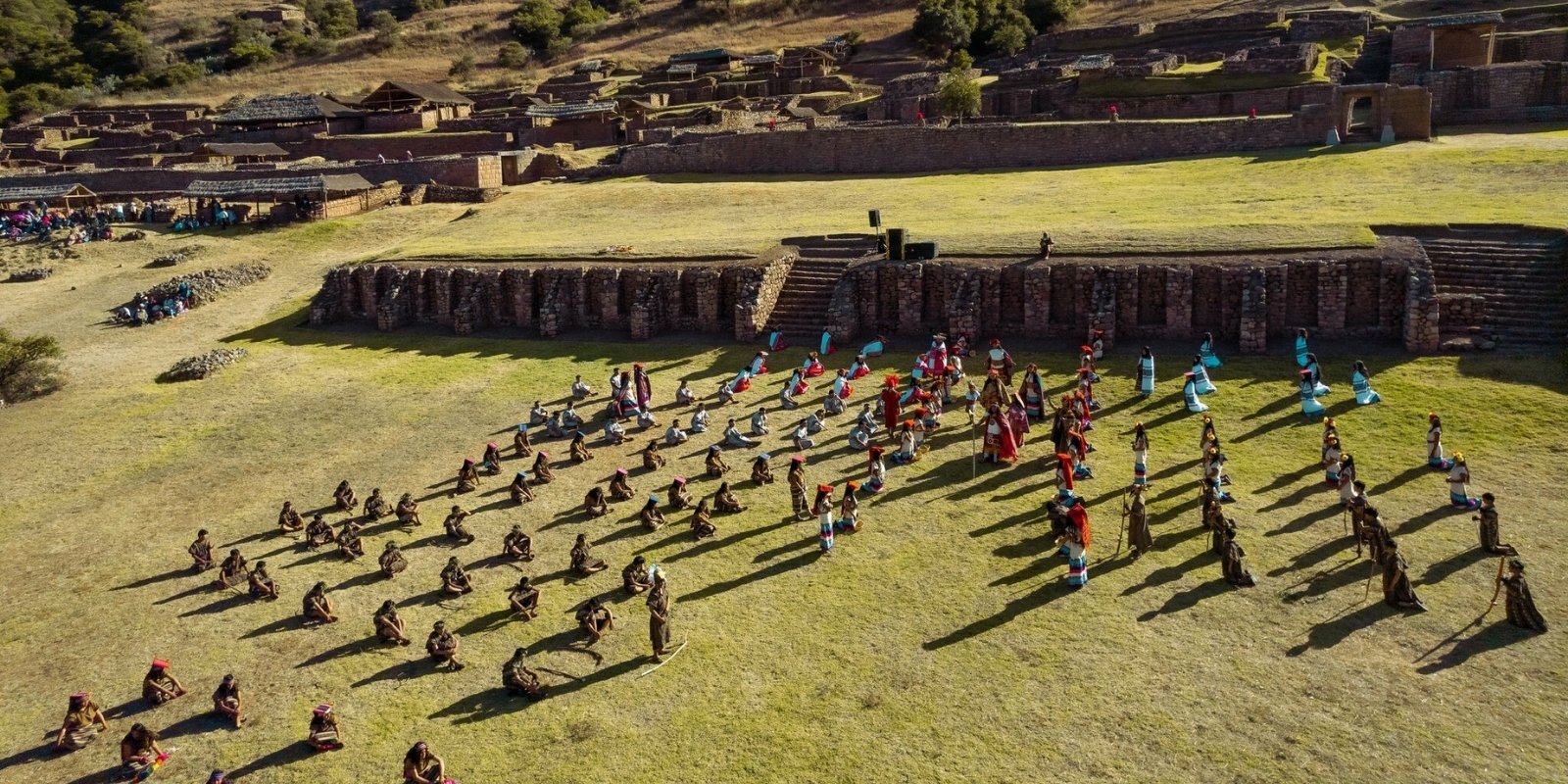
The advance of the 10 ayllus of Pacarictampu (5 from Hanan and 5 from Urin) in the spirit of conquest and under the command of Manco was carried out in successive phases with interludes of spaced stages. They arrived and took possession of regions, settling in neighboring native ayllus that they found. From Pacarictampu they went to Guaynacancha or Huanacancha, staying there for quite a long time, since they even sowed and harvested in the fields. Manco at that time continued to be the political, warrior and religious leader: supreme military and priestly authority of the emigrants. There he took Mama Ocllo as his wife. They resumed their advance and the next stop was Tampuquiro, where a son of Manco Capac was born, possibly the first, an event that gave rise to singular ritual celebrations that they were accustomed to. There they also stopped for a few years. The next stop was Pallata (in Taray), where they remained for a long time. There they celebrated the ceremonial Rutochicu or first haircut of their son, whom they named Roca. Then they went on to Huaysquiro. They continued their advance and arrived at Quirirmanta, where he married the aforementioned Mama Ocllo in accordance with the usual rites, apart from which he had other wives, among them the brave Mama Huaco.
From there he set out to capture Huanacauri, which belonged to the realm of the Ayaruchos (Alcahuisas) commanded by Ayar Ucho. In the battle he died defending his lands against the attack of the Inca ethnic group, a fact that opened the way for them. They took possession of Huanacauri, and went on to do the same in Matagua, where they began the siege of the valley of Cusco (Acamama), an area that was coveted because it had the conditions they were looking for: good climate, soil and water suitable for agriculture. But since Cusco was inhabited by several ethnic groups: Huallas, Sahuasiras and Antasayas, apart from the Ayaruchos, Manco had to plan an understanding, or a confrontation, with them. In Matagua they celebrated the festive rite of the Huarachico, declaring Roca of age, and they began to call him Sinchi Roca: they put huaras (underpants) on him and grabbed his ears to fit small gold discs that represented the Sun.
These migrants, as is logical, advanced carrying with them many institutions from the south, from Taypicala, from the Puquinas. The towns were divided into two groups: Hanan and Urin. The only difference is that the Hanan did not have a leader, having been killed in the desolation of Taypicala (Tiahuanaco). On the other hand, the Urin were led by the high priest. Their born leader, who due to the circumstances, acted as a leader of both halves, who in turn was accompanied by his consort and sister: the industrious Mama Ocllo, and another principal wife: the brave Mama Huaco.

Faced with the imminent attack, Manco sought alliances with ethnic groups opposed to those who populated Cusco. He set his sights and interests on the Sañus, whose sinchi or chief named Siticguamán welcomed him with sympathy. Both lords considered the situation and the possibilities, the corollary of which was the arrangement of the marriage of Sinchi Roca with Mama Coca or Mama Cora, daughter of the aforementioned chief of Sañu, from whose union a child was born who was later called Manco Sacapa. With such a matrimonial alliance, the Incas and the Sañus began to operate in agreement. The Huallas, as is logical, went on a war footing. But the defeat of these was total, thanks to the fact that, in said campaign, Mama Huaco had an outstanding performance. Many were impaled and shot with arrows by her order. The Huallas, with their sinchi Apo Cagua, fled, taking refuge in the places now called Hualla and Vico, in the valleys of Hualla and Pisac, with a warm climate, where they dedicated themselves to planting coca. They were never allowed to return to Cusco, so they no longer figure in any subsequent events.
After the invasion and the triumph of Manco, seeing that he had deprived the Huallas, Poques, Sahuasiras and other peoples of their lands and waters, the Ayaruchos or Alcahuisas, with their new chief Copalimaita, voluntarily gave him some more plots, although Manco insisted on taking over all of them, and even their own homes. The decision of the brave Mama Huaco determined that the invaders would take over the entire waters (springs and canals) depriving them of irrigation, with the purpose of pressuring the Alcahuisas to hand over their lands. The Ayaruchos then put up a tough resistance, forcing Manco Capac to retreat to his settlement of Huaynapata, which he had usurped from the Huallas.
The common danger brought the Alcahuisas and Sahuasiras together. But Manco attacked them again, defeating them definitively, and then stripped them of their lands. The overthrown Copalimaita chose self-exile rather than continue living under the dominion and control of the invaders and victors. In any case, the latter left a portion of land for the housing and reproduction of the other Ayaruchos who remained, who, as was to be expected, maintained a latent and deep opposition against Manco and his people, showing them a false submission. Both rivals frequently clashed, something that would last until the time of Maita Capac.
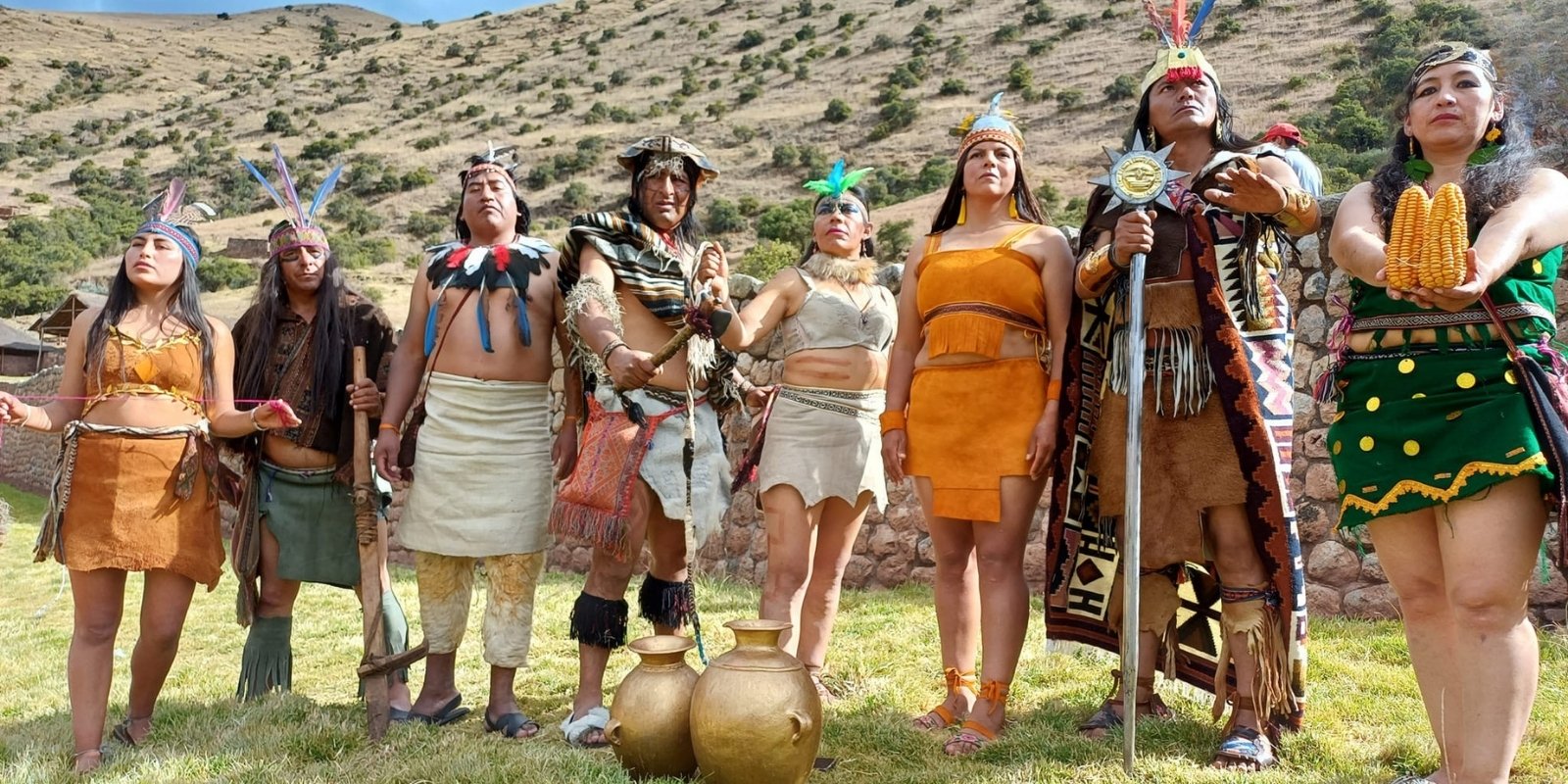
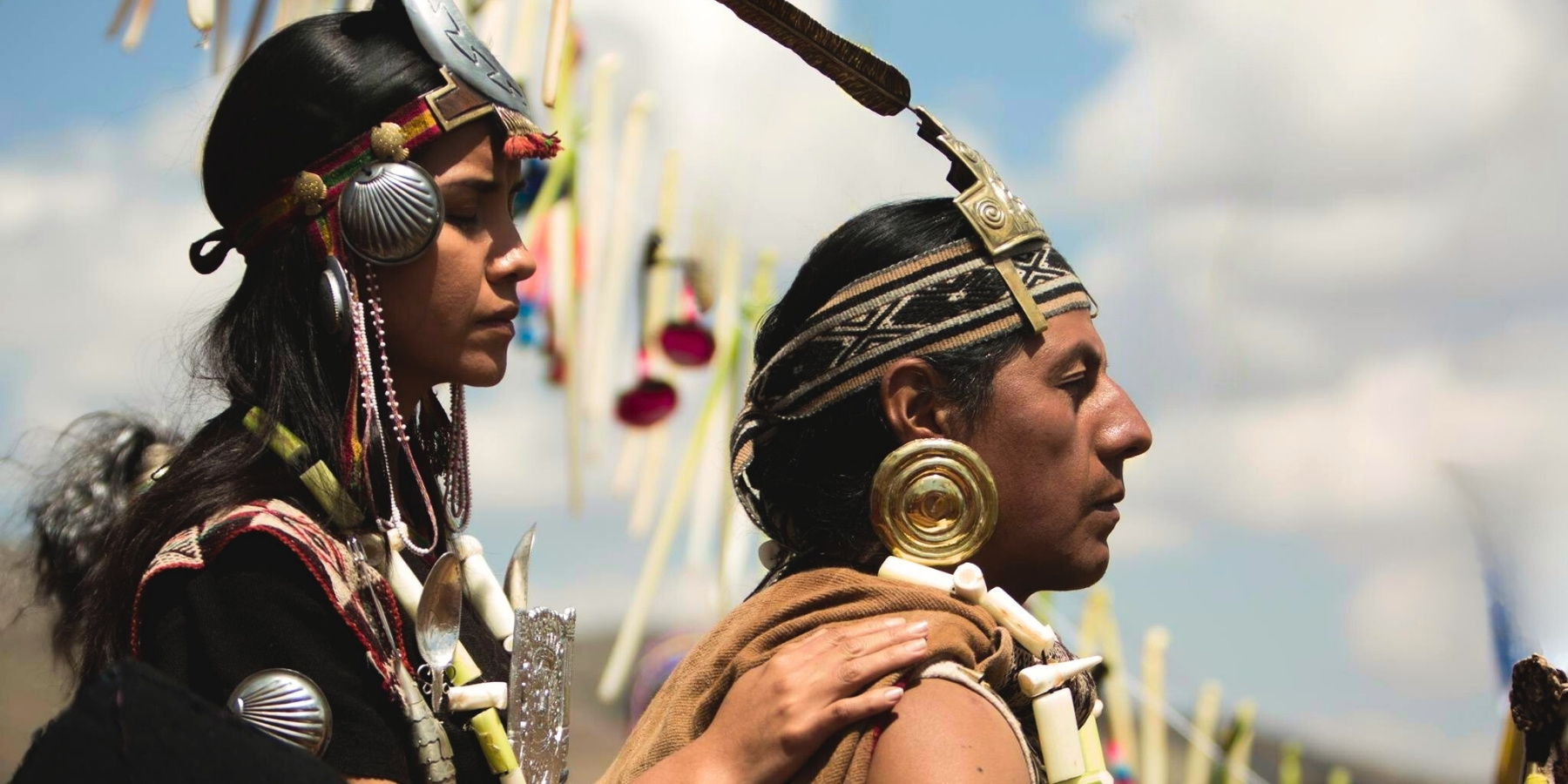
Those who had just arrived in Cusco in such conditions had distinctive features that differentiated them from other peoples. For example, they had very short hair that gave the appearance of shaved skulls from a distance. They wore round earrings, so long that they dilated their ears, reaching down to touch their shoulders. The chief also displayed on his forehead the highest symbol of his high rank: the Mascaipacha and Tupacusi: a red tassel with gold threads, whose fringes fell down to his eyelashes, so that it prevented his eyes from being seen. Other insignia they carried were the napa (white flame), ritual vessels, the Sunturpaucar (a spear or pike made with colorful feathers attached to wicker and reeds) and the axe or yauri. And also the inti bird: a small animal that played the role of messenger between the emigrants and the gods of heaven: an oracle. The entire group called itself Inca, that is, the Inca ethnicity or nationality.
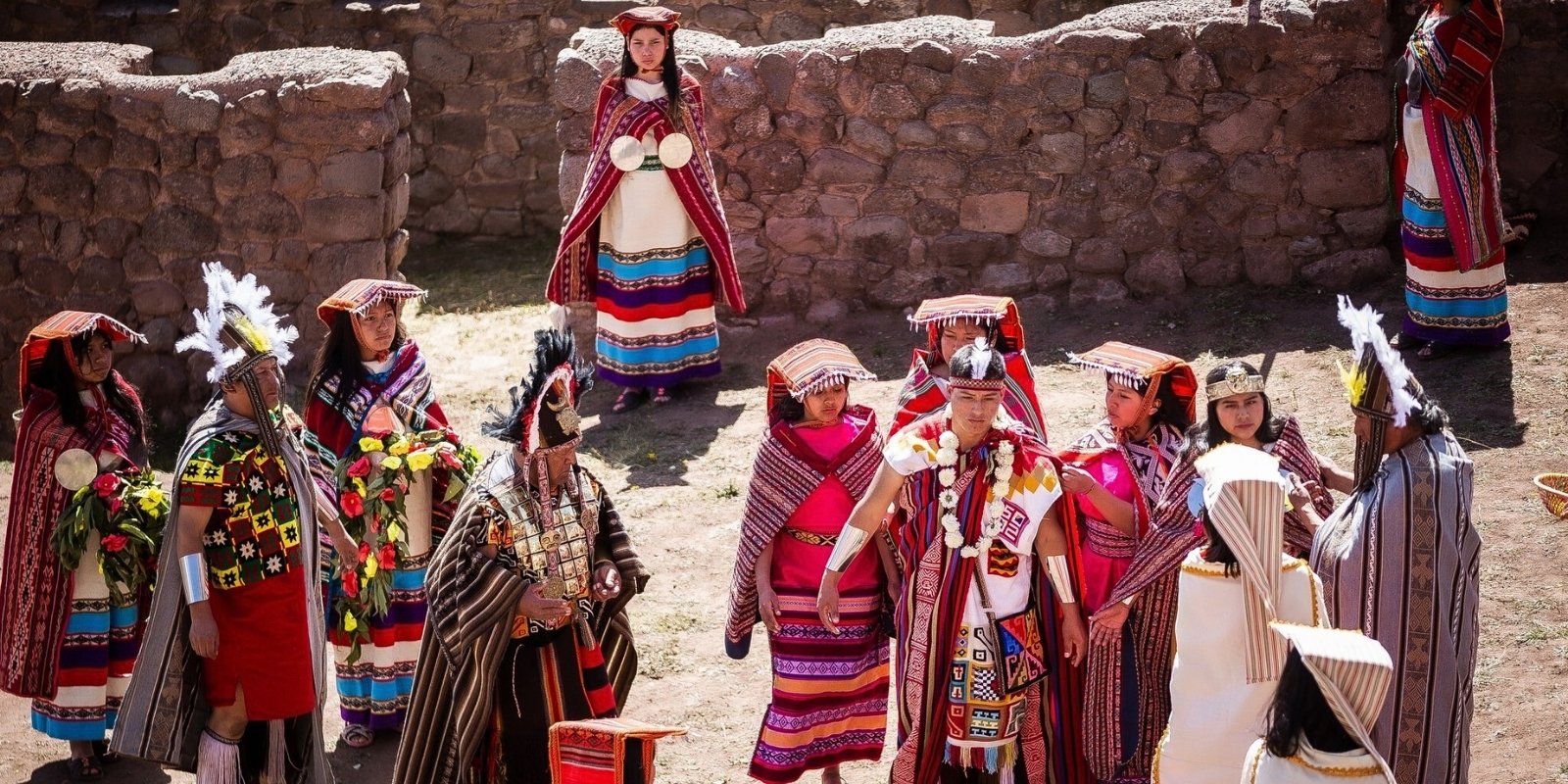
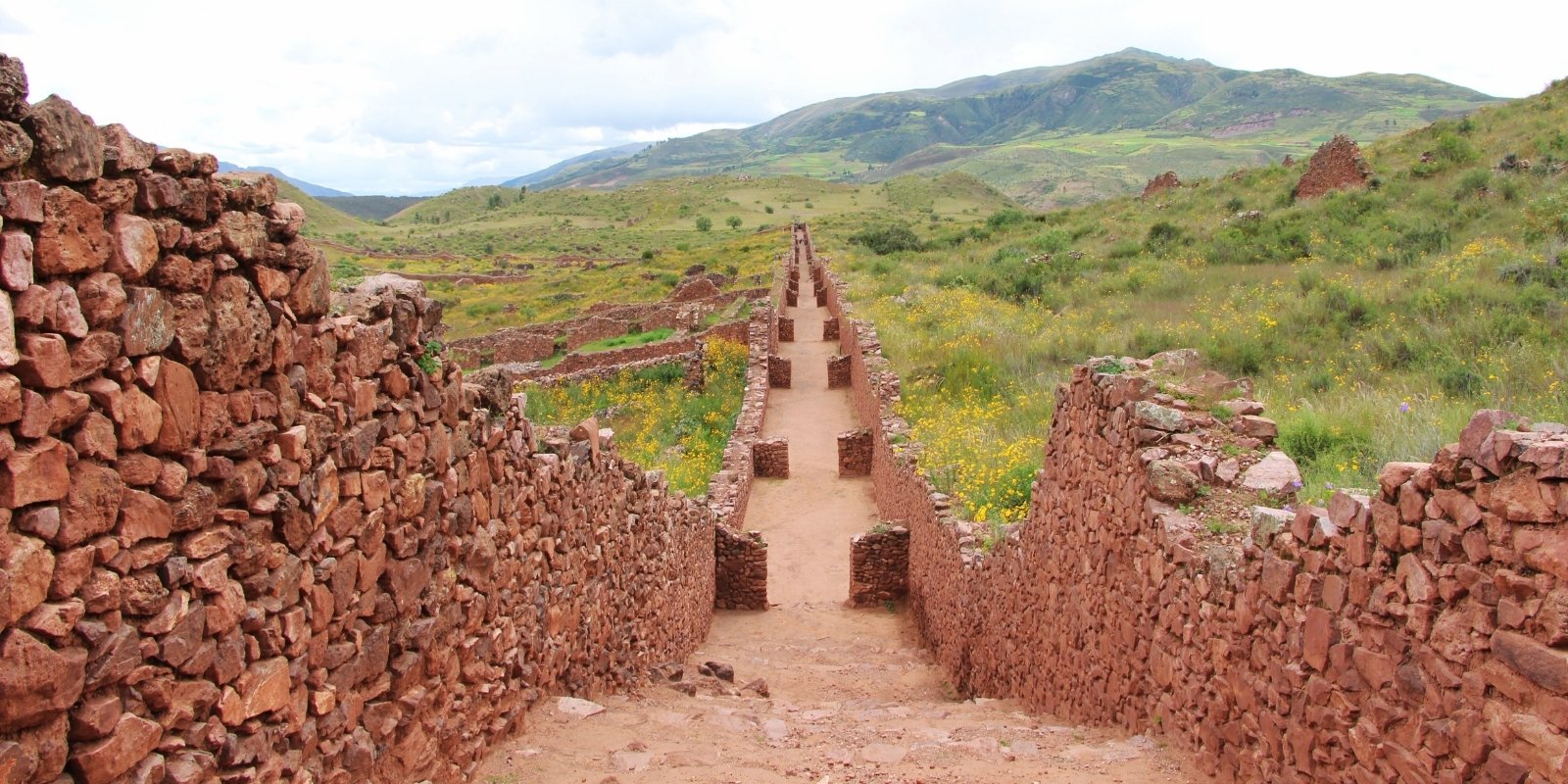
During the Middle Horizon (600-1000 AD), the Cuzco basin was under Huari influence through the administrative center of Piquillacta, located 30 kilometers from the Lucre basin. However, there is very little evidence that Huari control significantly affected settlement patterns in the Cuzco basin. Before the appearance of Huari, and continuing with little variation in the Middle Horizon, the population of the Cuzco basin was concentrated in numerous village centers on the south side of the valley, along ravines and valley bottoms that were found for the use of alluvial terraces and rainwater cultivation.
According to Bauer and Smith, with the collapse of Huari, around 1000 AD, Piquillacta was abandoned, which produced transformations in the settlement pattern. During the early Late Intermediate Period (1000-1200 AD), local settlements increased in population, while a new settlement pattern developed at the northern end of the Cuzco Valley, in an area that had previously shown less evidence of intensive occupation. The growing population in this part of the valley was sustained by the construction of large terraces, which greatly increased the arable land supplied by numerous irrigation canals.
All of this led to an increase in population and agricultural activity, as well as changes in settlements in the Cuzco basin, coinciding with a growing ability of local elites to mobilize large productive forces that served to build a better agricultural infrastructure, which in turn meant the reassertion of a degree of control over the resulting surpluses. In contrast, the basin near Oropesa, located between the Cuzco and Lucre basins, shows almost complete abandonment of sites and depopulation after the Huari collapse.
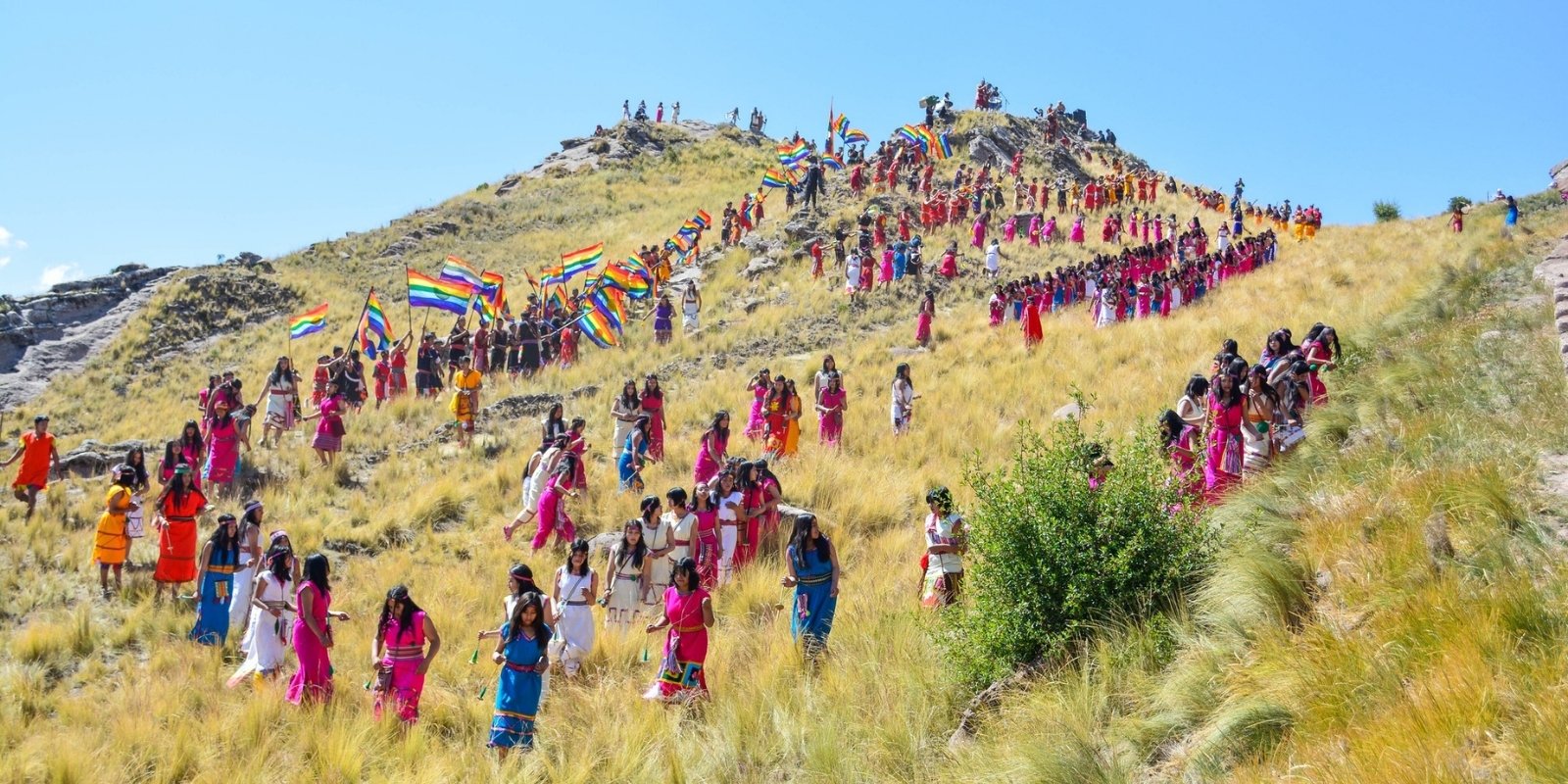
According to the stories of the inhabitants who inhabited the valley of Cusco, in their beliefs there was a myth of the creation of their descendants assigned to the god Viracocha. He created the dark world without sun, moon or stars; and for this creation they called him Viracocha Pachayachachi, which means Creator of all things. And after creating the world he created a kind of giants disfigured in size, painted or sculpted, to see if it would be good to make men of that size. And as they seemed to him to be of much greater proportion than his own, he said: “It is not good for people to be so tall, it would be better for them to be my size.” And so he created men in his likeness as they are now. And they lived in darkness. Viracocha ordered them to live without disagreement, and to know and serve him; and he gave them a certain precept, which they should observe under penalty that, if they broke it, he would confound them.
But as vices of pride and greed arose among them, they transgressed the precept of Viracocha Pachayachachi, who, falling into his indignation for this transgression, confounded and cursed them. And then some were turned into stones and others into other forms, some were swallowed by the earth and others by the sea, and above all he sent a general flood, which they call Unu Pachacuti, which means water that turned the earth upside down.
Viracocha Pachayachachi, when he destroyed this land, as has been told, kept with him three men, one of whom was called Taguapaca, to serve him and help create the new people that he was to create in the second age after the flood, which he did in this way. When the flood had passed and the land was dry, Viracocha decided to populate it a second time, and to do so with greater perfection he decided to create lights that would give light. And to do this, he went with a servant to a large lagoon, which is in Collao, and in the lagoon there is an island called Titicaca, which means mountains of lead, and he ordered that immediately the sun, moon and stars would rise and go to heaven to give light to the world; and so it was done.
And as Viracocha ordered some things to his servants, Taguapaca was disobedient to Viracocha’s commands. The latter, indignant at Taguapaca, ordered the other two to take him, and bound him hand and foot, and throw him on a raft into the lake, and so it was done. After which Viracocha, continuing on his way, arrived at the town of Urcos, six leagues from Cuzco. And staying there for a few days, he was well served by the natives of that place.
And as he left there, they made a famous huaca or statue for him to worship and offer gifts to, to which statue in future times the Incas offered many rich things of gold and other metals and above all a gold seat. After having educated and taught the inhabitants of the valley of Cuzco the work of agriculture, cattle raising and architecture, Viracocha undertook his journey to the north of Peru, where he entered the sea.

The sun god ordered two of his sons to go and found a kingdom in his name. They left Lake Titicaca and walked north, and all along the way, wherever they stopped, they tried to stick the gold bar in, but it never sank. So they entered a window or small bedroom, which today they call Pacárec Tampu. The Inca gave it this name because he came out of that room at dawn. It is one of the towns that this prince ordered to be populated later, and its inhabitants today greatly boast of the name, because the Inca imposed it. From there he and his wife arrived at the valley of Cusco, which at that time was a rugged mountain.
The first stop they made in this valley —said the Inca— was at the hill called Huanacauri, south of this city. There he tried to drive the gold bar into the ground, but it sank so easily at the first blow they gave it that they did not see it again. Then the Inca Manco Capac said to his wife: “In this valley Our Father the Sun commands us to stop and make our empire to fulfill his will.”
They spoke to all the men and women they found in those valleys and said how their father the Sun had sent them from heaven to be teachers and benefactors of the inhabitants of that whole land, taking them from the rustic life they had and showing them to live like men, and that in fulfillment of what the Sun, their father, had ordered them, they went to the villages of those mountains and thickets, to reduce them to live in populated towns and to give them food of men and not of beasts.
These and other similar things were said by the first Incas to the wild peoples they found in these lands and mountains, who, seeing those two people dressed and adorned with the ornaments of the Sun god who had given them (a habit very different from the one they wore) and their ears pierced and as open as Their descendants brought them, and that in their words and face they showed that they were children of the Sun and that they came to men to give them towns in which to live and eat, amazed on the one hand by what they saw and on the other by the promises that were made to them, they gave full credit to everything that was told to them and they adored and revered them as children of the Sun and obeyed them as kings. And the inhabitants themselves called together, one by one and recounting the wonders that they had seen and heard, men and women gathered in great numbers and went out with the founding Incas to follow them wherever they wanted to take them.
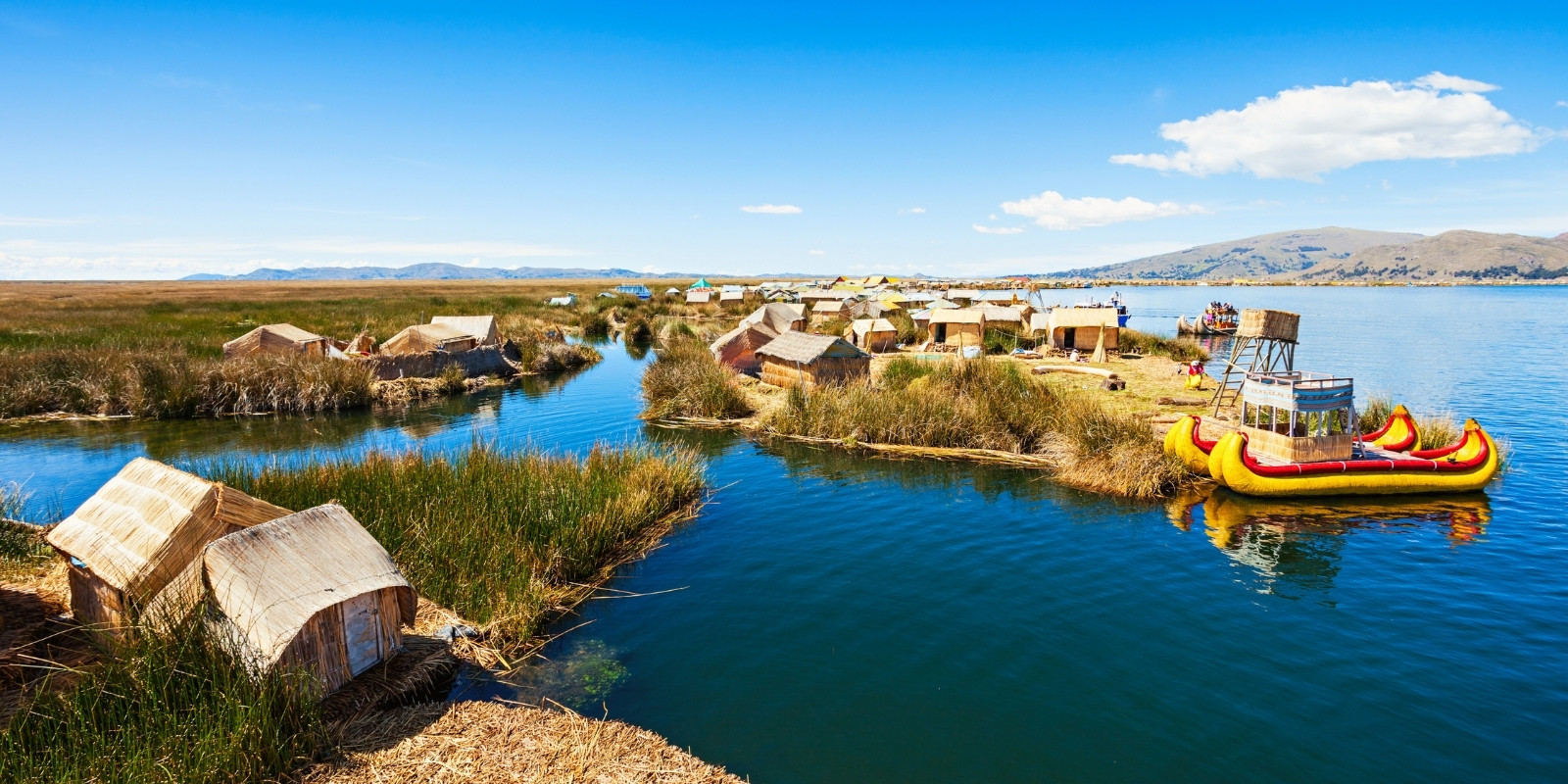
Manco Capac and Mama Ocllo, seeing many people approaching them, gave orders that some should take care of providing their country food for everyone, so that hunger would not drive them back to the mountains; he ordered that others work on making huts and houses, the Inca giving the plan of how they were to make them. In this way the city of Cusco began to be populated, which was divided into two parts, Hanan Qosqo and Urin Qosqo. This division of the city was not so that those of one half would have an advantage over the other half in exemptions and preeminences, but so that all would be equal as brothers, children of one father and one mother. The Inca only wanted this division of town and difference of names between high and low so that there would be a perpetual memory that the King had summoned the one and the Queen the other. And he ordered that there should be only one difference and recognition of superiority among them: that those of high Qosqo would be respected and considered as first-born, older brothers, and those of low Qosqo would be like second sons; and in short, they would be like the right and left arm in any preeminence of place and office, because those of high Qosqo had been attracted by the male and those of low Qosqo by the female.
Similarly, this same division was later carried out in all the large and small towns of the Empire, which were divided by districts or by lineages, saying Hanan ayllu and Hurin ayllu, which is the upper and lower lineage; Hanan suyu and Hurin suyu, which is the upper and lower district. “At the same time, populating the city, our Inca taught the Indian men the trades pertaining to men, such as breaking up and cultivating the land and sowing crops, seeds and vegetables that he showed them were edible and profitable, for which he taught them to make plows and other necessary instruments and gave them the order and manner to draw irrigation ditches from the streams that run through this valley of Cusco, even teaching them to make shoes.
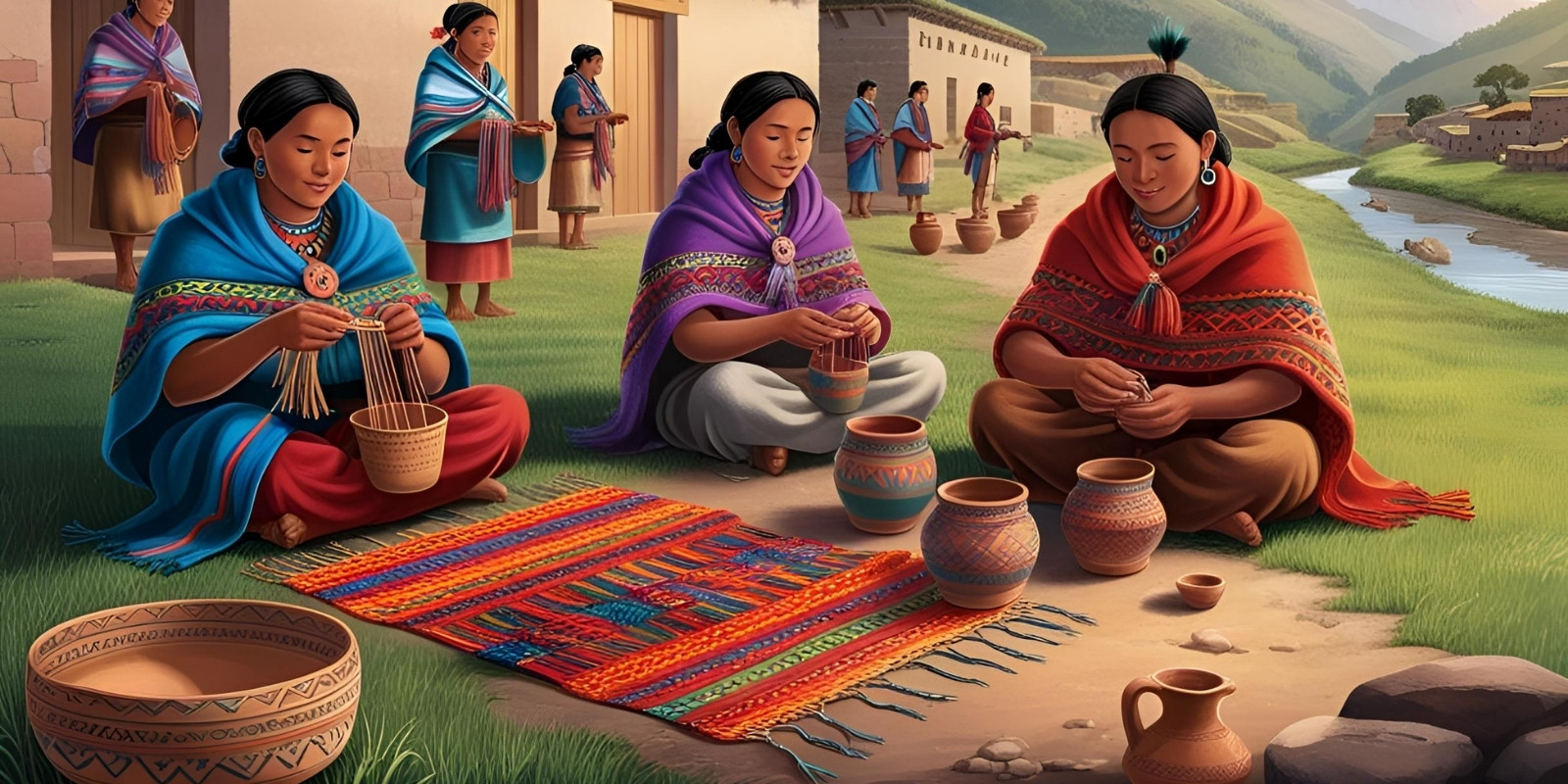
On the other hand, the Queen taught the women the trades of spinning and weaving cotton, wool and making clothes for themselves and for their husbands and children: she told them how to do the other jobs of household service. In short, the Incas did not leave anything pertaining to human life untaught to their first vassals, the Inca King becoming teacher of the men and the Coya Queen teacher of the women.
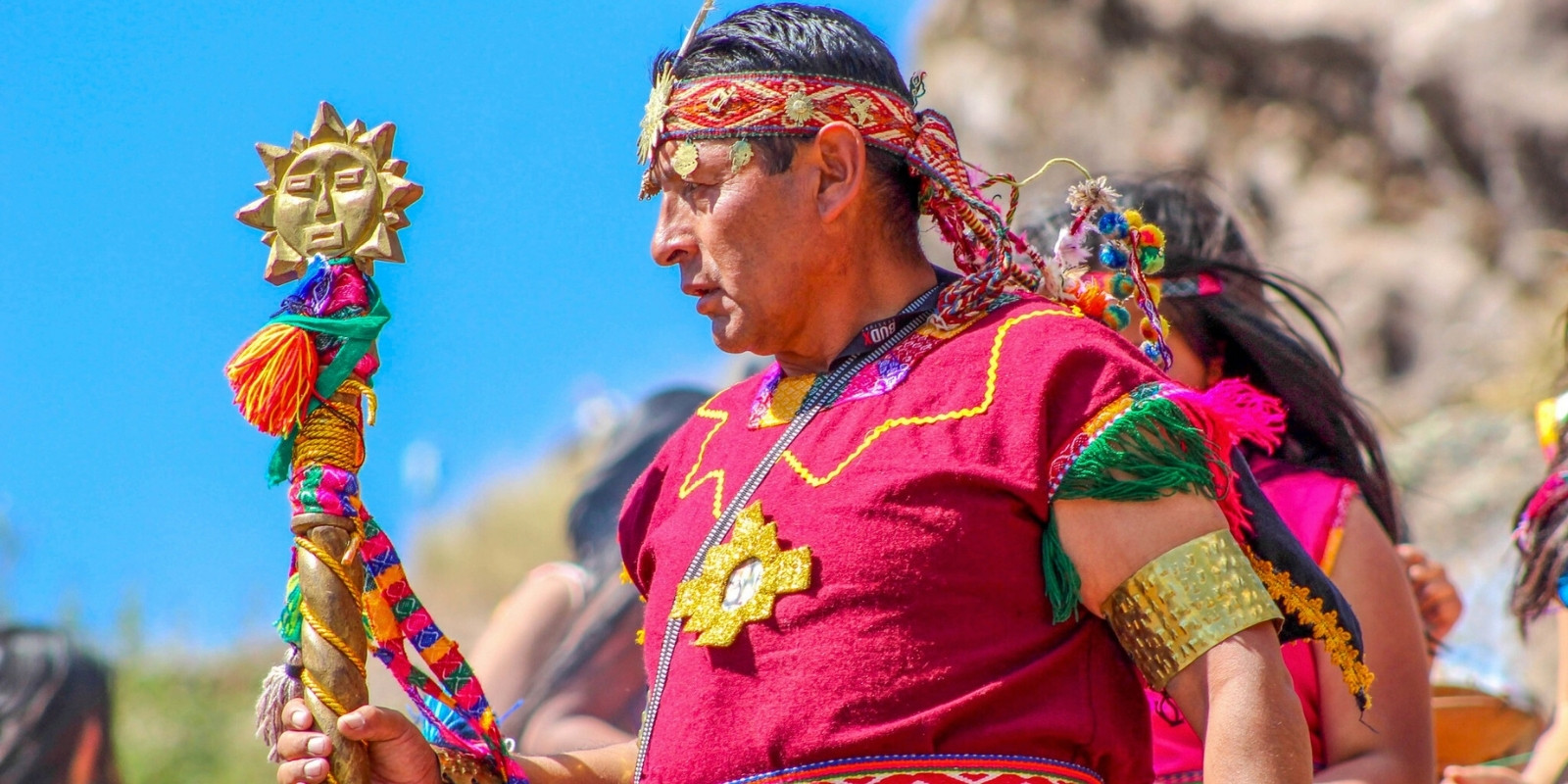
According to the account of the first chroniclers who arrived in the Inca empire, when asked about the origin of their culture, some of the natives told a legend about the Ayar brothers, who had come from the heart of the mountains, at the site of Pacaritambo, which is currently in the province of Paruro, at Pocarictambo, which is called the production house and is 105 km away. The story is as follows:
In Pacaritambo there is a hill called Tambotoco. There were three windows. From the last one came four men and four women, who were called brothers. They said that Viracocha had raised them to be lords. Their names were Mango Capac, Ayar Auca, Ayar Cache and Ayar Ucho; the women were Mama Ocllo, Mama Guaco, Mama Cura and Mama Raua. These eight brothers went to look for fertile land. Mango Capac had sexual intercourse with his sister Mama Ocllo. In a certain place the brothers made an agreement to remove one of the four brothers, Ayar Cache, because as he was fierce and strong and skilled with the sling and did mischief and cruel things, the brothers feared that because of bad company and mischief the company would break up and they would be left alone.
They told him to return to the window through which they had left and he was locked in. The brothers regretted what they did because as he was brave, he could face the war against eventual enemies. They cried for him. He was so strong that with each stone thrown he made a crack. The brothers agreed that Manco Capac would be the head of all; Ayar Uchu would remain as a guaca for his religion; and Ayar Auca would go to take possession of land where they sent him. They arrived at a place called Huanacauri, where they saw a guaca, and asked Ayar Uchu to remove it; but he remained stuck to the guaca. The brothers went to rescue him, but it was not possible to do so. He told them to go happily, that they would be great lords; but he asked them to pay for his will, in parties and ceremonies, to be honored and venerated; and he was turned into stone.
The Incas constituted him as a guaca and named him Ayar Uchu Huanacauri. The remaining brothers were sad for Ayar Uchu and for the death of Ayar Cachi. In the valley of Cuzco they knighted the son of Manco Capac, Sinchi Roca, and pierced his ears. Manco Capac saw a stone sign where the monastery of Santo Domingo is now and said to Ayar Auca: go there flying; wings grew on him; and he took possession of the place. But there he turned into stone. Finally, the Inca Maco Capac was the one who managed to found Cusco, and together with his descendants, he would create one of the most powerful empires in the Andes.