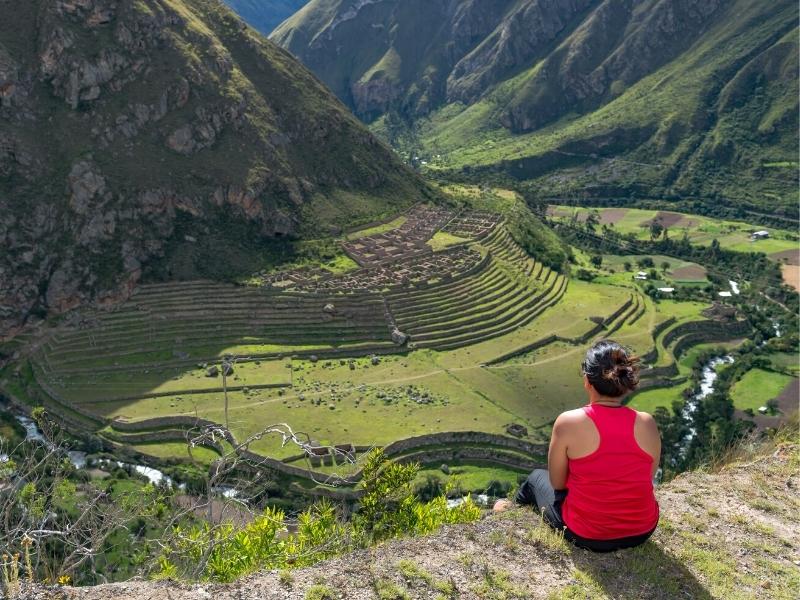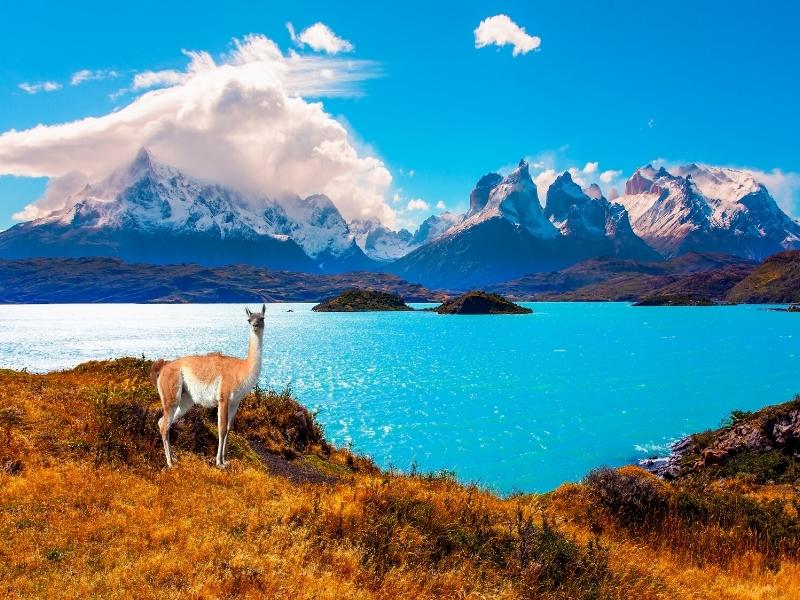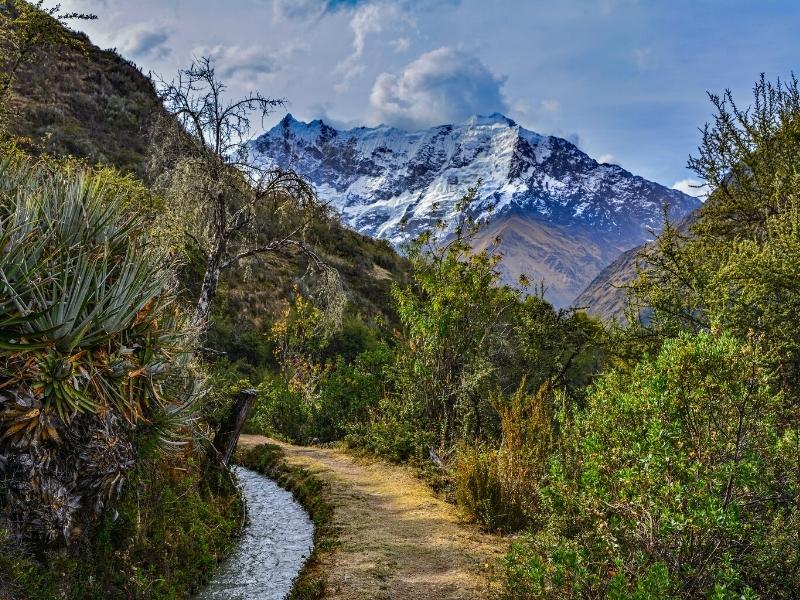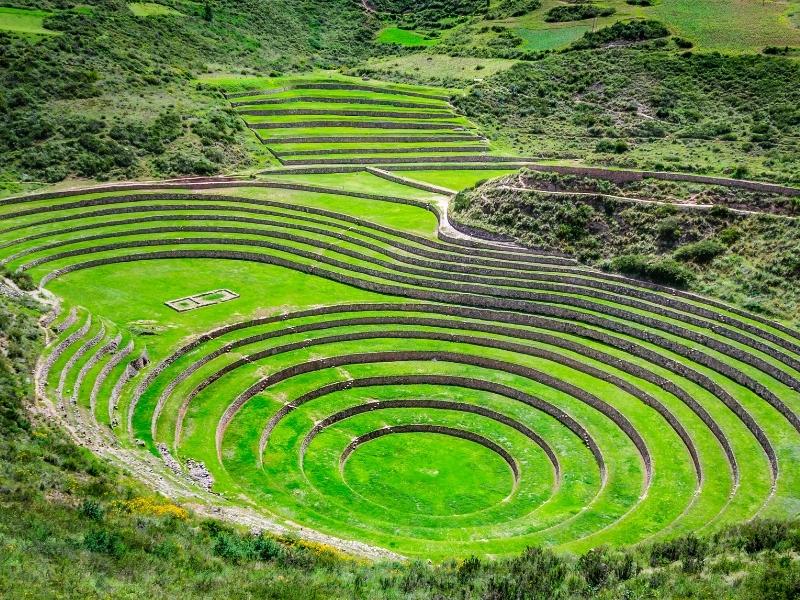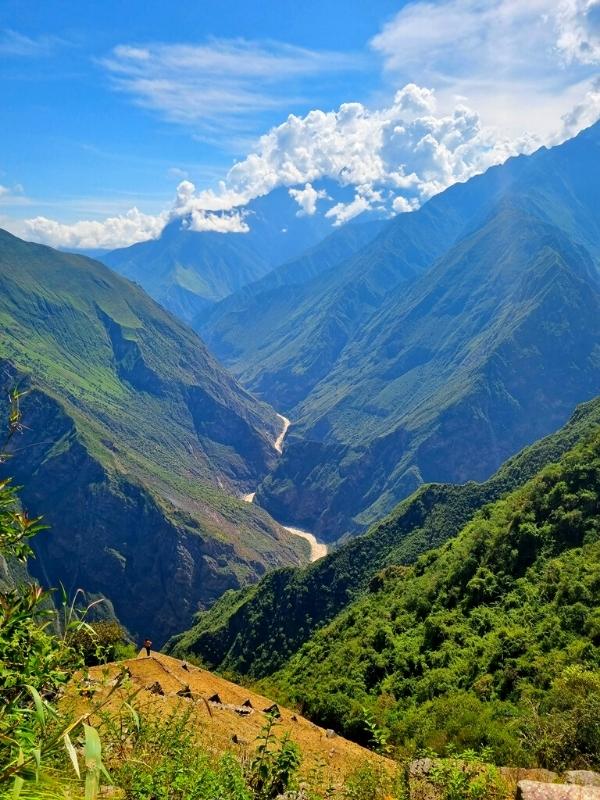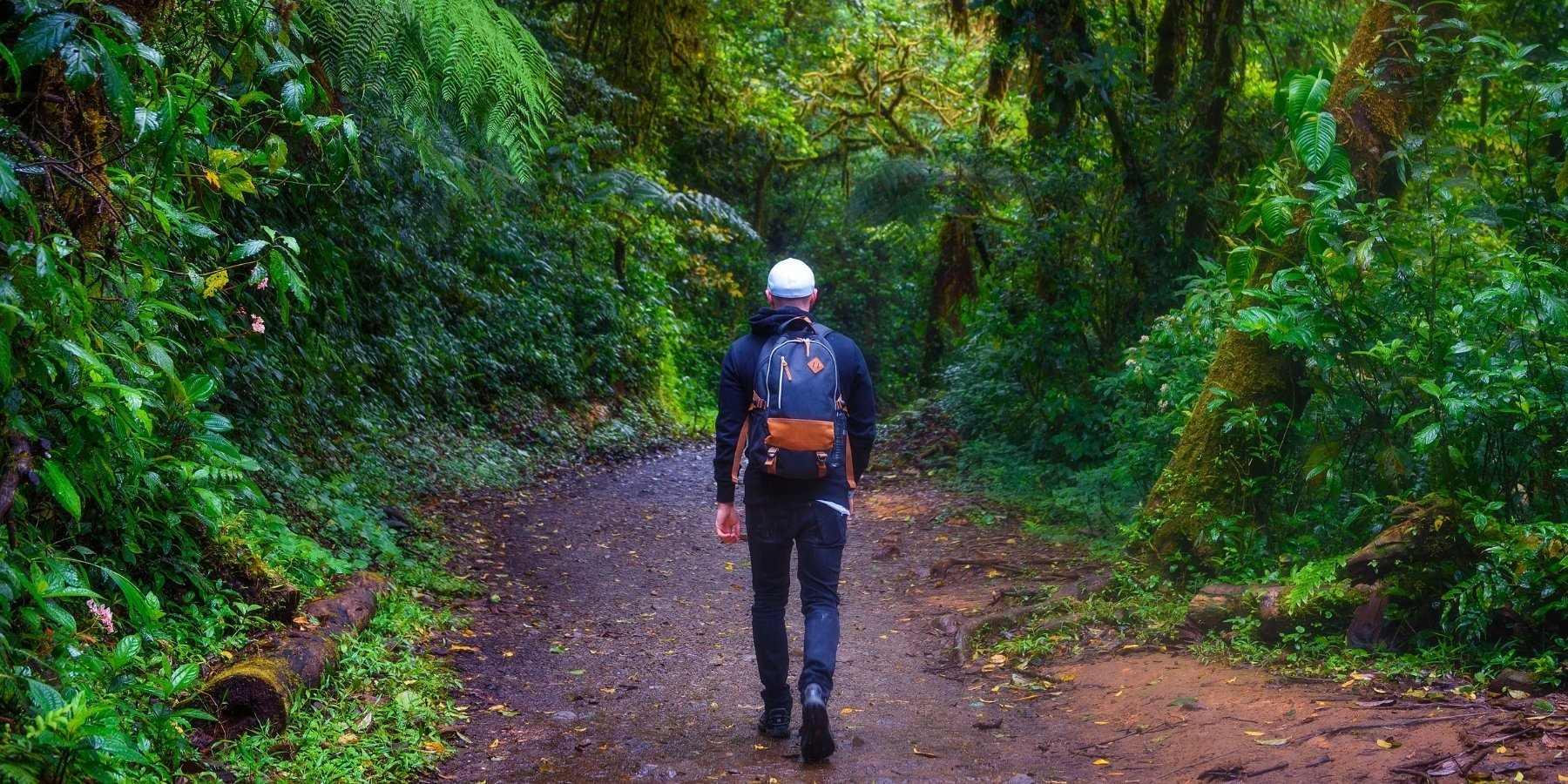
A comprehensive guide of Peru wildlife, notable for its numerous habitats. Peru is a dream destination for wildlife enthusiasts, boasting an astonishing variety of ecosystems that range from the arid Pacific coast to the snow-capped Andes and the lush Amazon rainforest. This incredible diversity supports an array of species, many of which are endemic and rare. Travelers can witness majestic Andean condors soaring over Colca Canyon, spot playful sea lions along the Ballestas Islands, or encounter pink river dolphins in the Amazon Basin. With over 1,800 species of birds, 500 mammals, and countless reptiles, amphibians, and insects, Peru offers some of the richest wildlife experiences in the world. This is one of the countries with many microclimates, thanks to the Andes mountain range, creating beautiful landscapes where flora and fauna flourish, scattering all sides of the mountains.
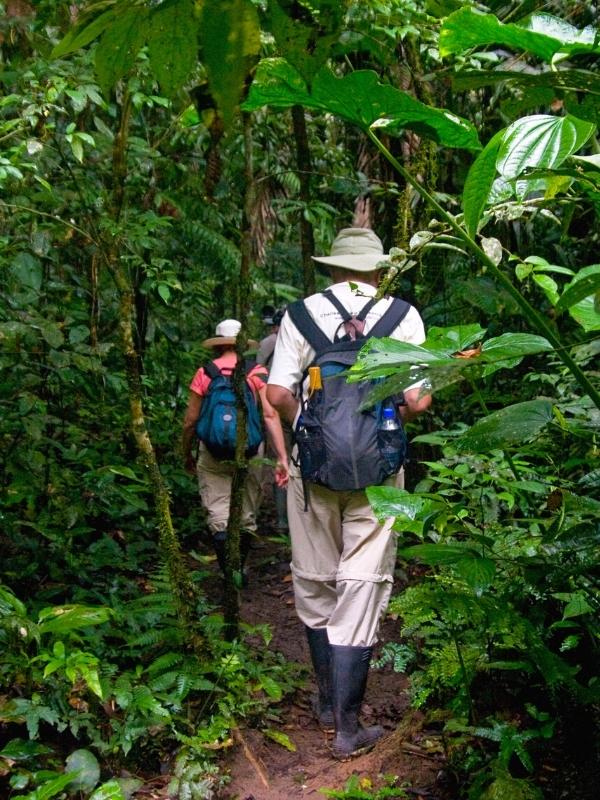
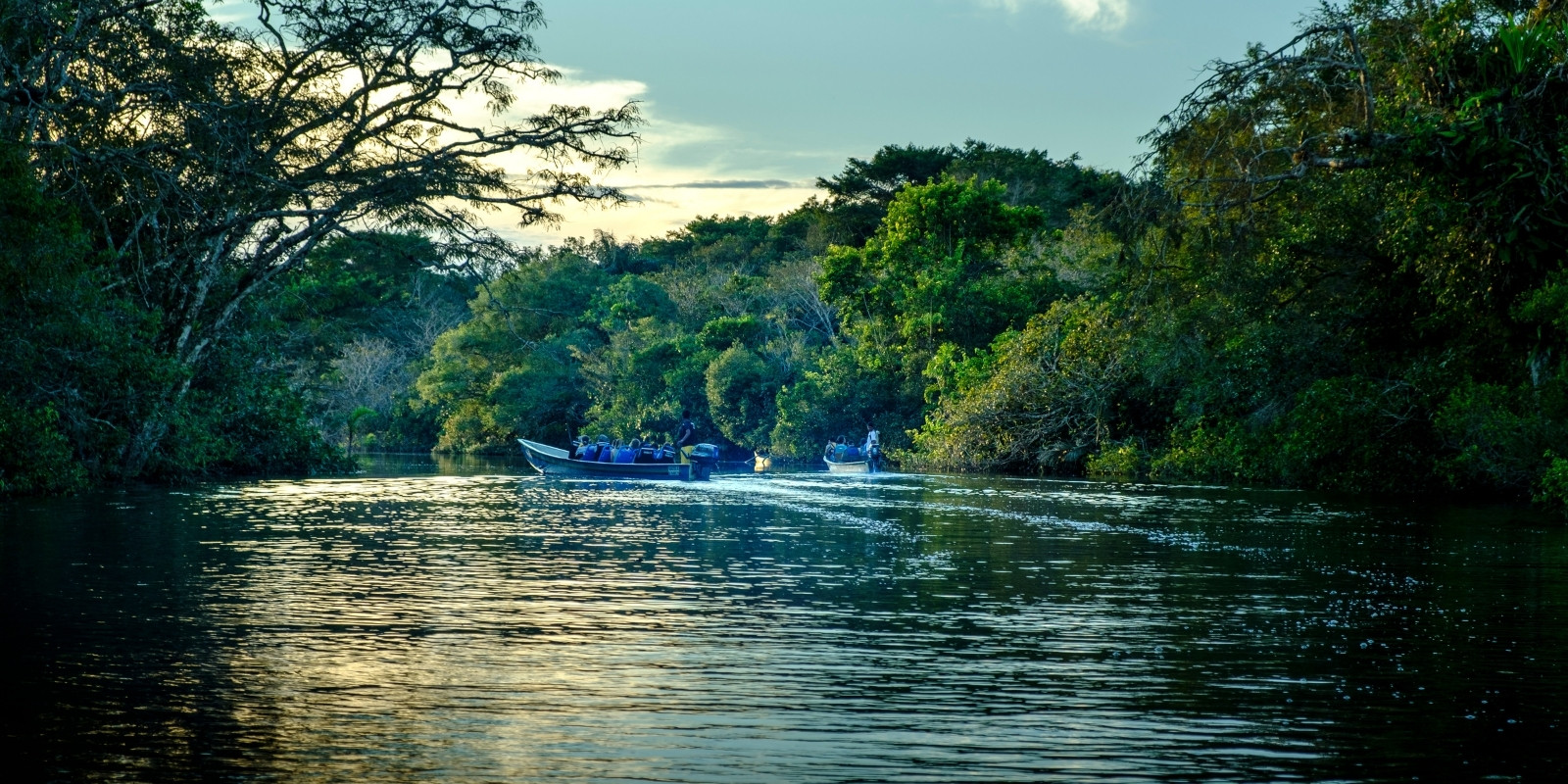
One of the most iconic regions for wildlife exploration is the Peruvian Amazon, which covers nearly 60% of the country’s territory. Manu National Park, a UNESCO World Heritage Site, is a biodiversity hotspot teeming with jaguars, giant otters, macaws, and hundreds of monkey species. Meanwhile, Tambopata National Reserve offers world-class clay lick sightings, where vibrant parrots and macaws gather to feed on mineral-rich soil. Navigating the Amazon’s rivers and trails with expert guides enhances your chances of encountering rare creatures while learning about the delicate balance of this vital ecosystem. Eco-lodges and sustainable tourism initiatives ensure that your visit contributes to preserving this natural wonder for future generations.
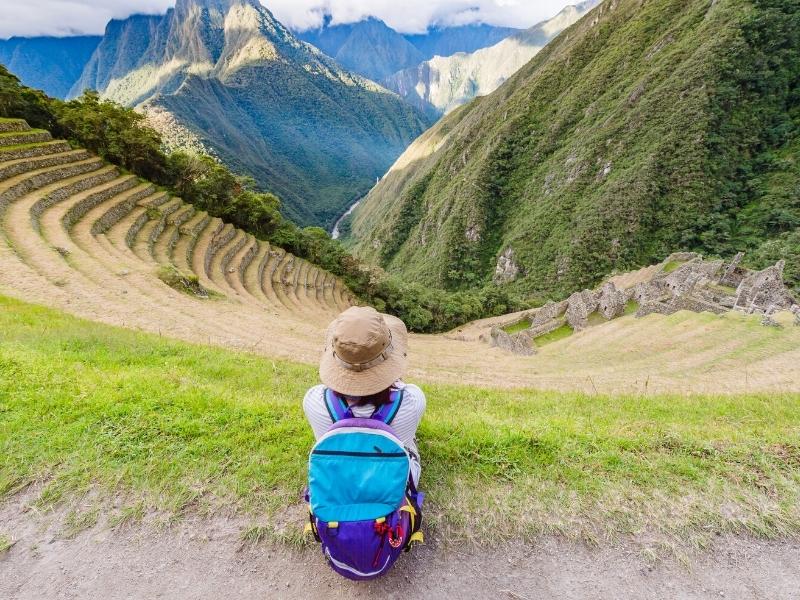
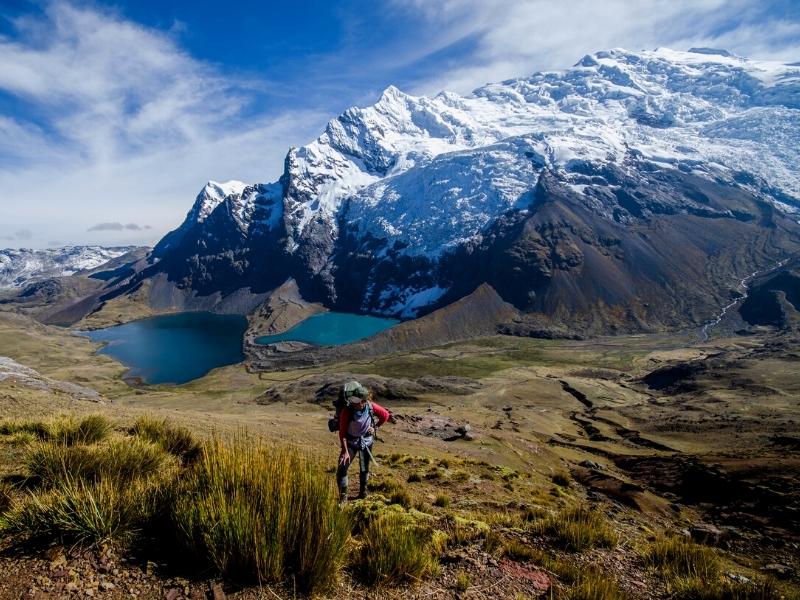
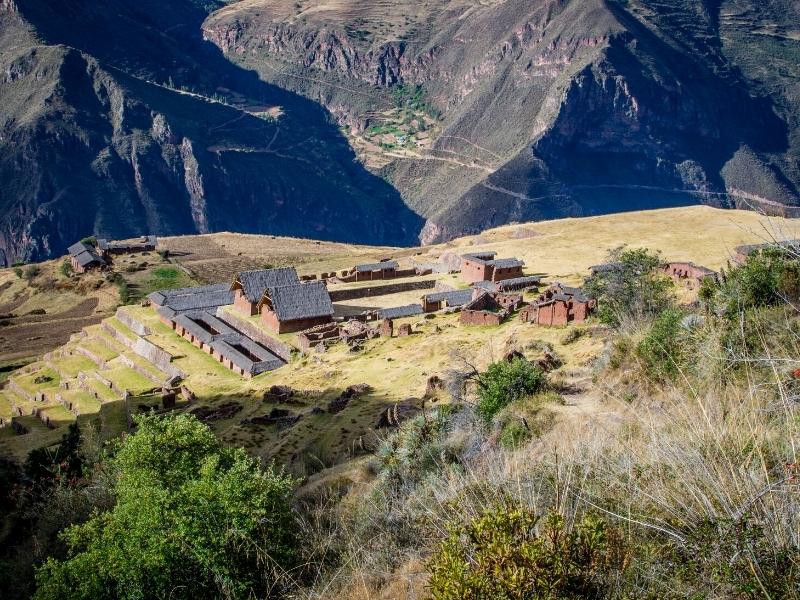
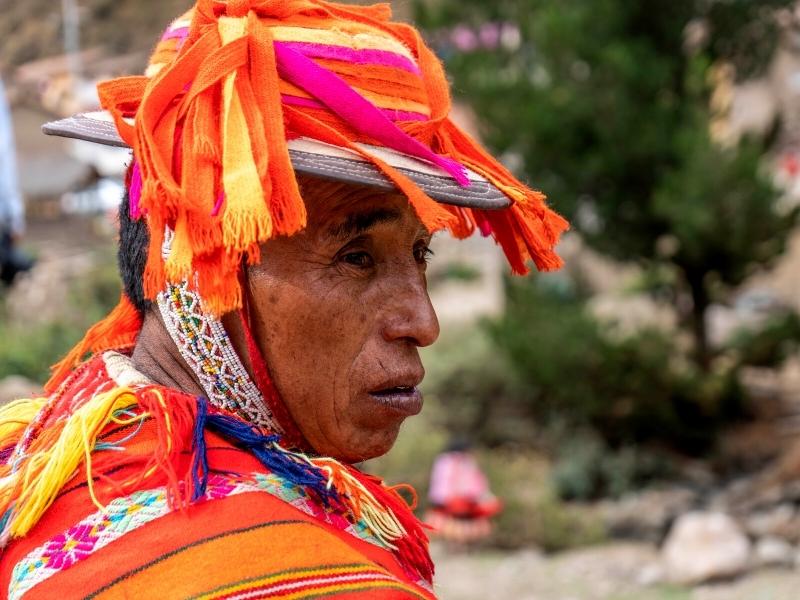
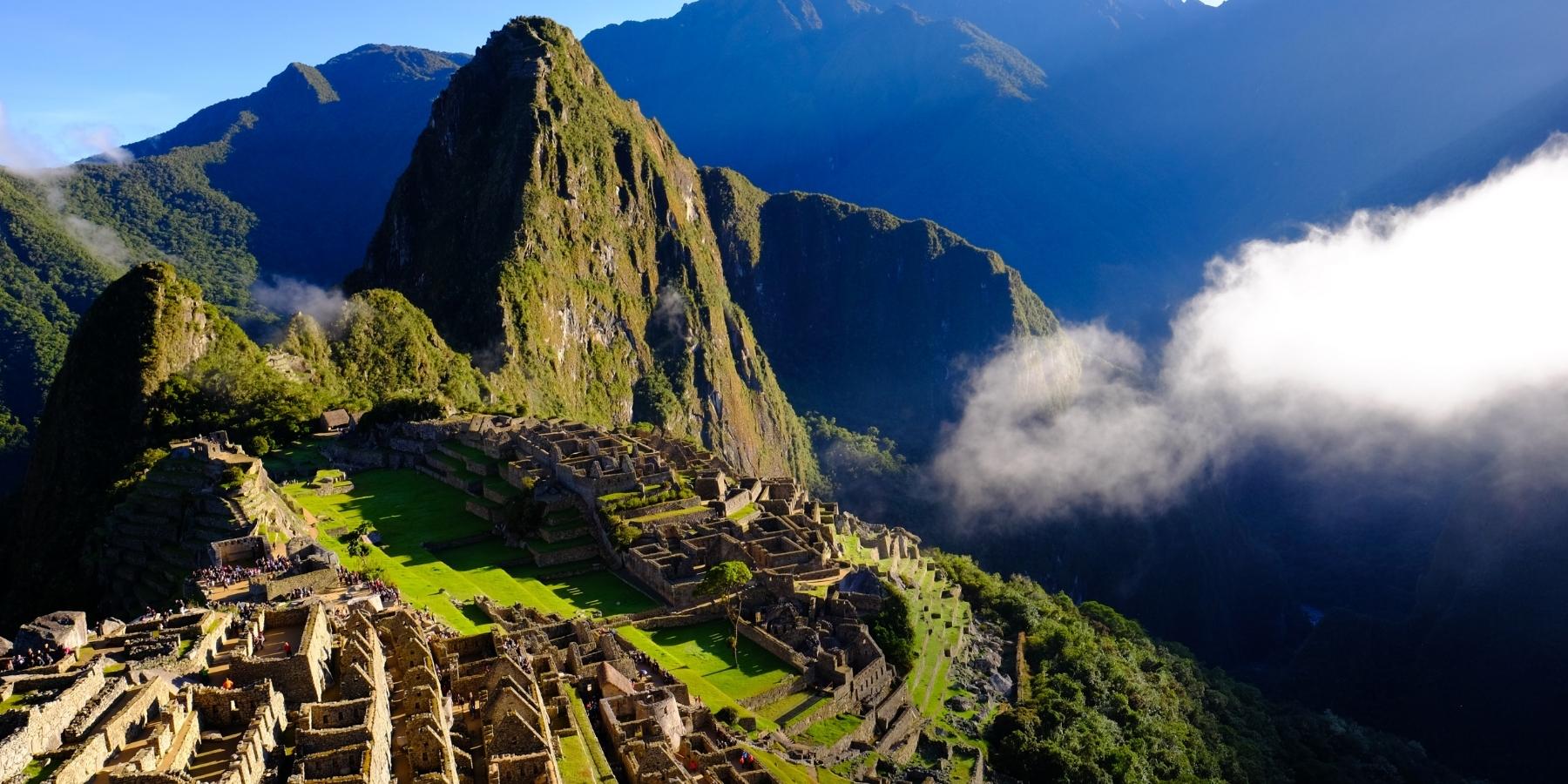
The Andes Mountains provide a dramatic contrast to the Amazon, with high-altitude species adapted to extreme conditions. The elusive spectacled bear, Peru’s only native bear species, roams the cloud forests of Chaparrí and the slopes of Huascarán National Park. Birdwatchers flock to the Sacred Valley and Machu Picchu’s surrounding forests to spot the dazzling Andean cock-of-the-rock and the giant hummingbird. Meanwhile, Lake Titicaca, the world’s highest navigable lake, is home to unique aquatic wildlife, including the Titicaca water frog and countless migratory birds. Trekking through these landscapes not only offers thrilling wildlife encounters but also immerses travelers in ancient indigenous cultures that have lived in harmony with nature for centuries.
The Peruvian rainforest, part of the vast Amazon, is one of the most biologically diverse regions on the planet. It is home to an incredible variety of flora and fauna species, many of them endemic, meaning they are found nowhere else in the world. The Amazon forests are a unique ecosystem, with a territory of 5.5 million square kilometers that is home to 2,500 tree species, 40,000 plant species, 427 mammal species, 1,294 bird species, 378 reptile species, 427 amphibian species, and nearly 3,000 fish species.
The Amazon is a treasure for humanity: the result of millions of years of constant ecological interaction. The daily practice of pollination, the dispersal of fruits and seeds, predation, and other forms of coevolutionary interactions have generated, over time, a diversity of inputs that humans have learned to domesticate. This region is the source of the cacao beans that produce chocolate, the cassava roots that feed billions of people living in poverty, and many other crops and medicines. Furthermore, this region acts as a green lung, absorbing large amounts of carbon dioxide and producing oxygen, making it a key element in the fight against climate change.
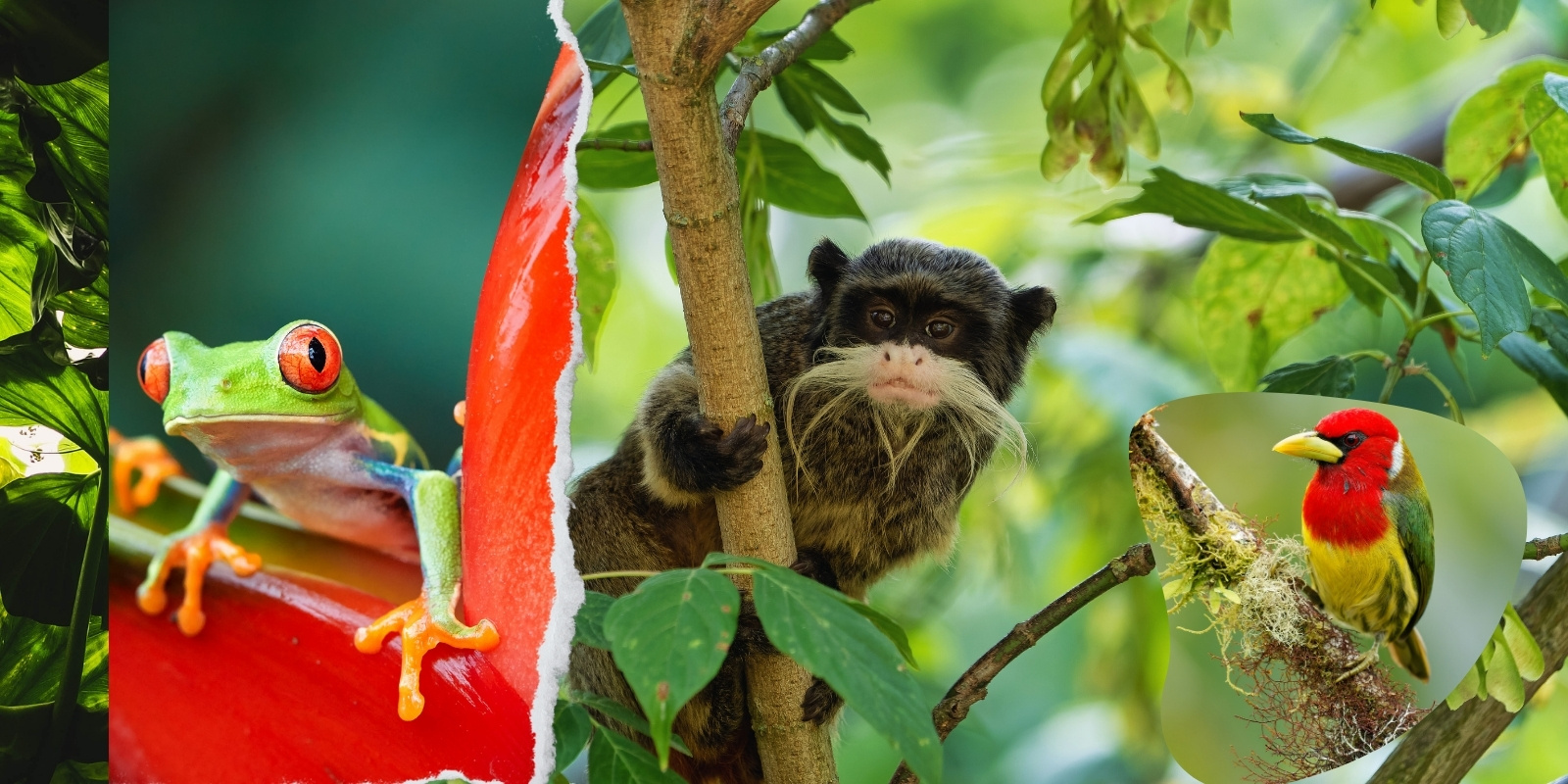
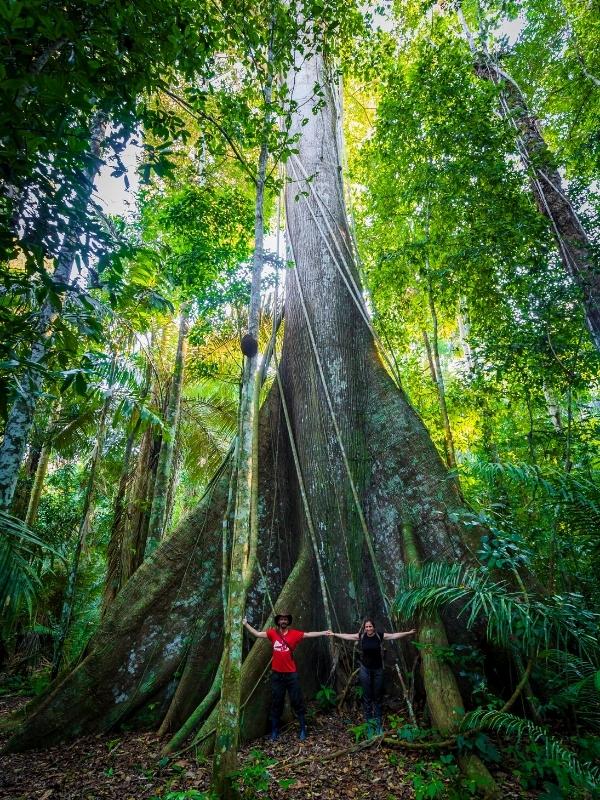
The Peruvian rainforest is home to one of the greatest plant diversity in the world, with more than 25,000 recorded species of flora, many of them endemic. Among the giants of the jungle are trees such as the lupuna (Ceiba pentandra), which grows to over 70 meters tall, and the cedar (Cedrela odorata), highly valued for its wood. Also prominent is the mahogany (Swietenia macrophylla), a species threatened by illegal logging. In the jungle canopy, orchids bloom in an explosion of color, with Peru being one of the countries with the greatest variety, including species such as the Sobralia altissima and the Phragmipedium kovachii, one of the rarest in the world.
Medicinal plants play a crucial role in Indigenous culture. Cat’s claw (Uncaria tomentosa) is known for its immunostimulant properties, while ayahuasca (Banisteriopsis caapi) is fundamental in shamanic rituals for its psychoactive effects. Furthermore, chacruna (Psychotria viridis) and sangre de grado (Croton lechleri), with their healing properties, are widely used in traditional medicine. In swamps and floodplains, the aguaje (Mauritia flexuosa) grows, a palm tree whose fruits are rich in vitamins and essential to the Amazonian diet.
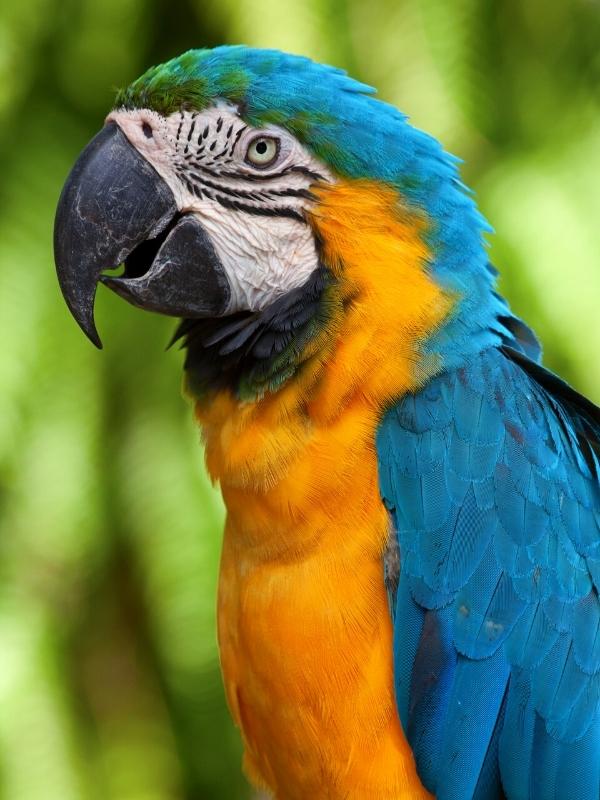
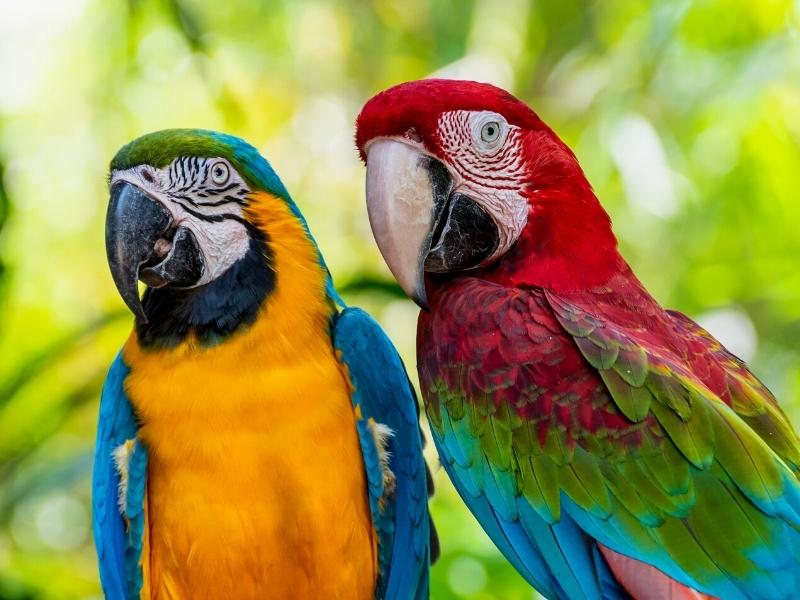
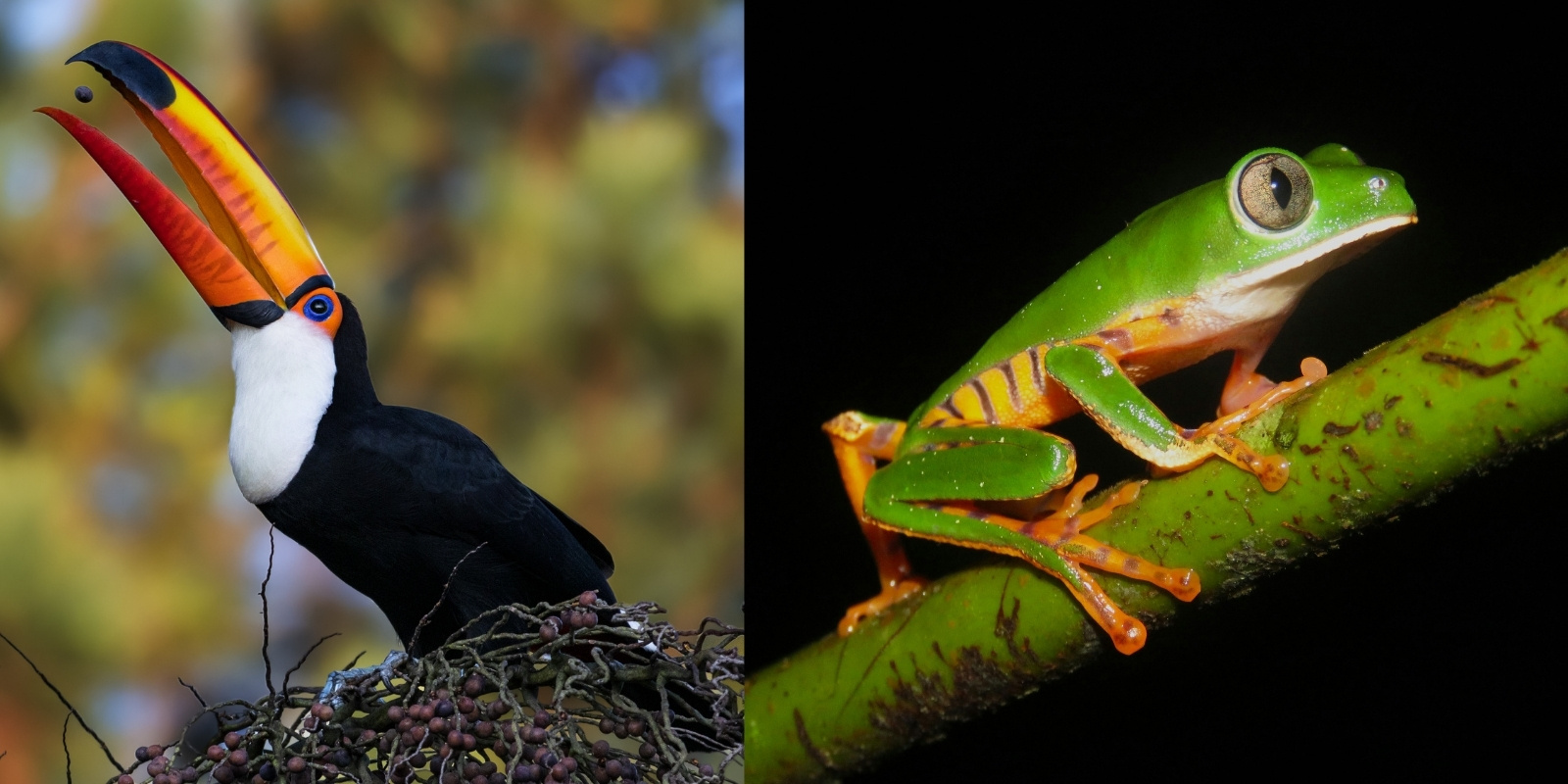
Peru is one of the countries with the greatest bird diversity, and the jungle is home to spectacular species such as the blue-and-yellow macaw (Ara ararauna), the harpy eagle (Harpia harpyja), the most powerful aerial predator in the Amazon, and the hoatzin (Opisthocomus hoazin), known as the “prehistoric bird” for its unique digestive system. Hummingbirds, such as the spoonbill hummingbird (Loddigesia mirabilis), endemic to Peru, dazzle with their vibrant colors.
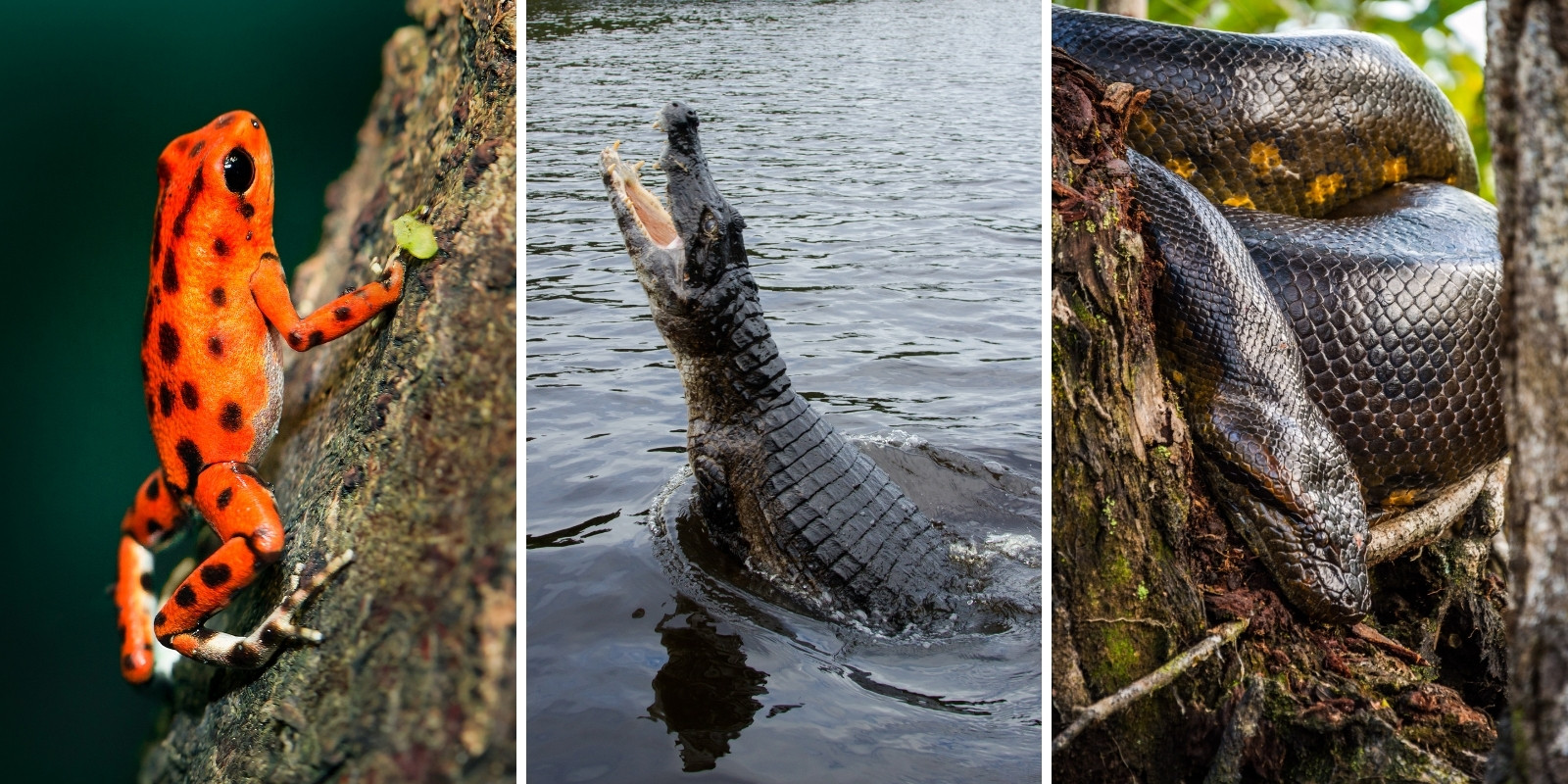
Among amphibians, poison dart frogs (Dendrobatidae) stand out for their bright hues, which warn of their toxicity. The glass frog (Hyalinobatrachium valerioi), with its transparent skin, is one of the most unusual. As for insects, the Peruvian rainforest is home to everything from blue morpho butterflies (Morpho menelaus), with their iridescent wings, to titan beetles (Titanus giganteus), one of the world’s largest insects. Leaf-cutter ants (Atta spp.) and stingless beetles (Meliponini) play key ecological roles in pollination and nutrient recycling.
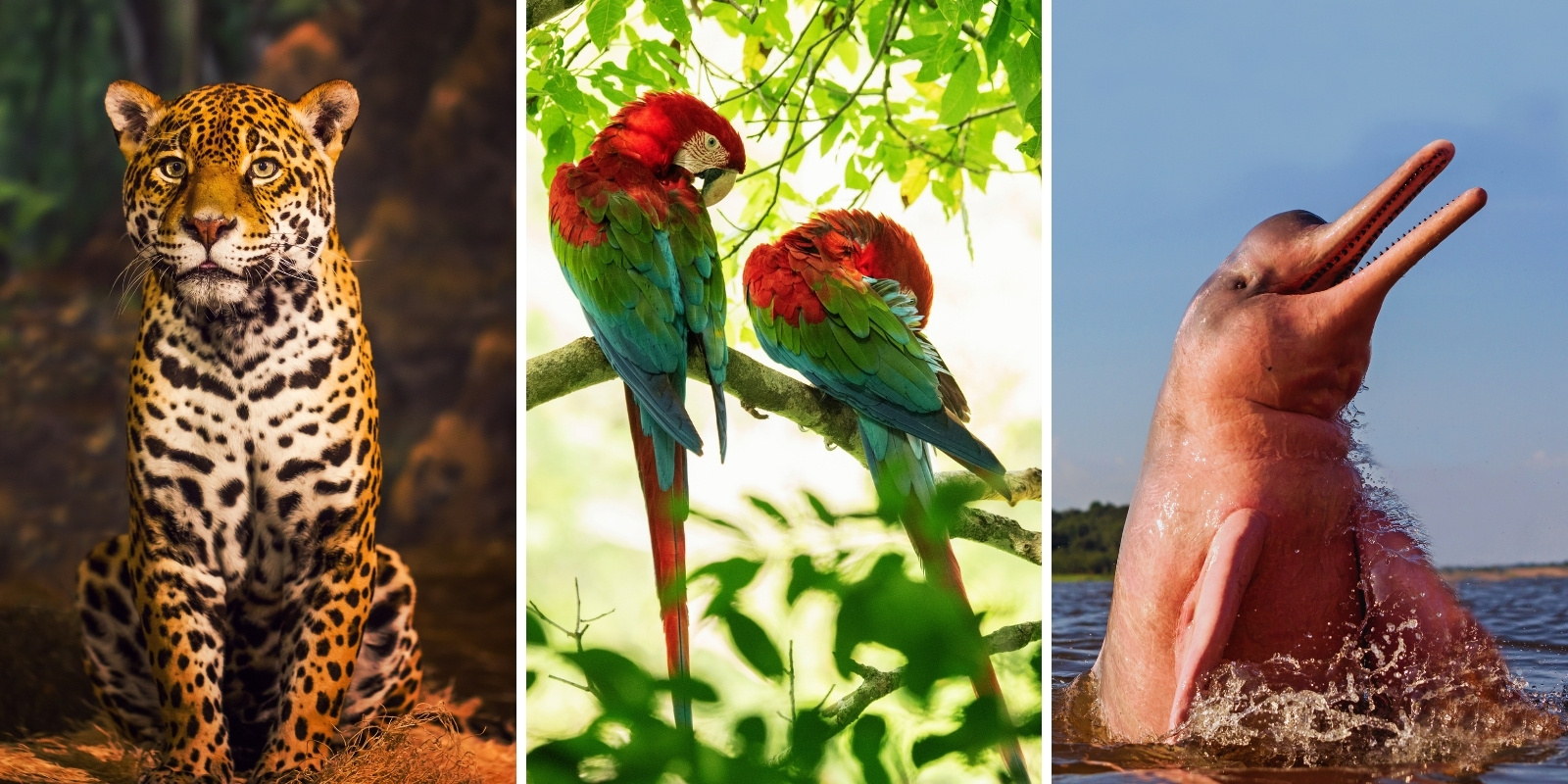
The jaguar (Panthera onca): The largest feline in the Americas and an emblematic predator of the Peruvian Amazon rainforest. It primarily inhabits protected areas such as Manu National Park, the Tambopata National Reserve, and the Pacaya-Samiria National Reserve, where it can be seen near rivers and lagoons during the dry season (June to November). This solitary and territorial hunter feeds on prey such as caimans, capybaras, and fish, and is noted for its strength and swimming ability.
Pink River Dolphins (Inia geoffrensis): Also known as the boto or Amazon river dolphin, this is an iconic species of the Peruvian rainforest rivers. With its distinctive pink color (more intense in adult males) and flexible body, it adapts perfectly to freshwater courses, including the Amazon, Ucayali, and Marañón. Unlike marine dolphins, it has an elongated snout, small humps instead of dorsal fins, and great mobility to navigate through flooded trees. According to Amazonian mythology, it transforms into a seductive man (“bufeo colorado”) at night.
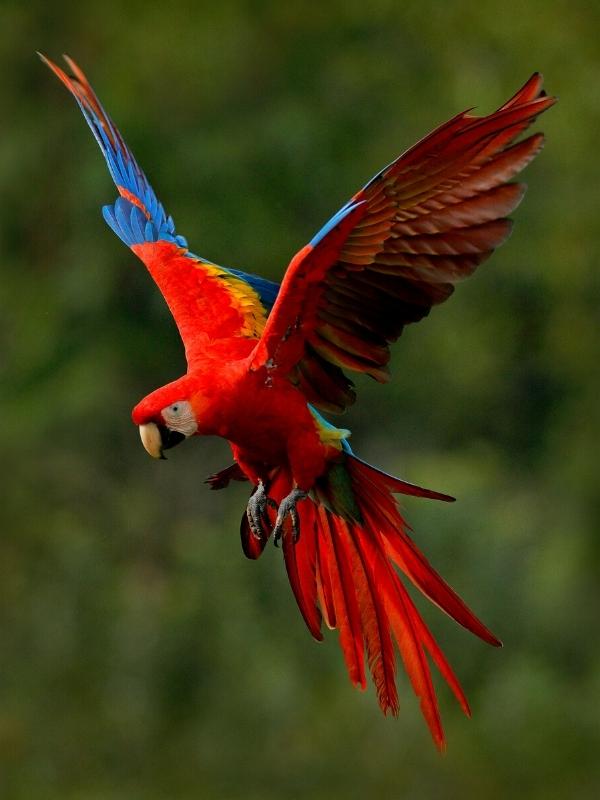
Macaws and Parrots: Parrots and macaws are emblematic birds of the Peruvian Amazon, recognized for their vibrant colors and their ecological role as seed dispersers. In Peru, species such as the scarlet macaw (Ara macao), the blue-and-yellow macaw (Ara ararauna), and the blue-headed parrot (Amazona festiva) stand out, living in tropical forests and areas near rivers. One of the best ways to observe them is to visit the clay licks (colpas) in reserves such as Tambopata or Manu, where hundreds of these birds gather to consume minerals that neutralize toxins in their diet.
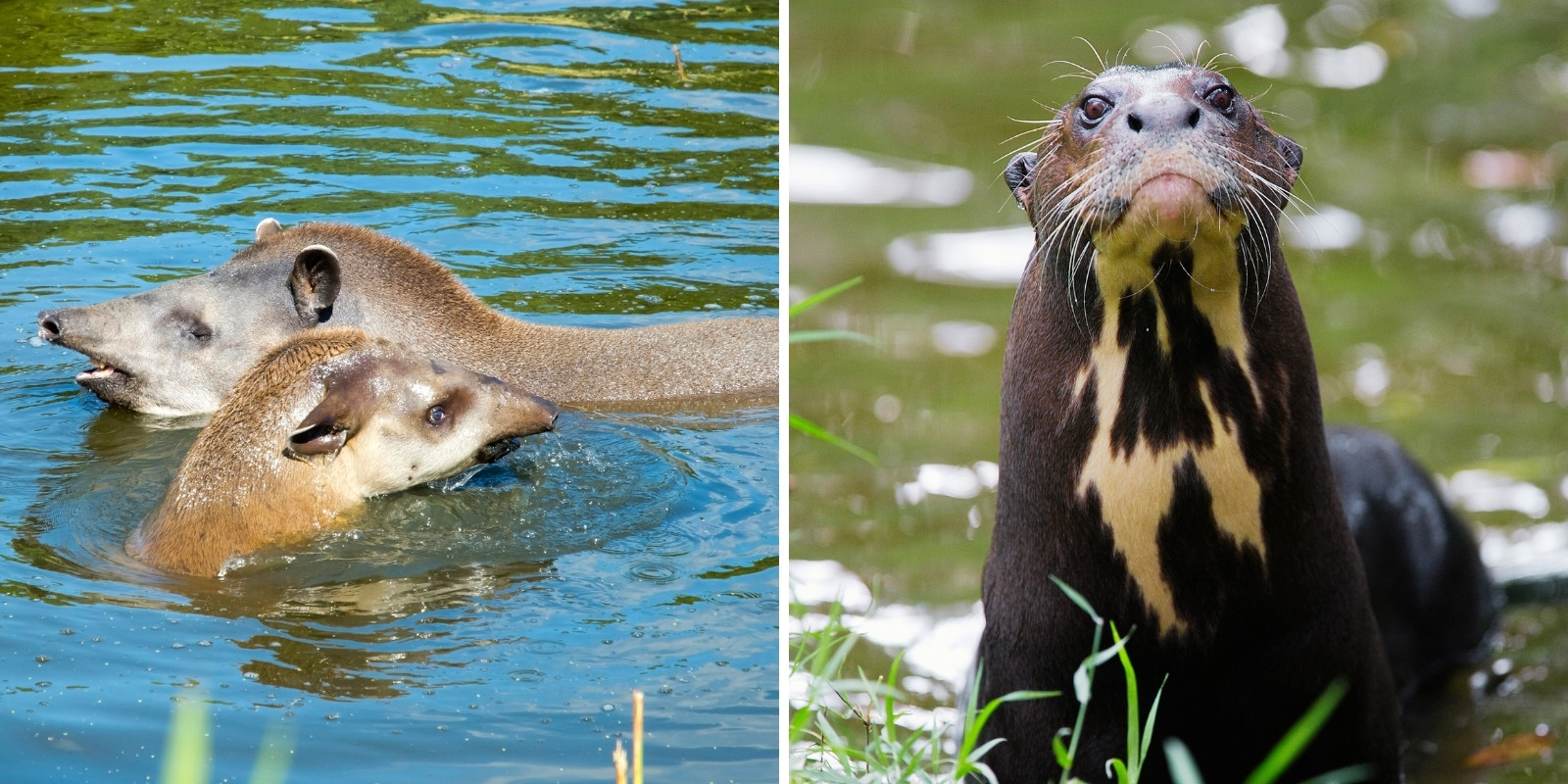
Giant river otter (Pteronura brasiliensis): Known in Peru as the giant river otter, this is the world’s largest mustelid and one of the most charismatic predators in the Amazon. Endemic to the rivers and lagoons of the Peruvian lowland rainforest, such as Madre de Dios and Loreto, it is distinguished by its size (up to 1.8 meters), its brown fur with white markings on the throat, and its social behavior, living in family groups of up to 10 individuals. A key species in the ecosystem, it regulates fish and caiman populations, but is endangered due to poaching (for its fur in the 20th century), habitat loss, and mercury contamination.
The terrestrial tapir (Tapirus terrestris): Known in Peru as sachavaca (“forest cow”), this is the largest terrestrial mammal in the Peruvian Amazon and a key ecosystem engineer. With its distinctive elongated snout and robust body (up to 250 kg), this nocturnal herbivore inhabits humid forests and areas near rivers in Madre de Dios, Loreto, and Ucayali, where it disperses seeds and maintains forest diversity. Although shy and solitary, it leaves traces such as three-toed footprints and trails in the vegetation. Reserves such as Tambopata and Manu are critical refuges, where spotting it—often in salt marshes or clay pits—requires patience and luck, but reveals the health of the forest.
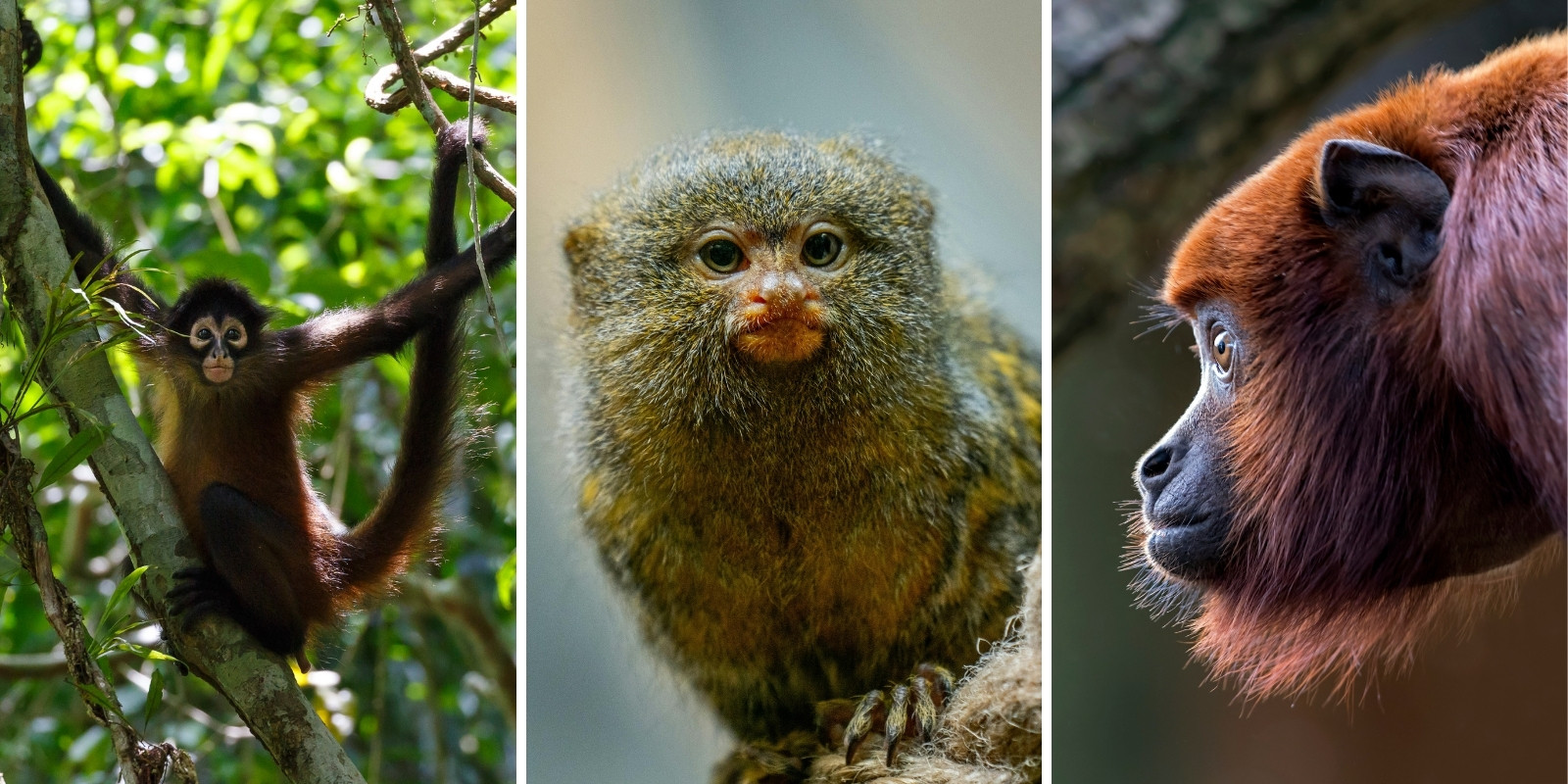
The Red Howler Monkey (Alouatta seniculus), also known as the Red Howler Monkey in Peru, is a primate with reddish fur that lives in the Peruvian Amazon (Loreto, Ucayali, Madre de Dios, and San Martín). It is known for its loud howls, audible for miles, which it uses to mark its territory. Its diet is primarily folivorous (leaves, fruits, and flowers), and it lives in groups of 5 to 15 individuals in humid forests near rivers. Although not critically endangered, it faces threats from deforestation and hunting. It is a symbol of Amazonian biodiversity, but requires protection from human encroachment.
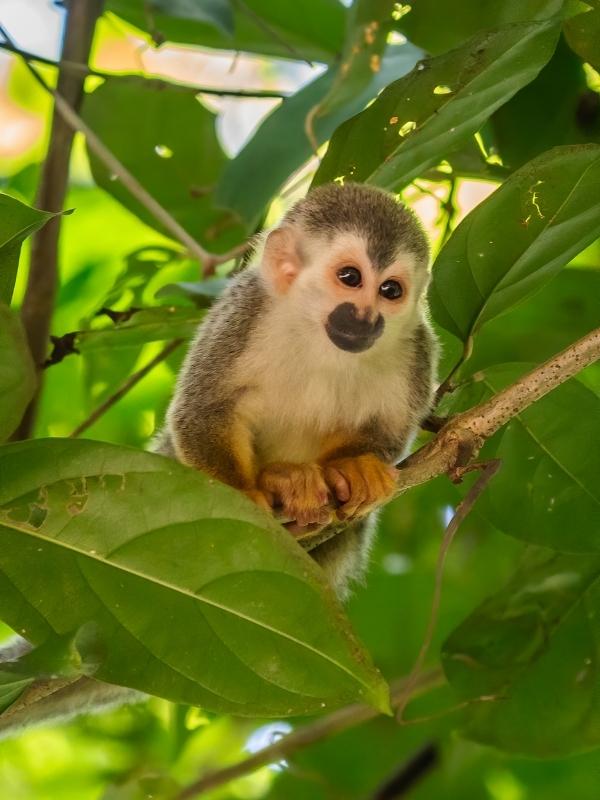
The Squirrel Monkey (Saimiri sciureus), known in Peru as the Red Howler Monkey or Ardilla Monkey, is a small primate (25–35 cm, tail 35–45 cm) that lives in the Peruvian Amazon. With short, yellowish fur and a white face and dark areas around the eyes, it feeds on fruits, insects, and small vertebrates. It lives in large social groups of up to 50 individuals and is very agile, moving quickly through the trees.
The Spider Monkey (Ateles chamek), known in Peru as the “Mono Araña,” is a primate with long limbs and a prehensile tail that lives in the Peruvian Amazon (Loreto, Madre de Dios, Ucayali). With black or dark brown fur, it feeds primarily on ripe fruits, seeds, and leaves, and is key for seed dispersal in the forest. It lives in small groups and is highly arboreal, moving nimbly through the treetops.
The Pygmy Marmoset (Cebuella pygmaea), known in Peru as the “Leoncillo” or “Mono de Bolsillo,” is the smallest primate in the world (12–15 cm body, 15–20 cm tail; 90–150 g). Endemic to the Peruvian Amazon (Loreto, Ucayali, Madre de Dios), it inhabits riparian forests and areas with abundant tree sap, its main food (exudative habit). It supplements its diet with insects and fruits. It lives in family groups of 2–9 individuals, communicating through high-pitched ultrasonic vocalizations.
The Harpy Eagle (Harpia harpyja), known in Peru as the Águila Arpía, is the most powerful bird of prey in the Peruvian Amazon (Loreto, Madre de Dios, Ucayali). With a wingspan of up to 2 meters and 13 cm talons (the longest among eagles), it is an apex predator that hunts monkeys, sloths, and arboreal birds. It builds nests in emerging trees (>40 m tall) and has a low population density (1 pair/75 km²).
The Hoatzin (Opisthocomus hoazin), known as Shansho in Peru, is a folivorous bird endemic to the Amazonian wetlands (Loreto, Ucayali, Madre de Dios). It is notable for its unique digestive system among birds, with bacterial fermentation in the crop (similar to that of ruminants), which allows it to metabolize toxic leaves, generating a characteristic odor (“bird dung”). The chicks have claws on their wings (an ancestral trait) for climbing.
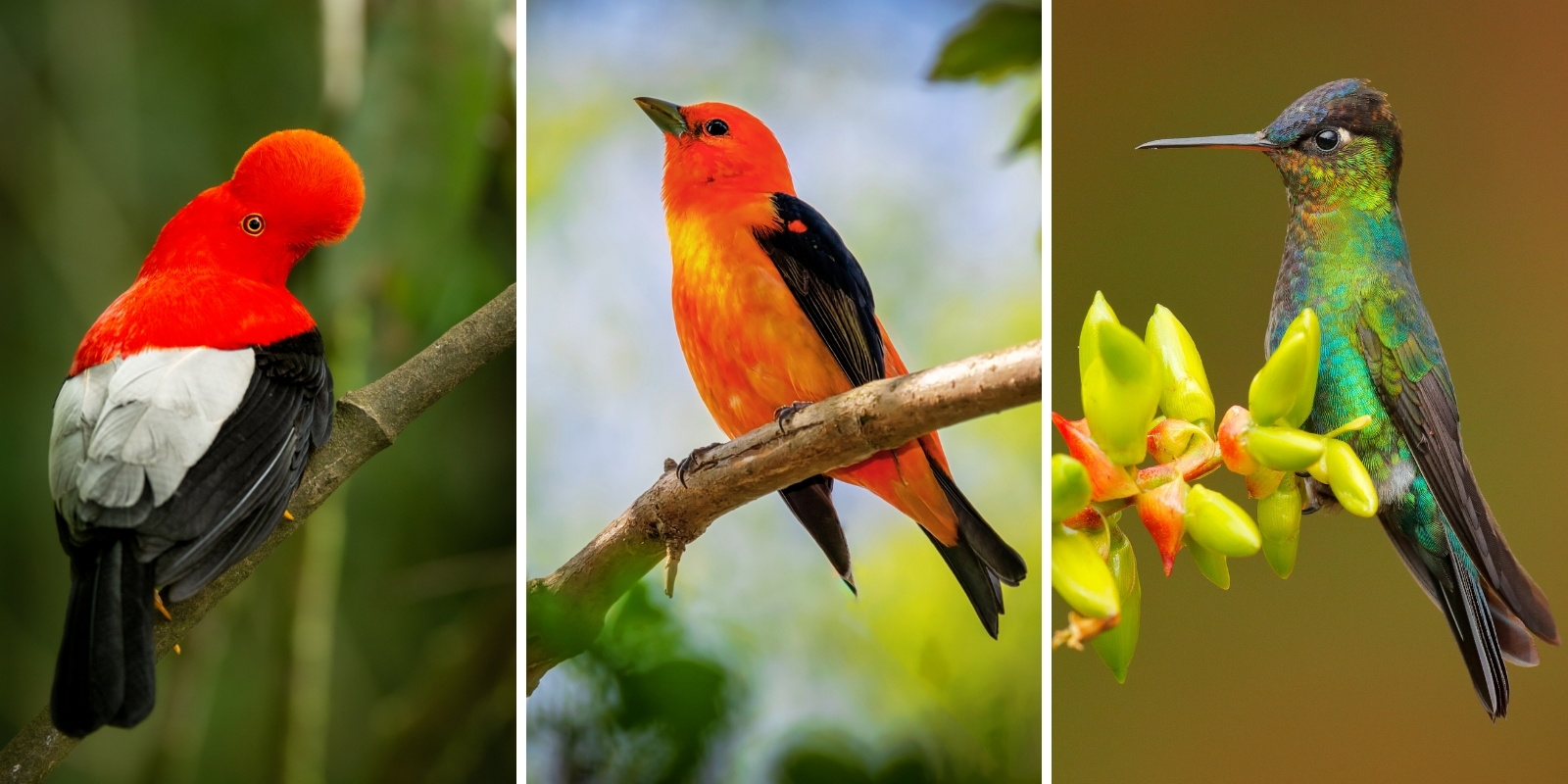
The Cock-of-the-Rock (Rupicola peruvianus), Peru’s national bird, is an emblematic species of the Andean cloud forests (between 500 and 2,400 meters above sea level). Males display bright orange plumage with a rounded crest, while females are brown. Their mating ritual (lek) is spectacular: groups of males perform jumps, whistles, and vocal competitions in communal display areas. They feed primarily on wild fruits (it is key in seed dispersal).
Hummingbirds (family Trochilidae) are a diverse group in Peru, with more than 120 recorded species (about 40% of all species worldwide). They range from the coast to the Andes and the Amazon, with endemic species such as the Marvelous Hummingbird (Loddigesia mirabilis), unique in its unique tail feathers, and the Giant Hummingbird (Patagona gigas), the largest of the family (22 cm). These birds play a vital ecological role as pollinators, with beaks and tongues adapted to specific flowers.
Tanagers (family Thraupidae) are a diverse group of Neotropical birds that are remarkably rich in Peru, with more than 140 recorded species, distributed from the dry forests of the coast to the Amazon rainforest and the Andes. These birds stand out for their vibrant coloration, with plumage combining blues, greens, reds, and yellows, such as the spectacular Paradise Tanager (Tangara chilensis) or the Red-backed Tanager (Ramphocelus dimidiatus). Their diet is primarily frugivorous, although some species also consume insects, thus contributing to seed dispersal and ecosystem balance. Many species are endemic to specific regions, such as the Blue-headed Tanager (Stilpnia cyanicollis), common in cloud forests. In Peru, protected areas such as Manu National Park and the Tambopata National Reserve are key to their conservation. Furthermore, their presence in gardens and urban green areas, especially in regions such as Cusco and San Martín, makes them important ambassadors of Peruvian biodiversity.
The Black Caiman (Melanosuchus niger), known in Peru as the Caimán Negro, is the largest predator in the Peruvian Amazon rivers (Loreto, Ucayali, Madre de Dios), reaching up to 6 meters in length and weighing up to 500 kg. This species is distinguished by its dark skin with gray bands on the flanks and its large eyes, adapted for nocturnal hunting. As an apex predator, it regulates populations of fish, aquatic birds, and mammals, even controlling invasive species such as the needle-nosed crocodile (Crocodylus acutus). Although its bite is one of the most powerful in the animal kingdom, it rarely attacks humans.
The Black Caiman is critically dependent on healthy wetlands and abandoned oxbow lakes. In Peru, its conservation benefits from protected areas such as the Pacaya-Samiria National Reserve and the Bahuaja-Sonene National Park, where its population is recovering. A fascinating fact: females carry their young in their mouths to protect them, a behavior unique among Neotropical crocodiles.
The Anaconda (genus Eunectes) is one of the largest and most emblematic snakes of the Peruvian Amazon, where two species live: the Green Anaconda (Eunectes murinus), the largest (which can exceed 8 meters and weigh 200 kg), and the Yellow Anaconda (Eunectes beniensis), endemic to the Madre de Dios basin. These semi-aquatic snakes are found in the swamps, slow-flowing rivers, and marshes of Loreto, Ucayali, and Madre de Dios. They are apex predators, capable of hunting large prey such as deer, capybaras, and caimans using their constricting power. Despite their fearsome reputation, attacks on humans are extremely rare. The conservation of anacondas in Peru is linked to the protection of Amazonian wetlands. Areas such as the Pacaya-Samiria National Reserve and Manu National Park are key refuges for these snakes.
Poison Dart Frogs
The Peruvian Amazon is home to several highly toxic frog species, primarily from the Dendrobatidae family, known as poison dart frogs. These frogs, such as the Phyllobates terribilis (golden poison frog) and Ameerega picta, secrete potent alkaloid toxins through their skin, which indigenous peoples have historically used to poison blowdart tips for hunting. Their bright colors (aposematic coloration) warn predators of their toxicity, with some species containing enough batrachotoxin to kill 10 humans. Toxin potency varies by diet, with wild frogs being far more toxic than captive ones due to their consumption of toxic ants and mites.
These frogs vary in toxicity, with some posing serious risks to predators (and humans if handled), while others have milder toxins. Many are threatened by habitat destruction and the illegal pet trade. The most important species of dart frogs:
Ranitomeya reticulata (Red-backed Poison Frog) – A small, strikingly colored frog with red and black patterns, found in the Loreto region.
Ranitomeya variabilis (Splash-backed Poison Frog) – Known for its vibrant green or blue splotches on a black background.
Ameerega picta (Painted Poison Frog) – Recognizable by its yellow or orange stripes and black body, common in lowland rainforests.
Ameerega bassleri (Bassler’s Poison Frog) – A rare, high-toxicity species with bold red and black markings.
Excidobates mysteriosus (Maranon Poison Frog) – A critically endangered frog with a unique marbled pattern, restricted to a small area in northern Peru.
Phyllobates bicolor (Black-legged Poison Frog) – One of the most toxic species, though less common in Peru than in Colombia.
Manu National Park: Manu National Park, located between Cusco and Madre de Dios, is one of the most biodiverse protected areas in the world and a UNESCO World Heritage Site. Spanning 1.7 million hectares, it stretches from the Andes to the lower Amazon, home to iconic species such as the jaguar, the harpy eagle, the scarlet macaw, and indigenous tribes in voluntary isolation. Renowned for its parrot clay licks, its lagoons with giant otters, and its pristine forests, Manu is a key scientific and ecotourism destination. Although access is restricted to protect its fragile ecosystem, areas such as the Manu Biosphere Reserve allow for controlled wildlife observation, conservation, and indigenous cultural experiences.
Tambopata National Reserve: The Tambopata National Reserve, located in the Madre de Dios region, is a haven of Amazonian biodiversity that protects more than 274,000 hectares of rainforest, rivers, and lakes. Famous for its macaw clay licks, where hundreds of colorful parrots and birds congregate to feed on clay, the reserve is home to iconic species such as the jaguar, giant otter, tapir, and harpy eagle. A key destination for ecotourism and scientific research, it offers sustainable lodges and activities such as jungle hikes, nighttime navigation in search of caimans, and wildlife watching. Access from Puerto Maldonado makes it one of the most visited protected areas in Peru, combining conservation and adventure in the heart of the Amazon.
Pacaya Samiria National Reserve: The Pacaya-Samiria National Reserve, located in the Loreto region, is the second largest protected area in Peru, encompassing 2 million hectares of floodplain forests, winding rivers, and lagoons that form an aquatic labyrinth known as the “Forest of Mirrors.” This biodiverse paradise is home to iconic species such as the pink river dolphin, the Amazon manatee, the charapa (river turtle), and the paiche (giant fish), as well as providing refuge for birds such as macaws and eagles. Known as the “lung of the Amazon,” its landscape changes with the rising rivers, creating a unique ecosystem. The reserve is also home to riverside communities that practice experiential tourism and sustainable resource management, such as controlled fishing and reforestation. Access from Iquitos makes it an ideal destination for boat expeditions, wildlife watching, and connecting with nature in its purest form.

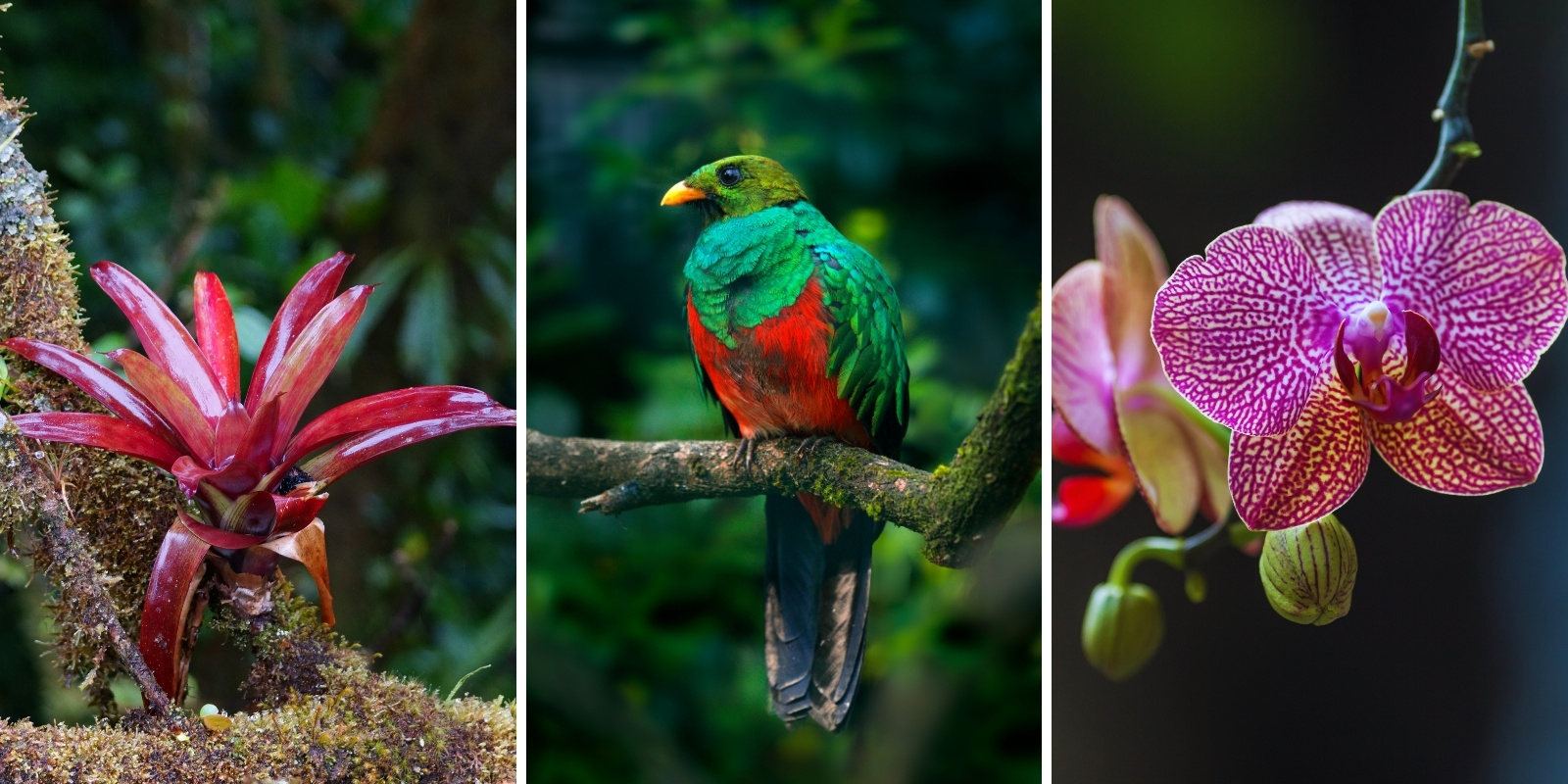
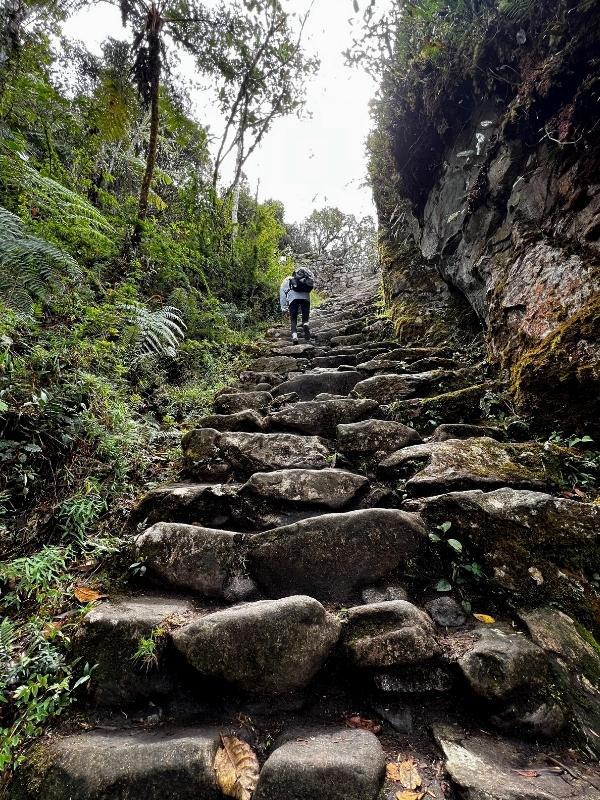
Peru’s cloud forests are unique ecosystems located on the eastern slopes of the Andes, between 1,500 and 3,500 meters above sea level, where the constant mist and humidity create a magical and biodiverse habitat. These forests, also called Yungas, stretch from Piura to Puno, with notable areas such as the Machu Picchu National Sanctuary, the Alto Mayo Protected Forest, and the Abiseo River National Park. The vegetation is lush, dominated by orchids, giant ferns, mosses, and trees covered in epiphytes, forming an emerald-green canopy. This environment is home to endemic species such as the spectacled bear, the cock-of-the-rock (Peru’s national bird), and the glass frog, and is also a biological corridor for migratory birds.
Among its greatest assets is its unique biodiversity and high endemism. Cloud forests are considered evolutionary hotspots, where countless previously unstudied species of flora and fauna have been discovered. Birds such as the golden-headed quetzal, the Andean toucan, and the magnificent hummingbird find refuge here, while mammals such as the yellow-tailed woolly monkey and the pudu (the world’s smallest deer) roam the thickets. These forests are also key to water regulation, capturing water from the mist and feeding the headwaters of watersheds that reach the Amazon and the coast.
Unique species that can be observed in cloud forests
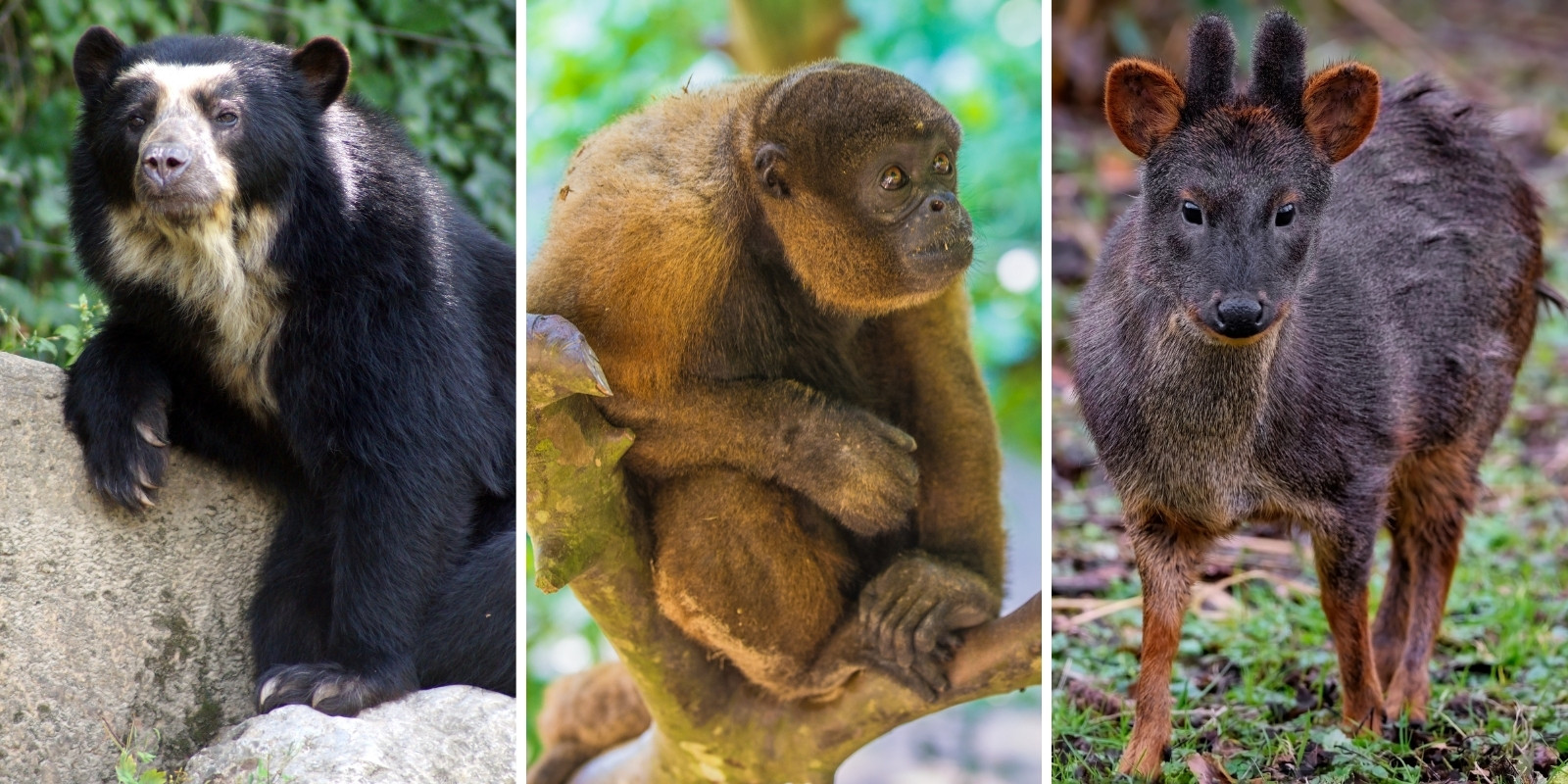
Spectacled bear (Tremarctos ornatus): The only ursid in South America, a symbol of these forests. It feeds on bromeliads and fruits, and its presence indicates the health of the ecosystem.
Yellow-tailed woolly monkey (Lagothrix flavicauda): A critically endangered monkey endemic to Peru, it lives only in the cloud forests of the Amazon and San Martín.
Northern pudu (Pudu mephistophiles): The smallest deer in the world (30 cm tall), shy and difficult to spot.
Olinguito (Bassaricyon neblina): Discovered in 2013 in Ecuador and Peru, it is the first carnivorous mammal identified in the Americas in 35 years.
Sword-nosed bat (Lonchorhina mankomara): Endemic to the cloud forests of San Martín, with a spear-shaped nose.
Cock-of-the-Rock (Rupicola peruvianus): Peru’s national bird. The males are bright red and gather in leks to court females.
Golden-headed Quetzal (Pharomachrus auriceps): With iridescent feathers, it lives in aguacatillo trees.
Blue-backed Mountain Tanager (Anisognathus somptuosus): Small bird with electric blue and black plumage.
White-breasted Guan (Penelope albipennis): Nearly extinct, it was rediscovered in 1977 in Lambayeque.
Spatule-tailed Hummingbird (Loddigesia mirabilis): Endemic to Utcubamba (Amazonas), the only one with two spatule-shaped feathers.
Glass frog (Hyalinobatrachium spp.): With transparent skin that reveals its organs.
Junín salamander (Bolitoglossa peruviana): Endemic to the humid forests of Pasco and Junín.
Cat-eyed snake (Leptodeira annulata): Hunts frogs among aquatic vegetation.
Orchids: Peru has 3,000 species, many in cloud forests, such as the Masdevallia veitchiana (dragon orchid).
Tree ferns (Cyathea spp.): Can grow to over 10 meters tall.
Cinchona tree (Cinchona officinalis): Original source of quinine, used against malaria.
Bromeliads and mosses: They cover logs and rocks, storing water for insects and birds.
Blue morpho butterfly (Morpho peleides): Its wings reflect light like mirrors.
Giant ant (Dinoponera gigantea): One of the largest in the world, with a painful sting.
Wolf spider (Lycosidae spp.): It hunts on the forest floor without spinning webs.