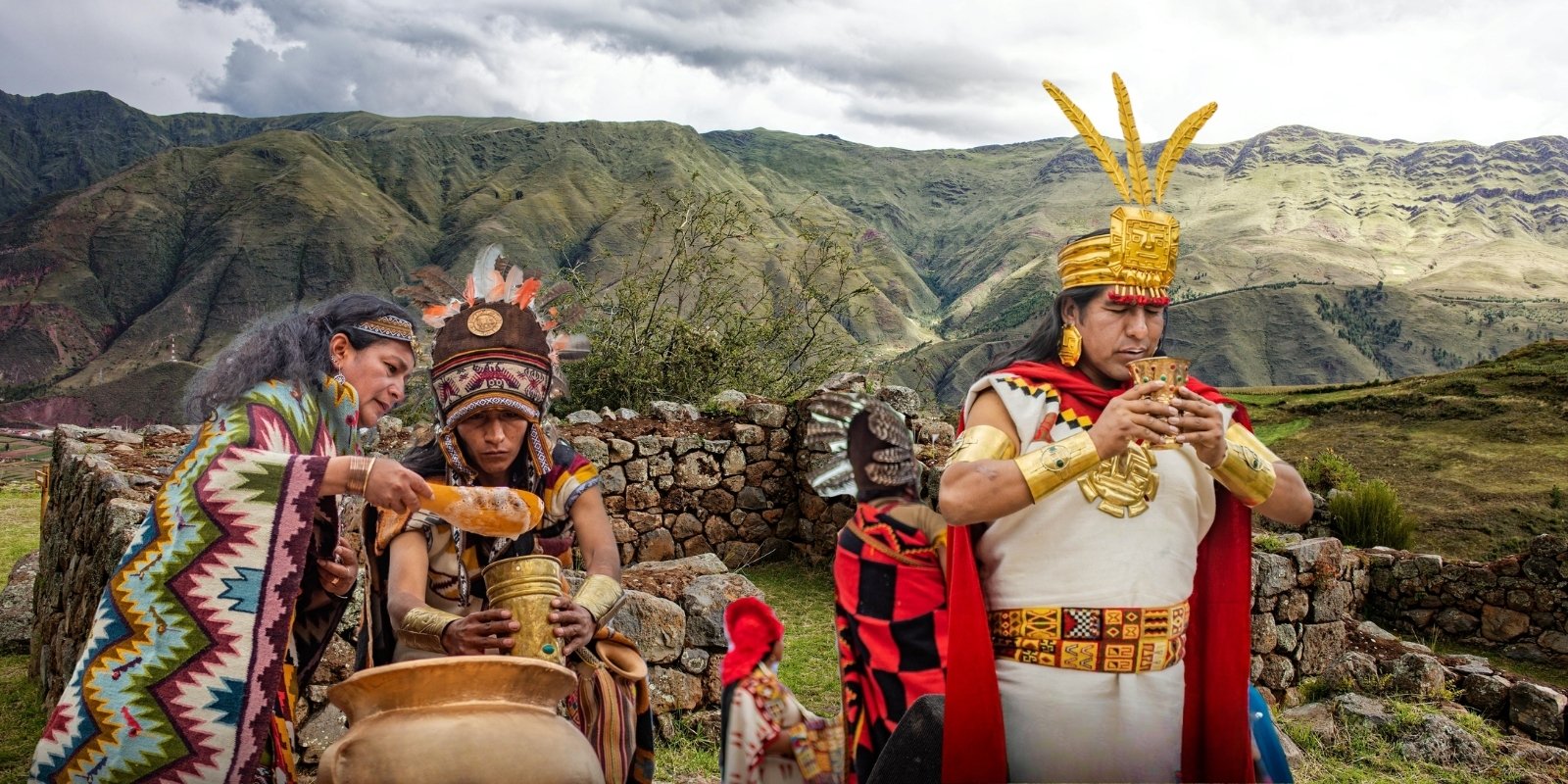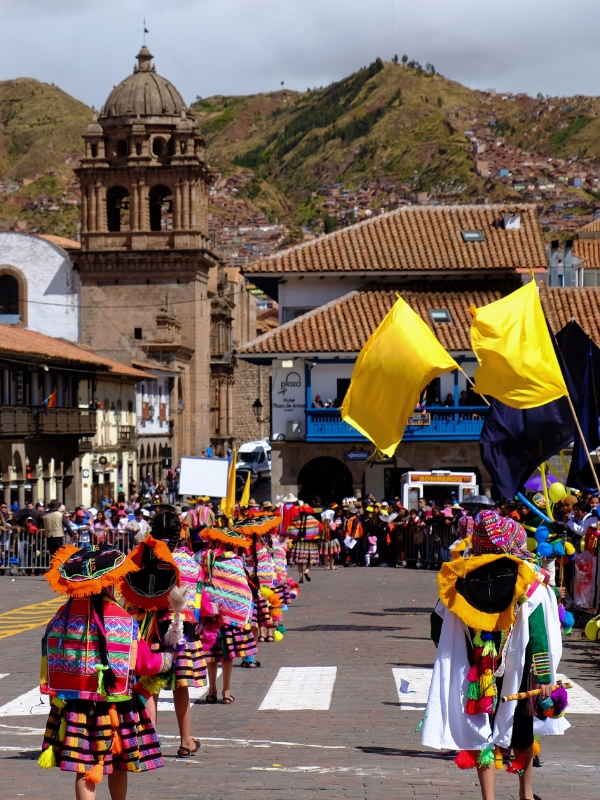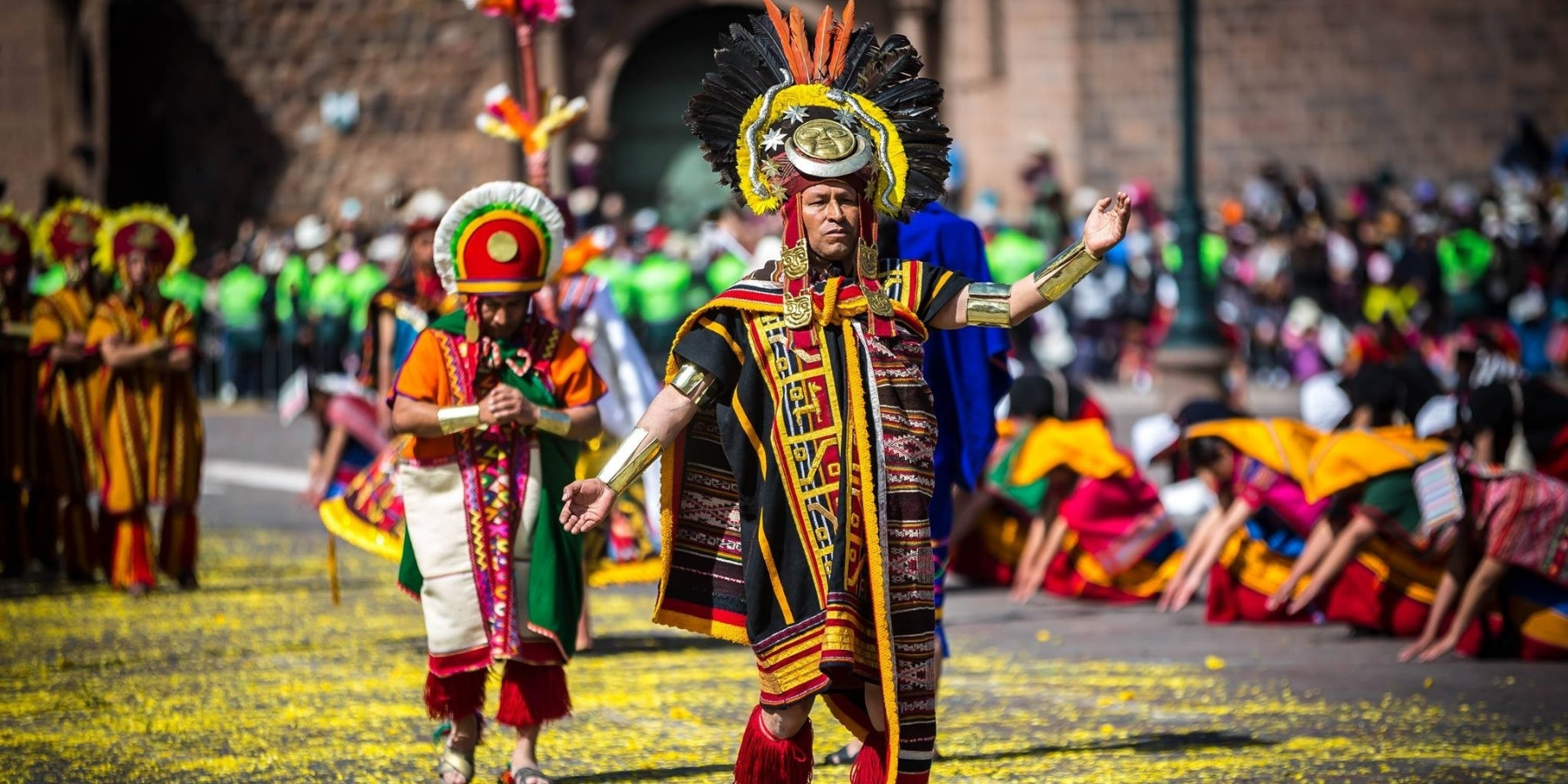
The festivals of the Incas were deeply meaningful events that went beyond the festive; they represented the very essence of their worldview and their connection to the universe. Celebrations such as Inti Raymi (Festival of the Sun) and Qhapaq Raymi (Festival of the Noble Youth) not only marked key moments in the agricultural and astronomical calendar, but also served as acts of gratitude and spiritual renewal. During these festivals, the Incas honored their main deities, such as Inti, the Sun god, and Pachamama, Mother Earth, through elaborate rituals, dances, music, and offerings. These ceremonies not only reinforced faith and cultural identity, but also consolidated the power of the Sapa Inca who was considered the son of the Sun and supreme ruler.
The festivals of the incas had a multifaceted character. On the one hand, they served as mechanisms of social cohesion, integrating the various ethnic groups and communities under the same system of beliefs and practices. On the other hand, they functioned as tools of political control, since through rituals the power of the Inca State was legitimized and symbolic and material resources, such as food and goods, were distributed in a system of reciprocity known as ayni. In addition, the inca festivals were closely linked to the agricultural cycle, marking key moments such as sowing and harvesting, which reflected the Incas’ deep connection with nature and their dependence on it.
The organization of these festivities required careful planning and the participation of priests, local authorities and the community in general, which demonstrated the collective importance of these events.
This blog is about developing the theme about the festivals and rites that have been developed in the Tahuantinsuyu, everything related to this blog is based on data extracted from some studies already carried out in our context and present a vision to obtain knowledge through the use of such studies taken from a historiography with a certain intention to make understand how the ritual aspect was practiced by the Incas and how we should observe from our condition, are some considerations to understand the history of Peru in this case. Festivals and rites were held all over the world, however in each space and time man is able to manifest his form from such circumstances. In the Peruvian case, that is why the research topic of this type of studies is considered fundamental to understand the history of the country. There is currently an advanced source of information about the festivals and rites in the case of the Tahuantinsuyu, which for example were used to make this blog.
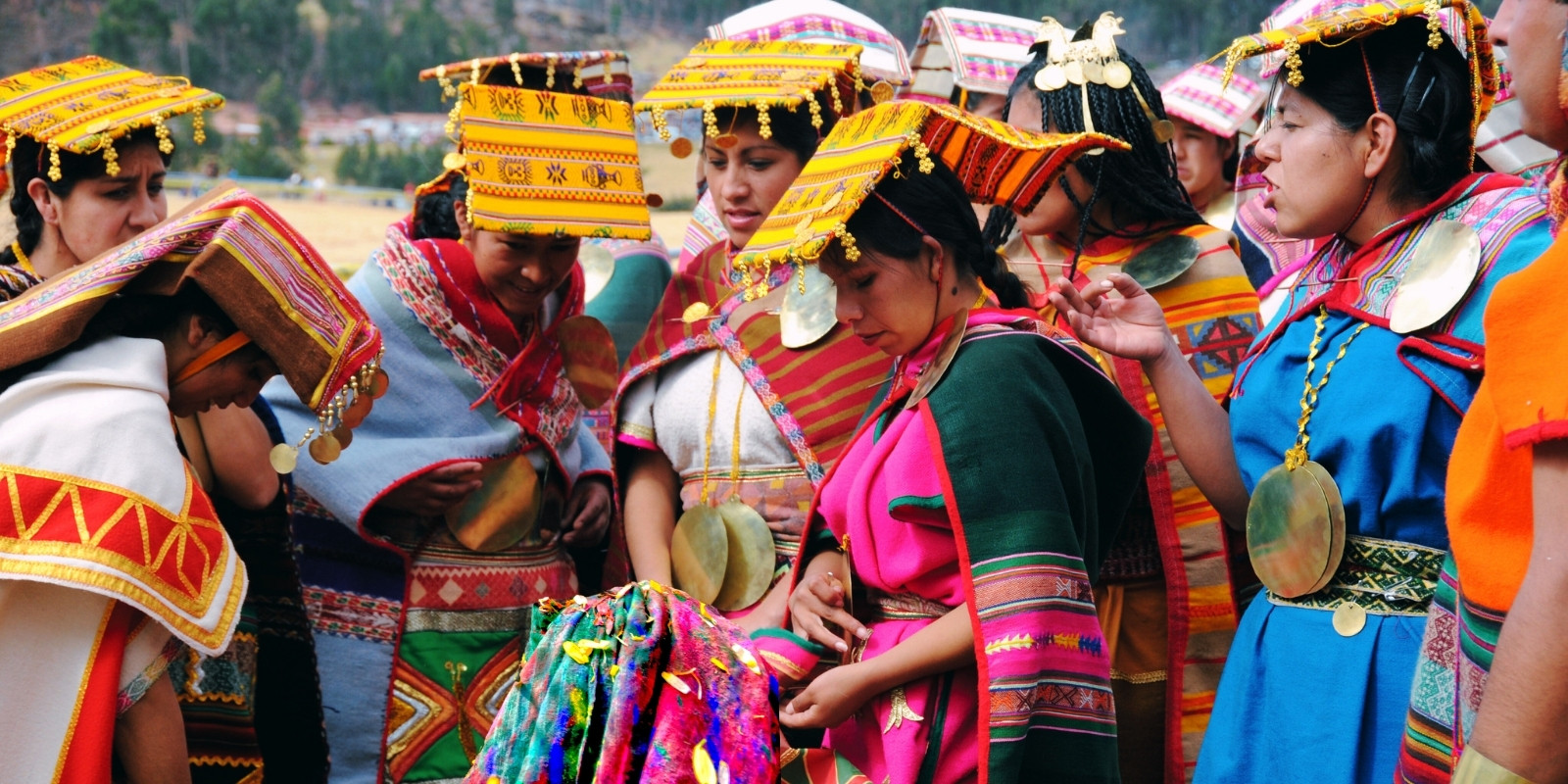
According to the chronicles, it was the Inca Pachakuteq who laid the foundations of the most spectacular Inca ceremonial and who used it to reinforce the cult of the emperor. With the centralization of the cult, the different ethnic groups of the powerful federation of Tahuantinsuyu became a single people, who expressed their religious beliefs with songs, dances and poems that passionately glossed legends and hymns transmitted from generation to generation. The undisputed center of all the intricate Inca spirituality, and the greatest exponent of the cult was the Koricancha and its god Wiraqocha, to whom the most sumptuous festivals were dedicated.
The Inca calendar was the direct result of the observation of the planets and stars, whose knowledge was closely linked to the agrarian cults of fertility. The Incas probably inherited it from earlier civilizations, such as Tiahuanaco and Wari, although it does not seem that the calendar had such a developed divinatory function as among the Mayans.
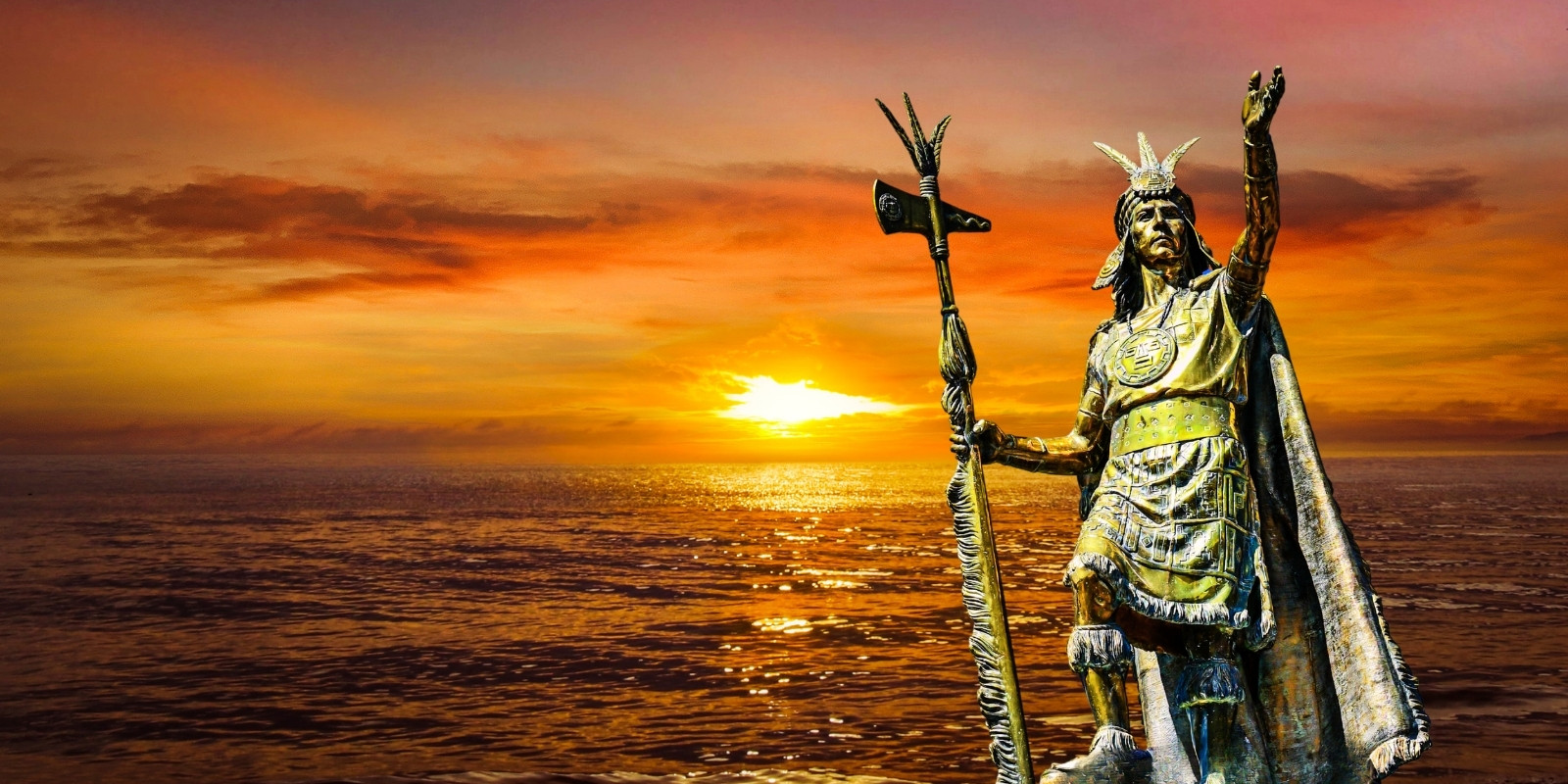
Through the observation of the sun, the elite that controlled the temple of the sun had divided the calendar into 4 seasons, 12 lunar months plus a series of complementary days, which allowed them to control the calendar of festivities and agricultural activities. However, apart from this elitist cult, there was a more popular aspect, which took place in the public square and which used the lunar calendar. The official festive calendar began on December 21, with the summer solstice, and the winter solstice, on June 21, closed the year with the great festival of the Sun.
Each month had its own name and corresponded to a festival of the Sun. Each month, the Incas had three festive days, and generally an important festival lasted a week. Festivals were held to mark the new agricultural year, the onset of puberty, marriages, and to honor the dead, as well as special festivities to mark natural disasters, famines, and wars. Festivals thus occupied more than 120 days of the Inca year, and vast reserves of food were consumed, but the effort of the Inca, who provided the food, drink, and sacrifices and the singing and dancing, was worthwhile, since it strengthened the bond between the empire and its subjects. Prayer, fasting, and sexual abstinence seem to have been common during the ceremonies. Pious rituals and sacrifices opened the festival, but afterwards the Incas indulged in fun.
They had a religious character, the festivities related to agricultural activities, field work, were related to the beginning of the seasons of the year, where the joyful and religious spirit of the inhabitants of Tahuantinsuyo was revealed. All the festivals were a demonstration of gratitude of the Inca peoples towards the Sun God, for the blessings and benefits received, which were translated into the abundant harvests obtained.
The first month of January, Cápac Raymi; in this month, they made sacrifices, fasts, penances and took ashes and put them at their doors where they threw them, some native peoples still do it today; they also made processions in the temples of the sun and the moon, and of their gods or sacred mountains; and in other sacred spaces where there were golden idols; And from hill to hill they went performing ceremonies and crying, and the sorcerer priests and confessor priests carried forward, kissing the said huacas of Guanacauri and Pacaritambo, and other idols that they had and also throughout the kingdom; the law and ordinances and sacrifices of the month of January, so that the obedience and law of their kingdom would go forward; and those who did not keep them were ordered to be killed, the Inca ordered them to fast and do penance, and to cry in their temples, idols, performing ceremonies and sacrifices and not sleeping with their women like the others in this kingdom.
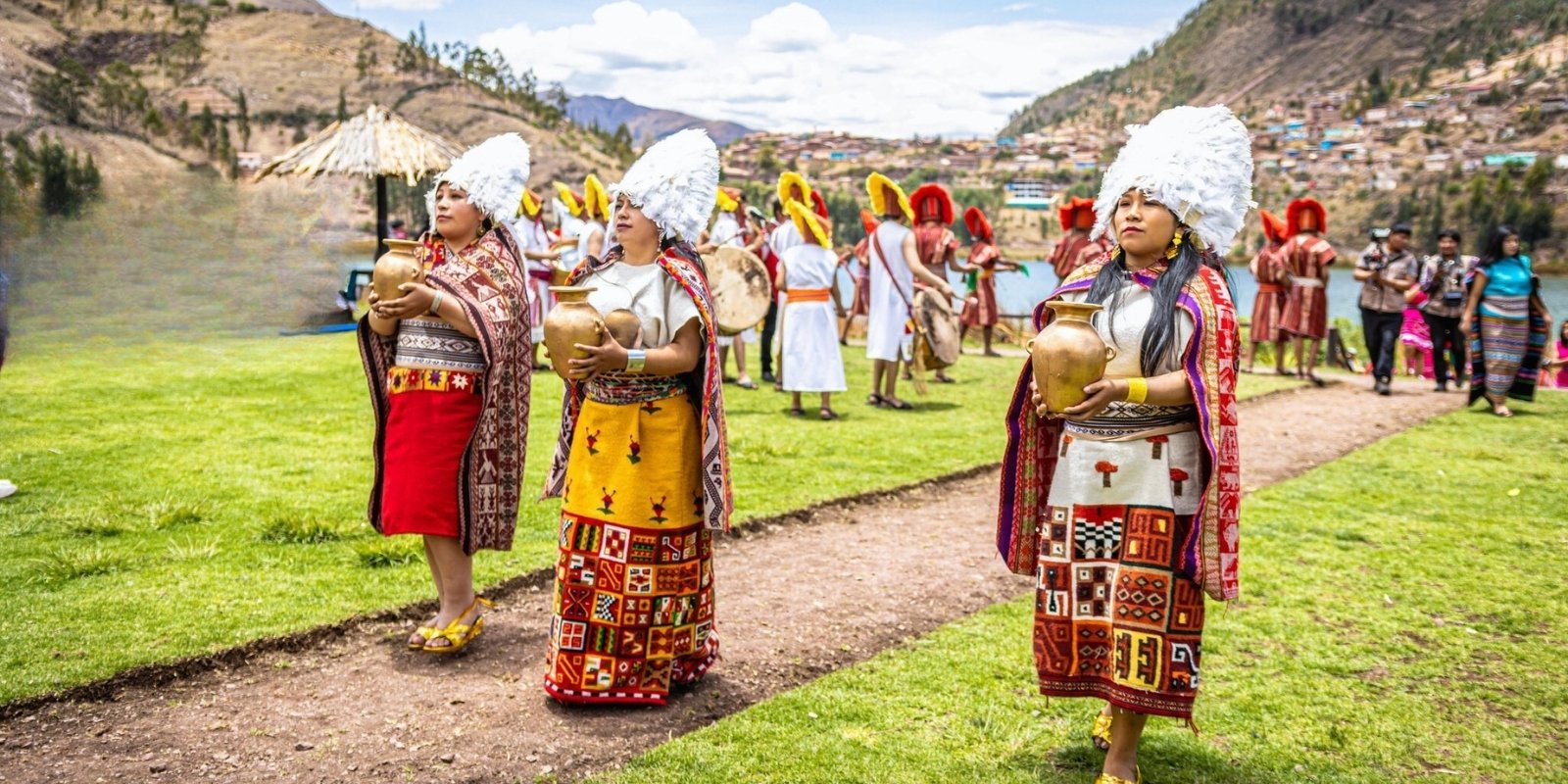
The month of great maturation, Hatun Pok’oy, in this month, the Inca and the entire kingdom sacrificed a large amount of gold and silver, llamas to the most sacred mountains, main idols, first to the sun and the moon and the stars, then to the temples and gods that were on the highest hills and snows; and it was during the rainy season when it rained a lot this month, and there was an abundance of turnips, but at the same time a shortage of food; there were references that by only being subject to the diet of consumption of green vegetables such as turnips, some people suffered from stomach cramps, which if not treated in time could lead to death. February is also the month where the fields and meadows offer different varieties of wild fruits such as capulí, tuna, pacay, avocado, etc.
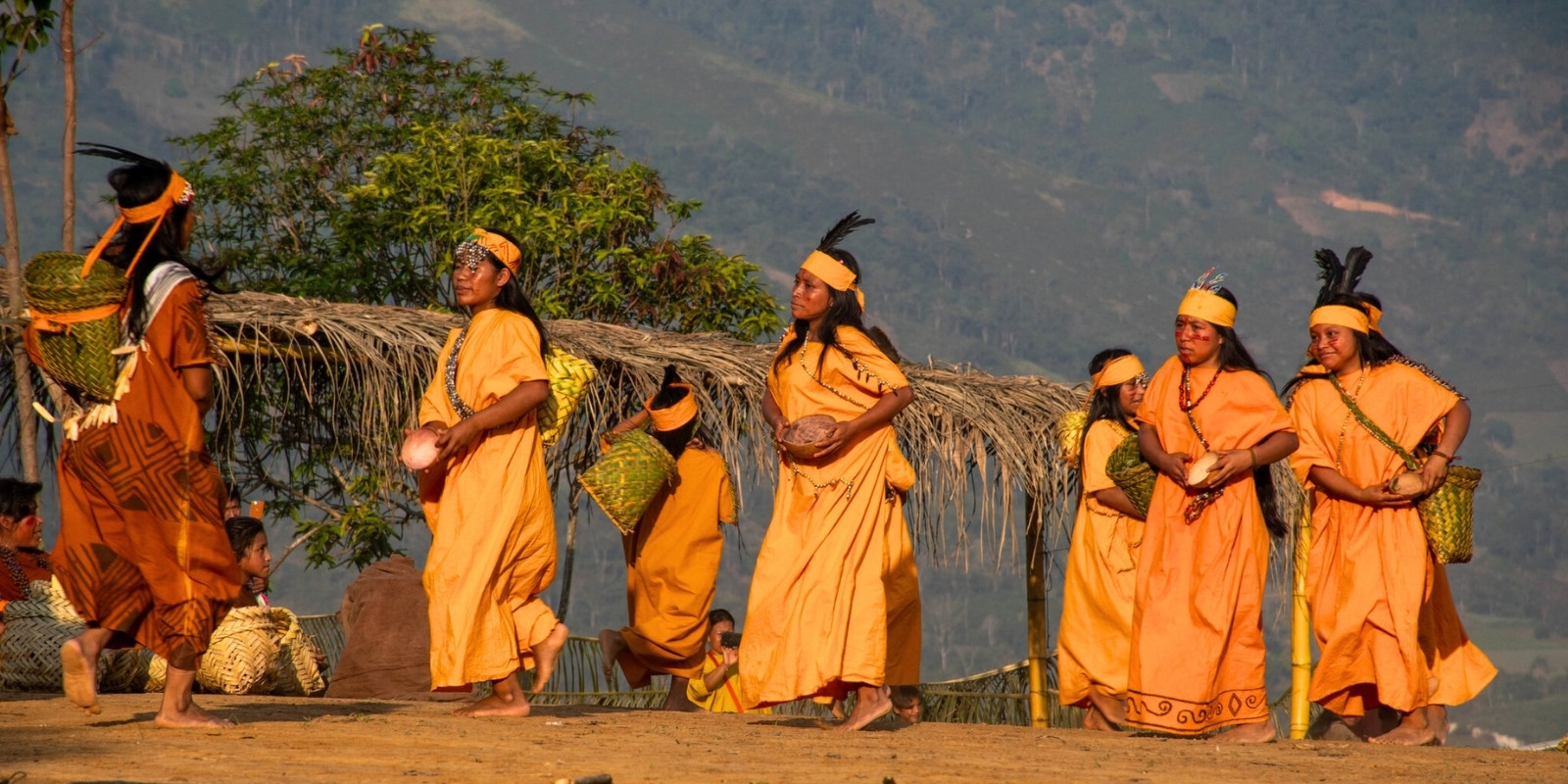
In this month they sacrificed black llamas to their idols and gods, who were named by the Incas, they did many ceremonies with the priests Wallawiczas, Condesuyos and with the sorcerers who spoke with the spirits, they did the usual fasting during the week; they stopped eating salt and sleeping with their wife, this in reference to the priestly class. Already close to the harvests the Inca and his subjects could access better food, for example rites of gratitude were performed in the corn and potato cement factories, where the priests offered large quantities of honey, incense, coca leaves, red sea shells, sweets, chicha, coca seeds, and they also visited the highest peaks of the mountains, where the priest Tarpuntay implored the gods for a good harvest of the year. In this month the cattle were fat and with abundant forage, the rains used to occur in large quantities.
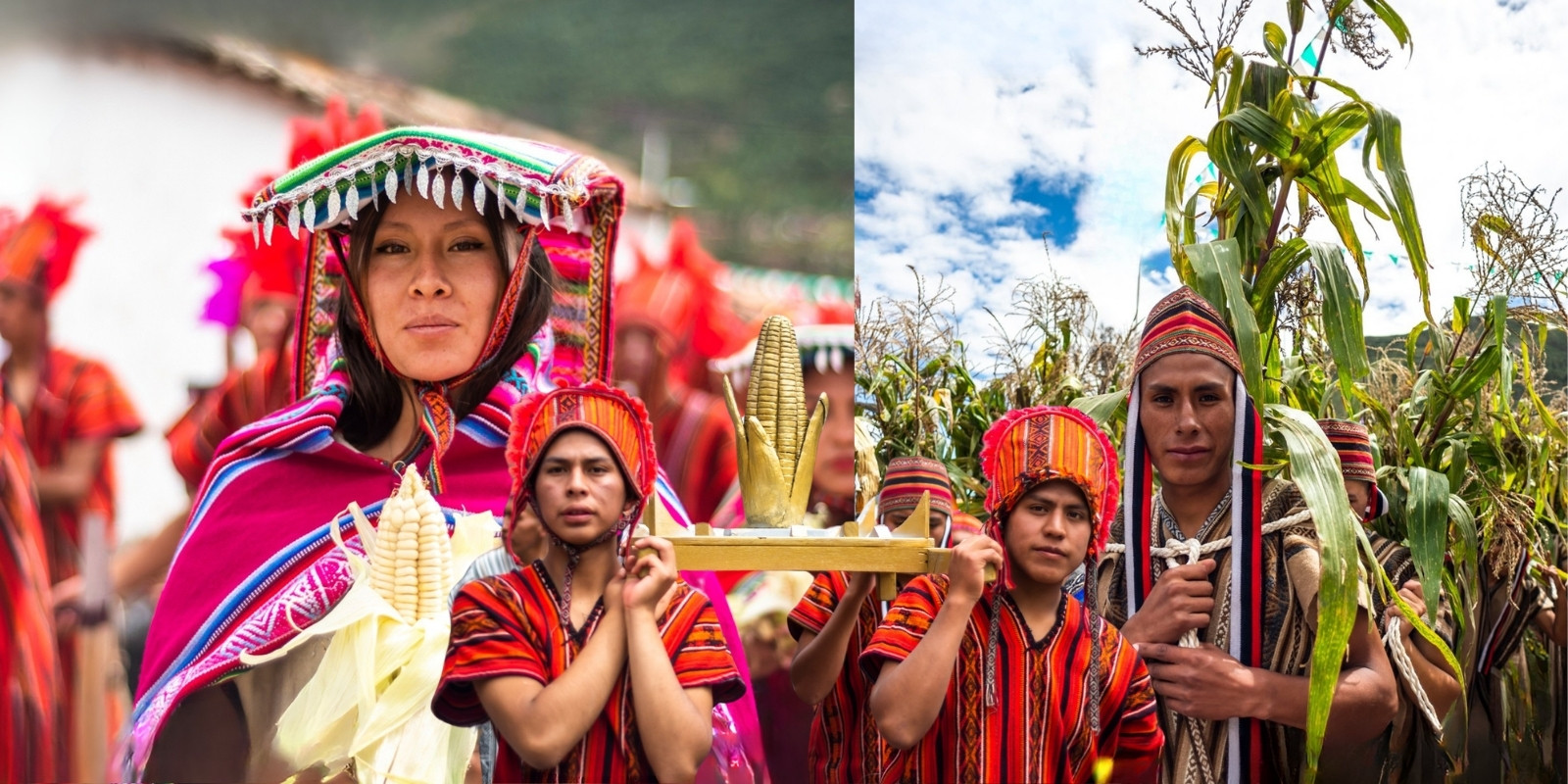
In this month they offered painted flames to the sanctuaries and common gods that existed throughout the kingdom and with this they had many ceremonies. The Inca emperor had a great party; he invited the great lords and main military chiefs. The people in general ate and sang, they danced in the public square, in this party they sang about the red flame of the rivers, imitating the sound of animals, they spent pleasant moments in great feasts and banquets, accompanied by the sacred drink of fermented corn. This month the corn, potato, bean, and other tubers crops, already look almost ready to be harvested in the valleys. That is why each family of all the kingdoms, gets ready for a great day of agricultural work where each head of the family holds meetings of more than 20 people, either in the harvests or conditioning of the Qolqas (store house). In this month the principal lords play the game of Chokay, the Pichica, also in this month all the young people pierce their ears like the Incas of noble blood (Orejones), with this they have a great party among themselves, and they invite each other as well as the rich and the poor.
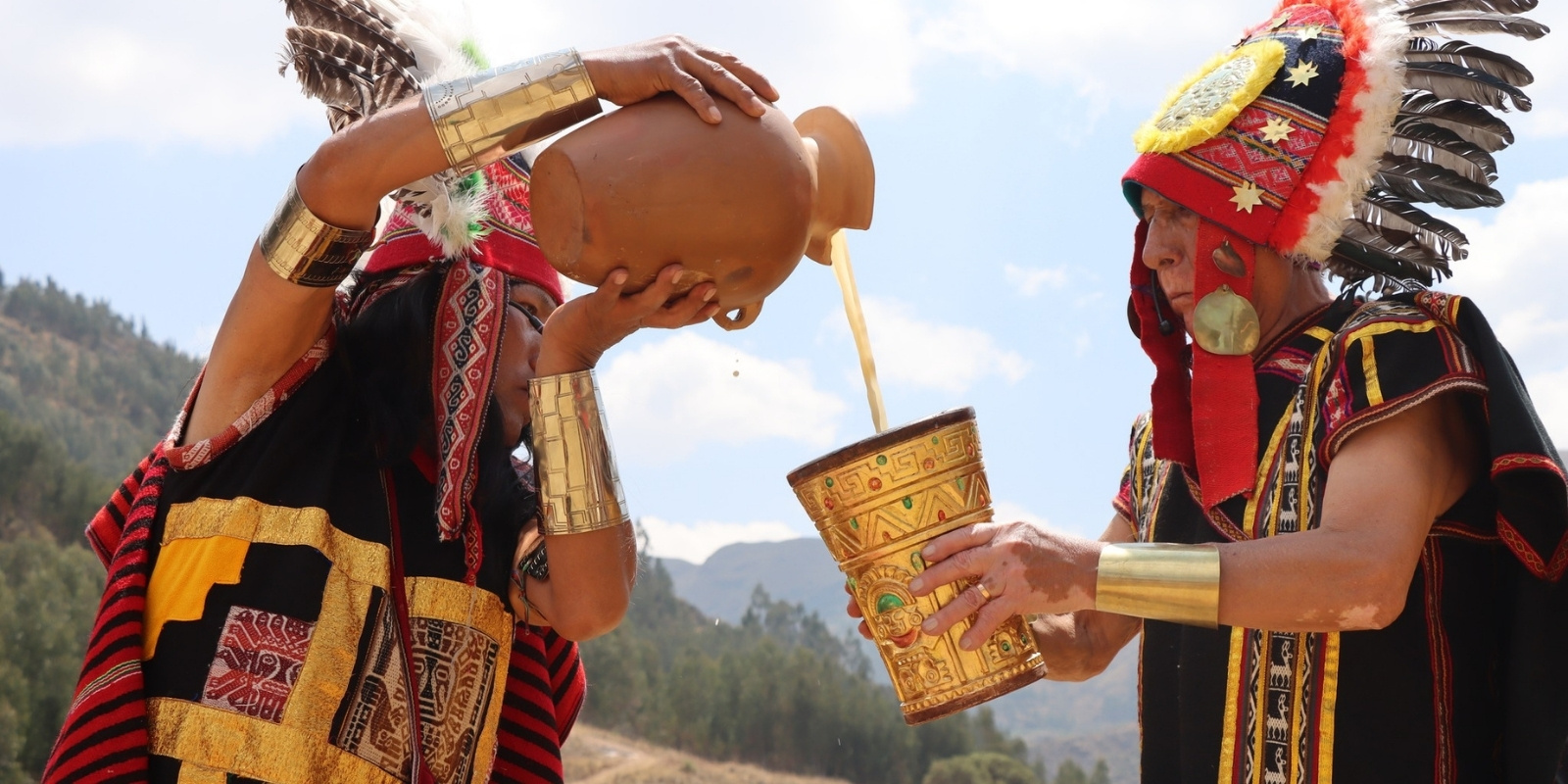
In this month llamas and alpacas painted in all colors were offered. In April the great corn harvests began, all the farmers were busy, since the lands of the Incas were wide and vast, requiring the participation of the entire community to harvest the corn, and then they carried it on their backs to the clotheslines in the hills, for which the women prepared a large quantity of meals, banquets, chicha. In the afternoon they retired singing for happiness. In May there was also a visit to the highlands where the troops of llamas, alpacas and vicuñas were, gifts were given to the shepherds who had contributed to the care of the troops of camelids, which were very important to provide wool and meat. At the end of May, the peasants carried all the corn to the royal warehouses, which were located in the hills, there the main priest Willaqumo, organized a ritual to protect the grains, a llama was offered and its blood was smeared on an ear of corn which was burned along with the coca leaves.
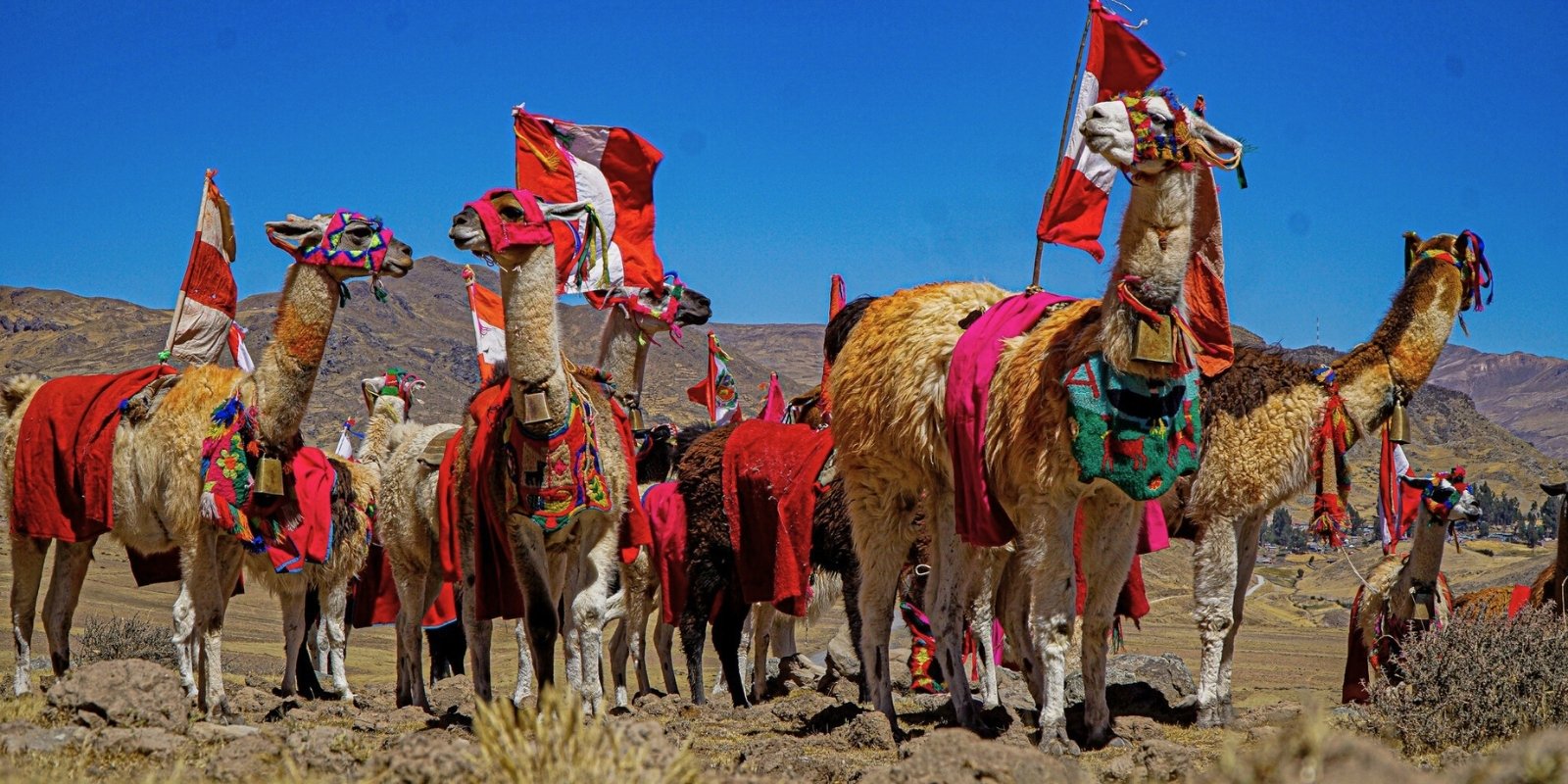
The reappearance of Las Cabrillas in June marked the moment when the temporal, social and spatial order was reestablished through the ritual celebrations of the Sun festival. The Inti Raymi or “Festival of the Sun” was related to the June solstice, which symbolically represented a young Sun. During the course of the month, three daily sacrifices of camelids were made to the Wakas in the Korikancha, while the priests prayed. The tarpuntaes priests made offerings of camelids, small figurines in the shape of corn cobs made of red and yellow mullu shells, and baskets of coca every day of the month at different sacred points located in the wide ritual and sacred landscape of the Cusco system.
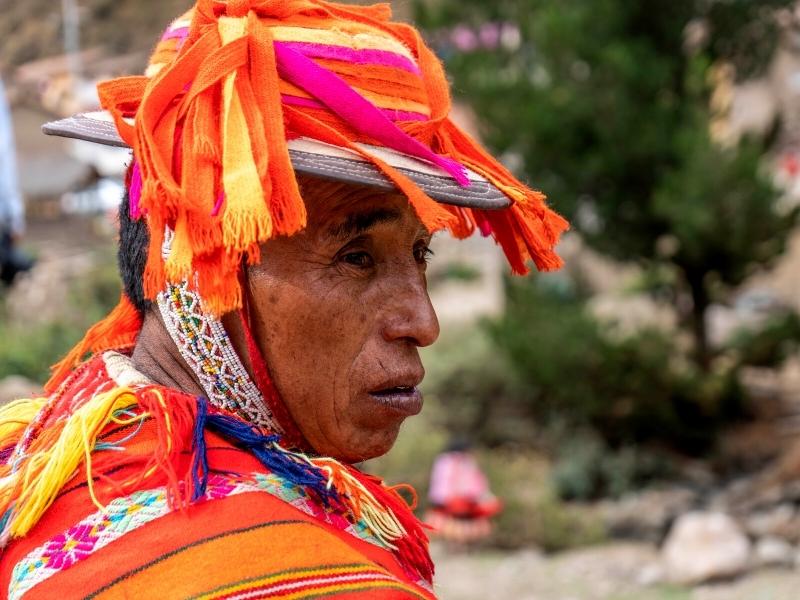
The Inca, accompanied by the blood Incas and privileged Incas, gathered in Mantucalla and performed a song, called Huayllina, four times a day. When the month ended, the Inca returned to the Ancapata plaza in Cusco to conclude the ritual celebration. For this occasion and in other ritual celebrations, all of them wore Unkus made of cumbi and used flower headdresses. On top of these garments they placed brightly colored feathers. On top of their foreheads they placed a large feather headband raised high in the form of a crown or garland, called a ‘pilcorara’. They had several flowers hanging from their llauto. Even the Zapa Inca wore flowers, he went out to the big parties they had, very gallant and richly dressed, with the crown or Mascapaicha placed as a sign of King and Lord, with many flowers and with silver and gold patens.
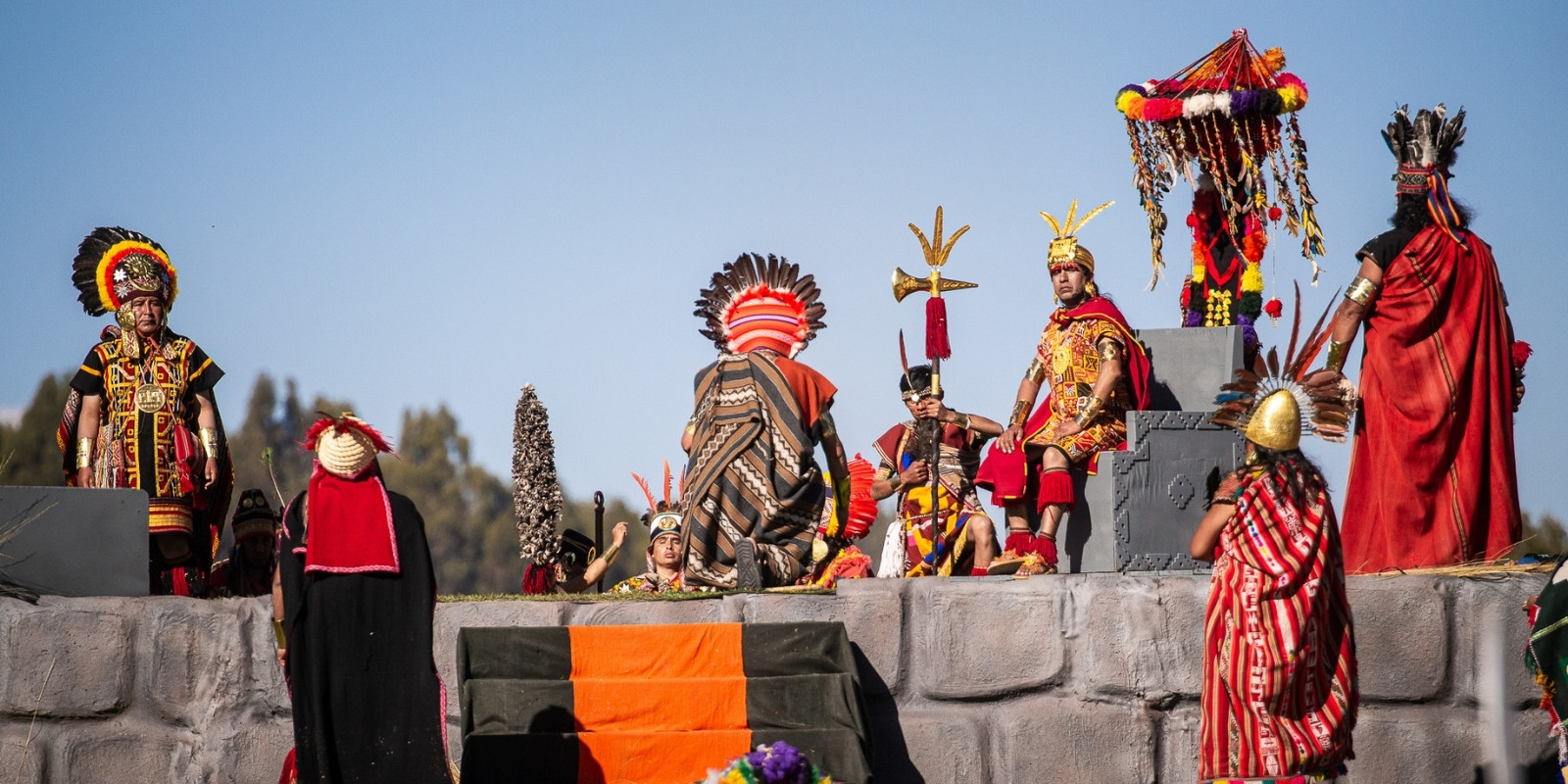
In this month, the leaders of each Ayllu or region were in charge of distributing the fields for sowing, according to the social status that one enjoyed. The Inca assigned you a certain area for cultivation. The community was also in charge of working the lands of the nobles, the priests and the emperor. During the time of the Inca Empire, no one was idle. Everyone collaborated in the sustenance and production of goods. It is even known that widows and the elderly were helped by their community in everything related to the preparation of the agricultural work on their lands. In this month, they sacrificed another hundred white and brown camelids, another number in the public square, and they were accompanied by a thousand white guinea pigs. This sacrifice was made so that the sun and water would not damage the crops. Before starting to sow, the Incas had to clean the fields, and then they brought the manure of camelids such as the alpaca and llama. It was also necessary to delimit the lands, using sticks and stones. Each family was in charge of protecting the properties of their ancestors and parents. July is a month when frosts are more intense. The community leader also had the role of organizing the cleaning of the water channels, since water resources were usually captured from rivers and lakes near the valleys.
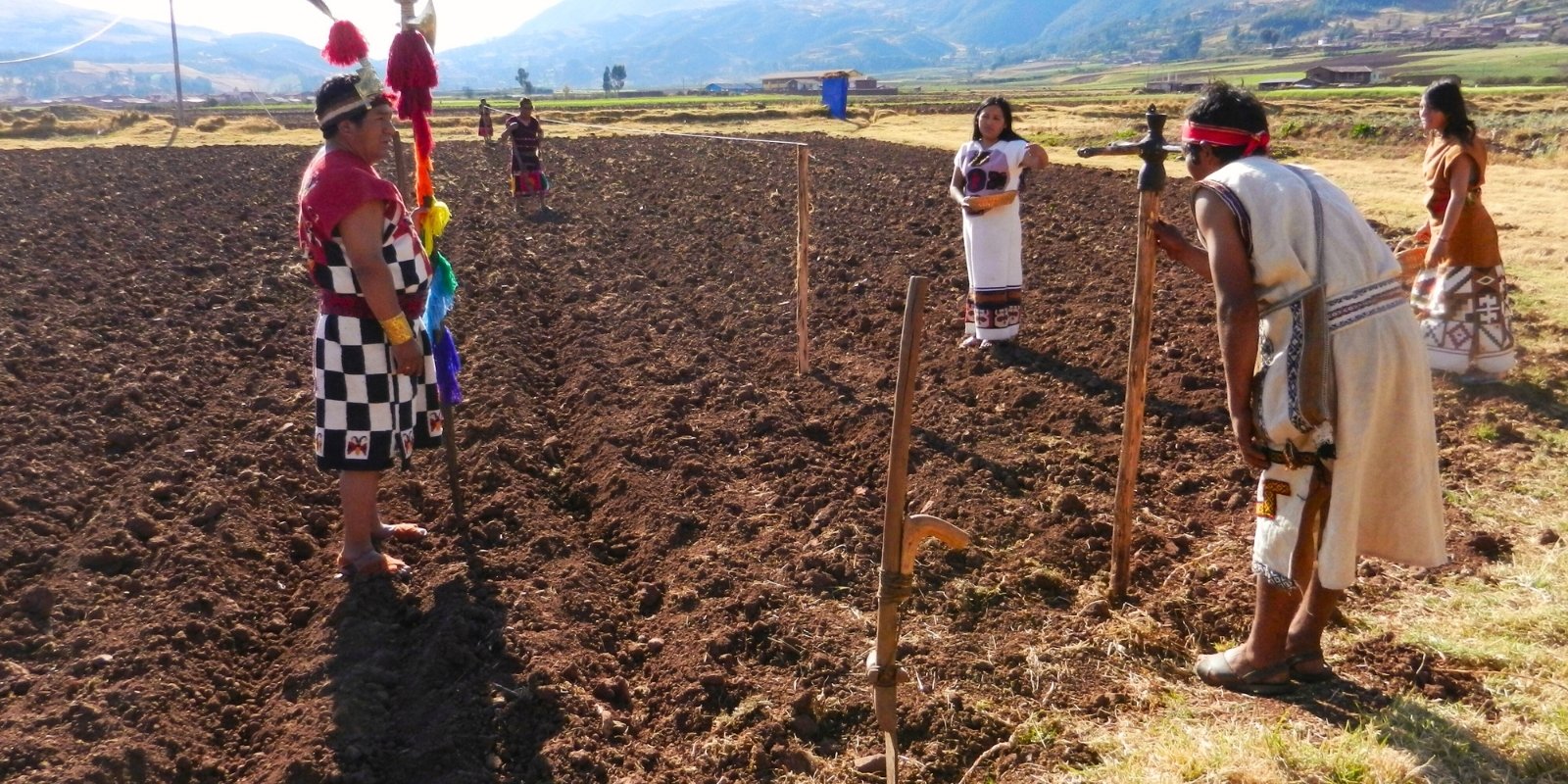
In this month they go to work, they plow and break simple lands to plant corn, in this month they sacrificed to their deities with alpacas, llamas, guinea pigs, and mullo (spondilus), sankhu (steamed corn bread), chicha. The farming work was accompanied by musicians who sang the Harawis and Hayllies. The women were in charge of preparing the stews such as Uchus of mullet, pumpkin, tarwi, quinoa soup, toasted corn, squash tortillas. The Incas always used to consume their food with chili. It was customary to perform the ceremony of permission to mother earth, so the main priest organized a great offering for all the main mountains with coca leaves and kantu flowers. The work days were carried out with the work system called Ayni and Minka, each work group was organized by young men from 20 to 35 years old, in a number of 20 to 50 individuals. All carried their own farming tools, such as the Chakitaqlla, Qoranas. The youngest and oldest helped with the preparation of the soil by hitting the clods, collecting weeds.
The main food grown in the Inca empire was corn in its different varieties, depending on the climatic and altitude conditions, so agricultural work began in the fields located in the valleys, and ended with the fields located on the highest hills, where the October rains were expected.
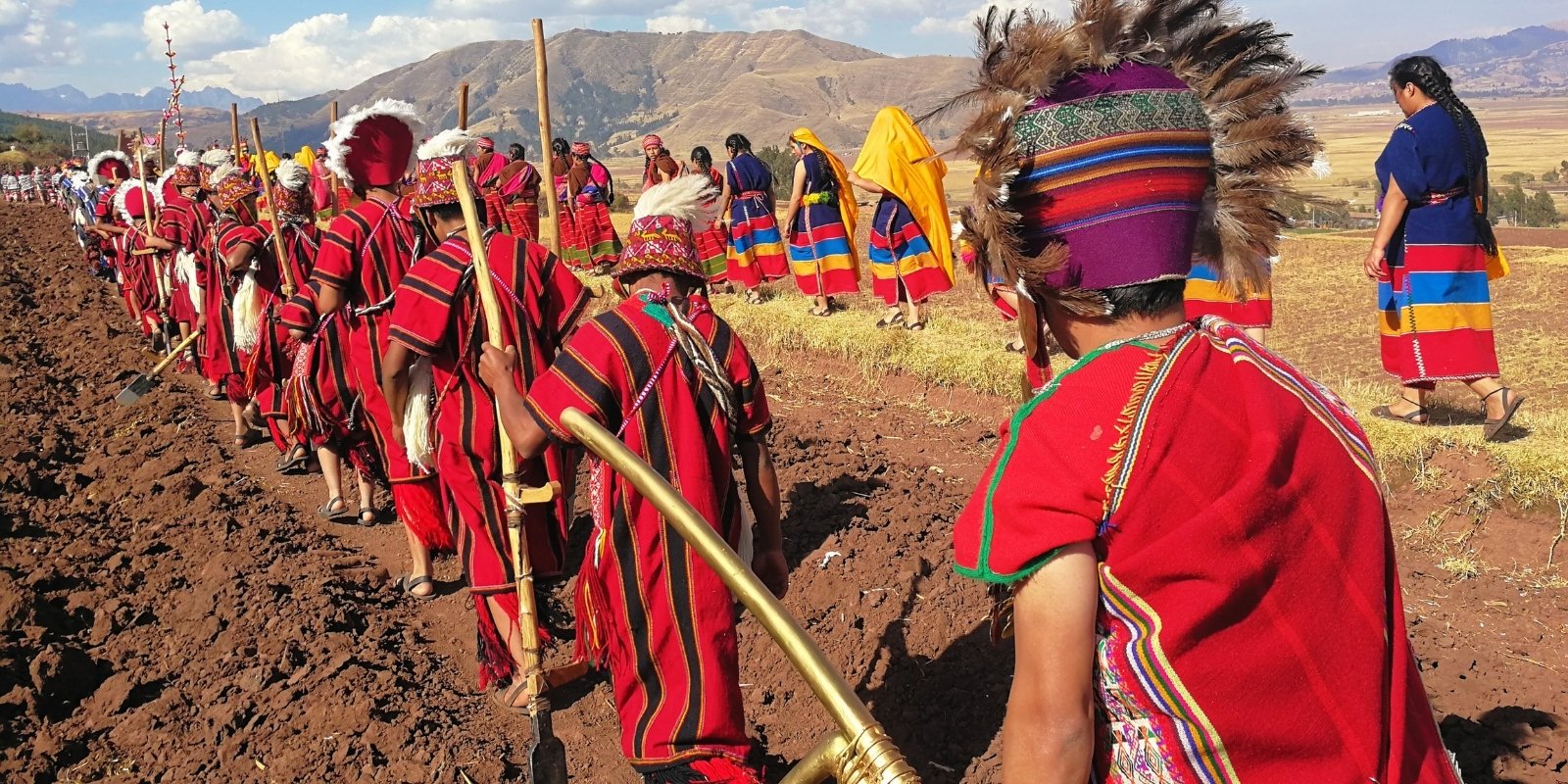
September is the month of the Coya Raymi festival (the queen’s festival). This month was also the great festival of the moon. During these dates, all the women of the empire were celebrated as Ladies, single women, maidens and virgins of the sun. During this time, the Incas ordered the purification and cleaning of the capital of the Empire, Cusco. It was believed that all the diseases and bad vibes of the towns and pestilences of the entire kingdom should be expelled. The men armed as if they were going to war to fight, threw slings of fire, saying: “Get rid of diseases and pestilences from among the people and from this town, leave us,” with a loud voice; and in this they sprinkled all the houses and streets with water and cleaned them with incense and flowers; This was done throughout the kingdom and many other ceremonies to cast out evil spirits, corn disease, spring disease, rain disease, earth disease, goblin disease.
At the beginning of the festival, the figures of the Sun, Viracocha Pachayachachic and Chuquilla gathered in the Coricancha. Then, the non-natives of Cuzco and those with physical defects were expelled, leaving from the Haucaypata, around the Ushnu, 400 men for the four suyos expelling evils and illnesses, alternating the Panacas (noble families), privileged Incas and mitimaes, throwing said evils into the rivers.
On the second day, they washed themselves to remove evils and illnesses, they made Pancuncu (straw torches) / they spread Sankhu (corn buns) on their faces, houses; and they gave them to the mummies and offered them to the Sun, Viracocha Pachayachachic and Chuquilla.
On the third day food was offered to Koricancha, Pucamarca and Quishuarcancha, the mummies of the ancient Incas were paraded. Sankhu was taken to the Huaca of Huanacaure.
From the fourth to the seventh day the Inca, his wife, the mummies, the Panacas, privileged Incas and the figures of the Sun, Viracocha Pachayachachic and Chuquilla, met in Haucaypata, offerings of chicha (corn drink) were made to the ushnu.
On the eighth day all the ayllus of Tahuantinsuyu came to Haucaypata bringing their huacas and bowing to Viracocha Pachayachachic, the Sun, Chuquilla, Huanacaure and the Inca, they swore loyalty, then the people with defects who had been thrown out of Cuzco entered.
Finally, on the ninth day, the ayllus that had come the day before left their huacas (to which they gave farms and servants) and took the ones they left the previous year.
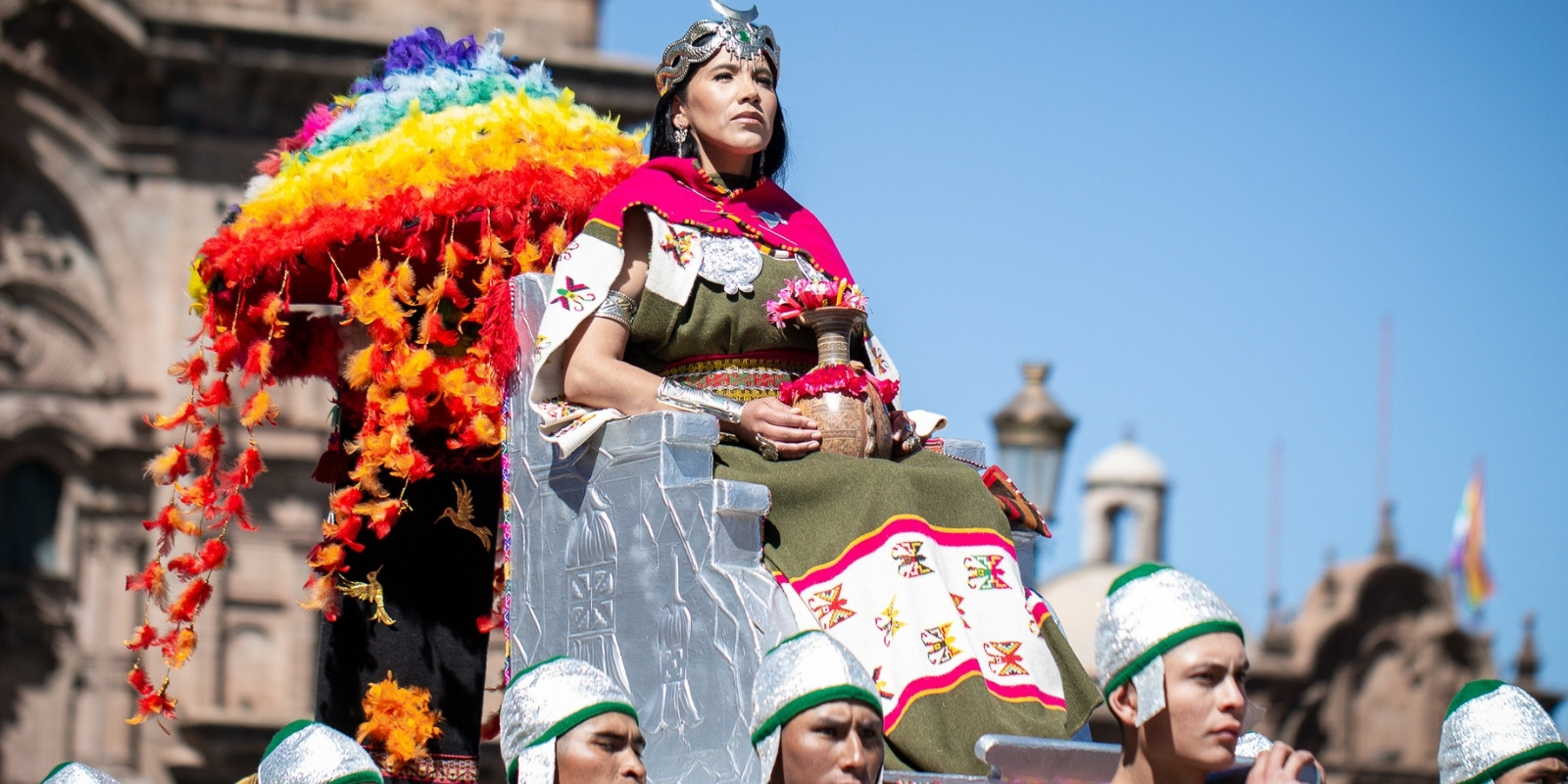
In this month they sacrificed to the Wacas, the main idols and gods, so that they would send them water from heaven, another hundred white camelids, and they tied other black rams in the public square and they did not feed the said rams tied so that they would help cry; they also tied the dogs, as they saw people shouting and screaming they also made (howls) barking, and those who did not bark they hit them with sticks and thus they made great cries, men as well as women, children, sick, lame and blind, old men, old women and each one of these those who had dogs took them, they went making them shout asking for water from the cycle to God Runa Kamaq, saying these prayers and doctrine: “Oh, oh, let us cry, oh, oh, let us moan. Your children (your sons?) are overcome with pain, we can only cry for you.” After these prayers, everyone began to shout and cry and said in a loud voice: [“Oh Creator of men, what do you do for those who eat? Viracocha, God, where are you? Release your water, your rains, even for your people”]; with this they went from hill to hill in procession, shouting and moaning very seriously with all their hearts asking for water from God in heaven, Runacamac.
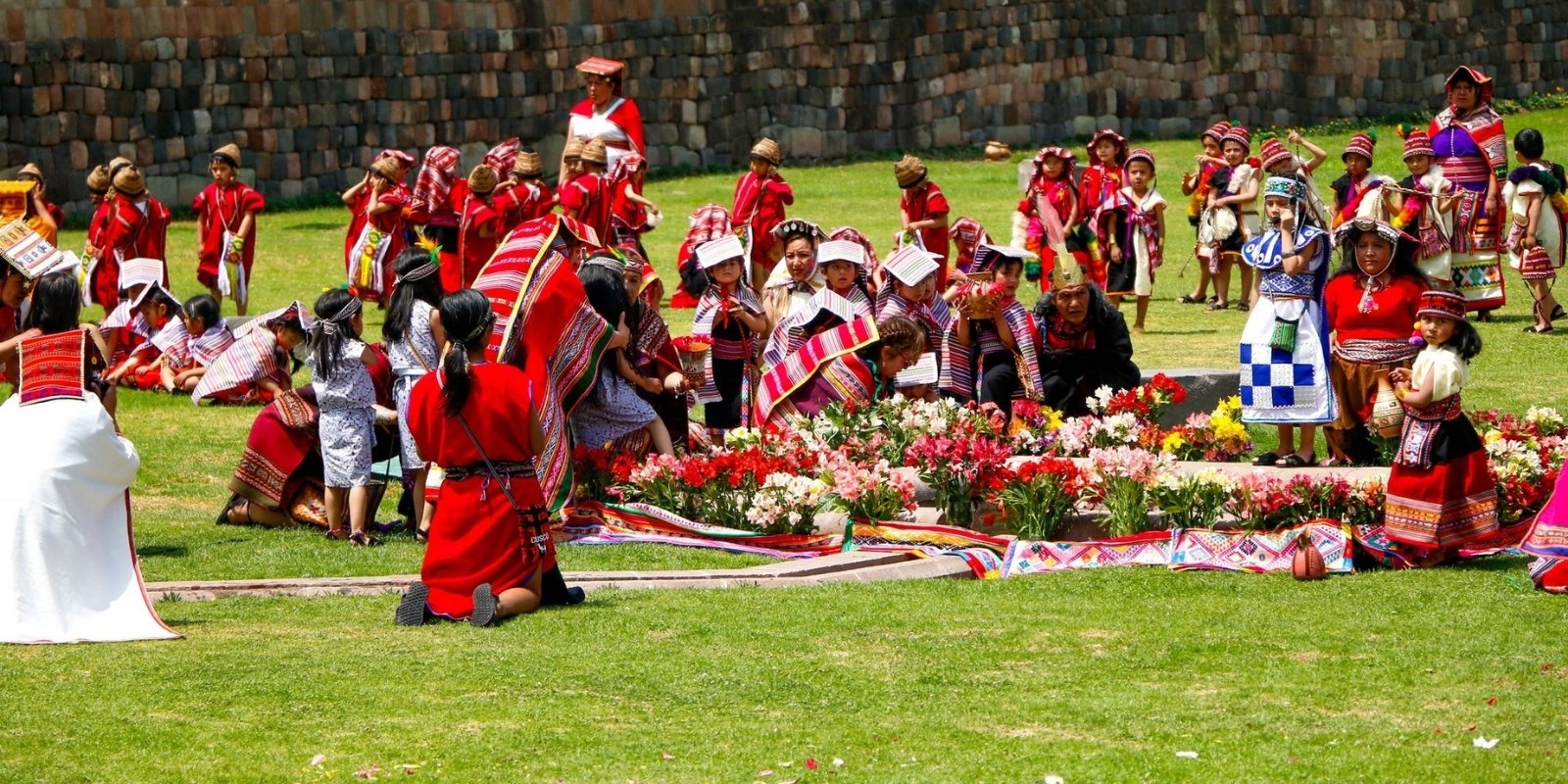
This month was the month of the dead, in this month they take the dead out of their vaults which they call Pucullo, they give them food and drink, they dress them in their rich clothes and put feathers on their heads, they sing and dance with them, they put a litter on them and they walk with it from house to house, through the streets and through the squares, then they put them back in their Pucullos giving them their food and dishes, the main one of silver and gold, and the poor one of clay; they also give them their camels, clothes and bury them with them, they spend a lot on this festival. And in this month they also pierce the ears of the Incas, and they celebrated the Warachikuy and Rutochikoy, the women celebrated the Quicochukuy, they bring water from streets and springs, and they made the Anaku festival for the maidens, and the Quinaupi Churcuy for the children.
In this month of November, Aya Karkay Quilla, ordered the Inca to visit and count the people of the general visitation of this kingdom, and to rehearse the captains and soldiers for war and to distribute women and marry them; and in this month they covered houses and raised walls; in this month the cattle of the community were visited, also the women who would enter the Acllauasi, a kind of monastery, were selected, the virgin women were selected to work and know how to spin, weave clothes for the Inca and the other lords.
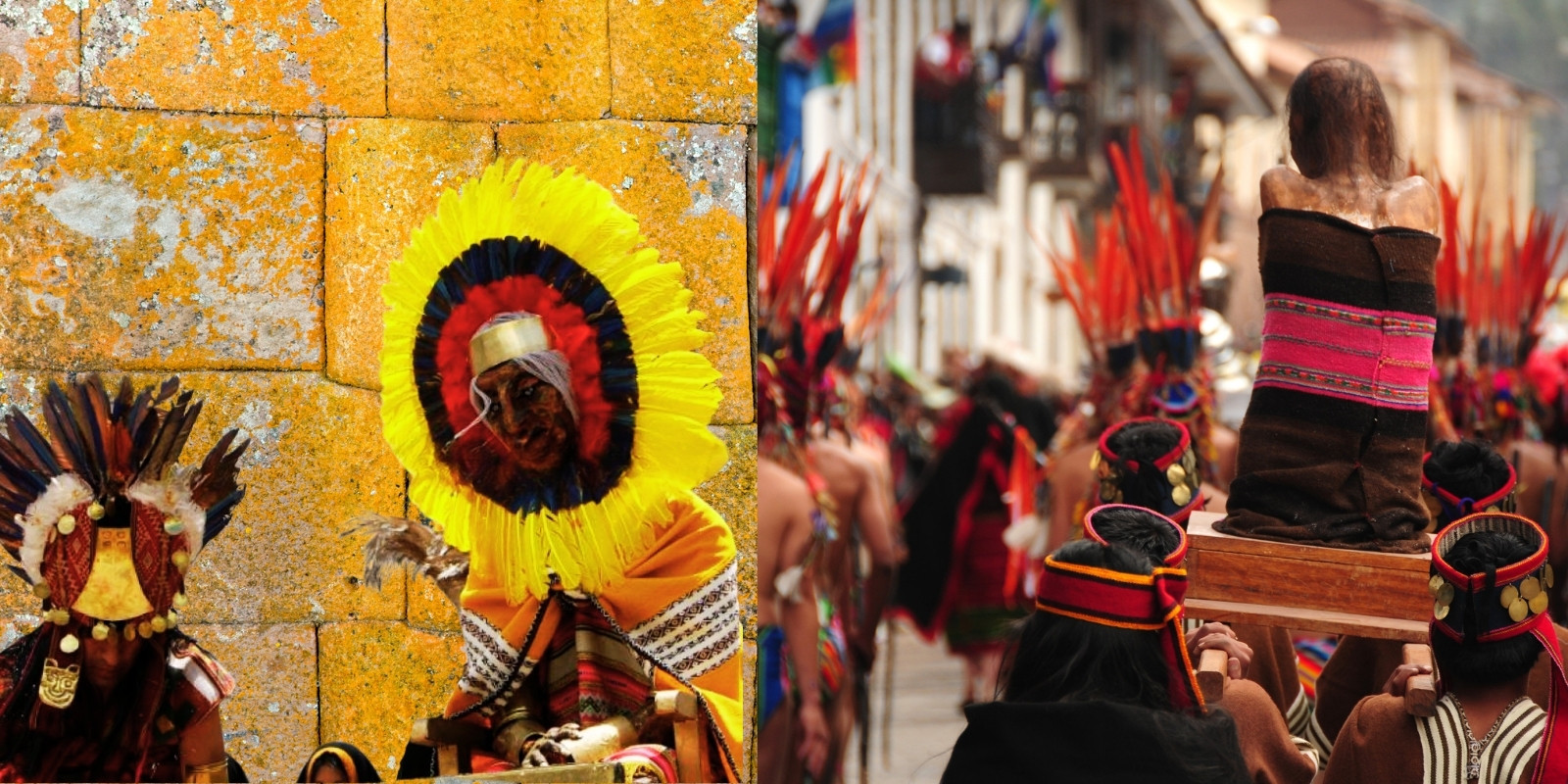
In this month the Incas held the great festival and solemn Easter of the sun, since according to their Inca beliefs the sun was the king star of all the planets. In this month great sacrifices were made to the sun with much gold and silver, dishes with food, much mullo (red bivalve shells) and black and white llamas; after the sacrifice, the Incas held a great party, they ate and drank in gratitude to the sun, a great number of dances and dancers gathered in the squares of Cusco and throughout the kingdom.
On the twenty-third day of the month dedicated to Ccapac Raymi the Huayna Punchao (idol that represented the young lord of the day) was taken with its insignia (the Suntur Paucar and the gold and silver camelids) to Puquincancha (Poquencancha). There, sacrifices were made to the state huacas (Viracocha, Sun, Thunder, the Moon) so that people would multiply and all things would be prosperous.
During the Ccapac Raymi, the Harawi was performed, a song as an integral part of a sequence that articulated the different moments of the celebration. The structure of this sequence was composed of clearly established activities: kisses to the idols, delivery of elements of the emblematic paraphernalia. As the celebration progressed, the order of these activities changed according to ritual needs. The activities programmed for the rite of passage made clear the educational message that everything received from the State, the song of the Harawis, was interpreted by the men of the lineages of the young Incas, in which the historical, mythical and religious foundations that authorized the social reality, or rather, the social class of which they would be part once “knighted” were transmitted.